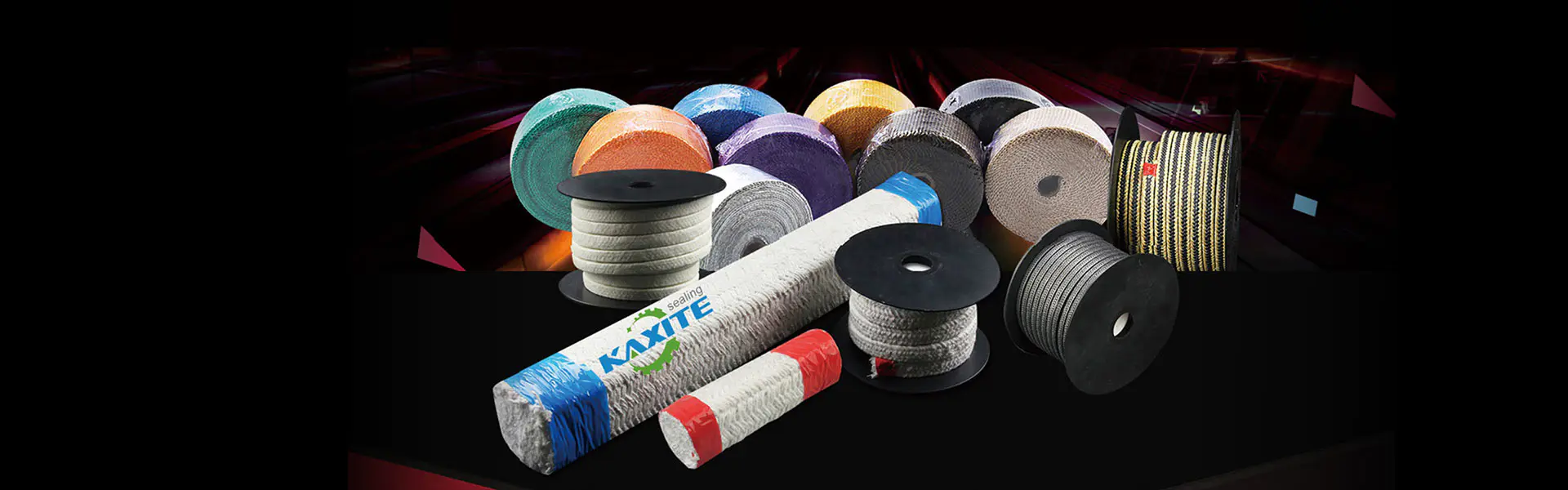
Imagine a high-pressure pump suddenly failing in the middle of a critical chemical transfer. The leak isn't just a minor spill—it’s a safety hazard, a production delay, and a costly cleanup. For procurement professionals sourcing sealing solutions, the core question is always about reliability under pressure. So, is PTFE Packing suitable for high-pressure applications? The short answer is yes, but with important structural and material considerations. Pure PTFE packing, especially when reinforced with lubricants or aramid corners, can handle pressures up to 200 bar in dynamic services. However, not all PTFE packings are equal. Heat dissipation, extrusion resistance, and correct installation all play a decisive role in whether the seal holds or fails catastrophically. At Ningbo Kaxite Sealing Materials Co., Ltd., we understand the engineering margins required for demanding environments, having refined our braiding and impregnation processes to maximize density and minimize creep.
Article Quick Links:
1. The Hidden Cost of High-Pressure Leakage and Why PTFE Packing Fits the Bill
2. When High Pressure Meets High Speed: Preventing Heat Damage with Specialized PTFE
3. Installation Nightmares: Solving Extrusion and Stem Scoring with Hybrid Materials
4. Chemical Attack Under Pressure: Selecting the Right PTFE Compound for Sour Gas
5. Expert Dialogs on PTFE Packing for High-Pressure Applications
6. PTFE Packing Selection Checklist for High-Pressure Valves and Pumps
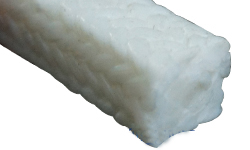
Pain Point Scenario: A plant manager overseas notices fugitive emissions spiking from a steam valve operating at 150 bar. The conventional graphite packing crumbles under thermal cycling, causing micro-leaks that violate environmental compliance. Each leak may cost $5,000 in lost media and fines annually, affecting procurement KPIs.
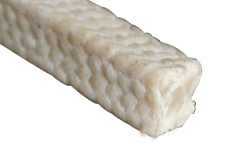
Solution: This is where high-density PTFE packing infused with inert lubricants excels. Unlike graphite which can suffer from oxidation in high-temperature steam, PTFE remains chemically inert and self-lubricating. For procurement specialists seeking the answer to is PTFE packing suitable for high-pressure applications, the key lies in cross-braided structures that lock fibers in place. Ningbo Kaxite Sealing Materials Co., Ltd. delivers packings that distribute gland load evenly, reducing the need for constant retightening. Our optimized density minimizes porosity, directly addressing the risk of extrusion that plagues softer seals.
| Packing Type | Max Pressure (Bar) | Temperature Limit (°C) | Extrusion Resistance |
|---|---|---|---|
| Standard Pure PTFE | 100 | 260 | Moderate |
| Graphited PTFE | 150 | 280 | High |
| Aramid-Corner PTFE | 200 | 300 | Very High |
Pain Point Scenario: A maintenance engineer complains that shaft packing on a high-pressure boiler feed pump burns out after only three weeks. The rotational speed combined with 120 bar pressure generates dry friction heat, charring standard packings and scoring the shaft. Downtime for repacking eats into already tight margins.
Solution: The misperception that PTFE cannot survive high-speed, high-pressure environments is widespread. The reality is that break-in procedure and material formulation are critical. Ningbo Kaxite Sealing Materials Co., Ltd. formulates PTFE fibers with finely divided inorganic thermal conductors. This allows heat to dissipate from the shaft interface into the stuffing box wall. When asking is PTFE packing suitable for high-pressure applications in rotating equipment, the answer rests on surface hardness. We increase fiber compactness through multi-stage compression, reducing the coefficient of thermal expansion. This ensures the packing doesn’t expand and seize the shaft, a common failure mode that our international clients have completely eliminated after switching to our customized solutions.
| Parameter | Standard PTFE | KAxite ThermCon PTFE | Benefits |
|---|---|---|---|
| PV Limit | 15 MPa·m/s | 22 MPa·m/s | Wider safety margin at high speeds |
| Heat Dissipation | Low | Enhanced | Prevents polymer degradation |
| Break-in Time | Long | Short | Fast startup reliability |
Pain Point Scenario: Procuring cheap PTFE ropes leads to a rebuild nightmare. Under 180 bar of reciprocating pressure, the soft PTFE begins to cold-flow into the clearance between the stem and the stuffing box. Operators tighten the gland excessively to compensate, which scores the stainless steel stem and requires complete valve disassembly. The procurement manager faces the fallout of false economy.
Solution: High-pressure applications demand anti-extrusion barriers. This is where aramid-core PTFE hybrid packings from Ningbo Kaxite Sealing Materials Co., Ltd. become essential. The high-strength aramid corners, fully encapsulated in PTFE, create a mechanical lock against the pressure side. For our B2B partners questioning is PTFE packing suitable for high-pressure applications over long service intervals, the durability data speaks clearly: our hybrid styles maintain seal integrity for over 10,000 cycles in hydraulic systems. The aramid provides the tensile backbone, while the PTFE surface provides the low friction, preventing the stem damage that erodes asset value. We help our clients standardize on one hybrid specification to simplify inventory while solving multiple sealing pain points at once.
Pain Point Scenario: An offshore procurement team receives a rejection report: valve packing on a 200-bar sour gas injection line has failed within a month. Hydrogen sulfide and carbon dioxide permeate the packing, causing blistering and rapid decompression damage during sudden pressure drops. The cost of offshore crane time for valve repair dwarfs the initially saved packing cost.
Solution: In aggressive media, pressure and chemical exposure together dictate packing life. Standard PTFE can absorb certain light hydrocarbons under extreme pressure, leading to explosive decompression. Ningbo Kaxite Sealing Materials Co., Ltd. addresses this with vacuum-treated, high-density PTFE compounds virtually free of micro-voids. The question is PTFE packing suitable for high-pressure applications in the oil and gas sector is decisively answered when using our decompression-resistant grades. By eliminating internal porosity through specialized compression sintering, we prevent gas nucleation within the packing body. Our technical consultation ensures procurement teams get certified material traceability, a vital element for ISO 15848-compliant fugitive emission performance that solves rejection problems before they occur.
Procurement Engineer: We’re seeing wide variations in cycle life across different PTFE suppliers. Our internal tests at 160 bar show that while some packings leak within 500 strokes, others survive beyond 5,000. Is PTFE packing suitable for high-pressure applications when considering consolidation during dynamic cycling?
Sealing Specialist: The variation often comes down to density and lubrication retention. Our PTFE packing at Ningbo Kaxite Sealing Materials Co., Ltd. undergoes a continuous compression process, achieving a density above 1.6 g/cm³. This high original density means less volume loss under load. Plus, the deeply impregnated oil or graphite acts as a capillary reservoir, continuously lubricating the contact surface as pressure cycles rise. This directly extends the stroke life past 8,000 cycles in similar tests, cutting your total cost of ownership by reducing maintenance windows.
Valve OEM Sourcing Manager: For valve fire-safe certification, can PTFE packing retain a seal at high pressure after burn-out? We have experienced total graphite packing failure due to oxidation and need a reliable alternative for API 607 tested valves.
Sealing Specialist: Graphite can oxidize aggressively at high temperatures, but PTFE will decompose and leave behind a resilient carbonaceous char layer. Our proprietary PTFE compounds incorporate mineral fillers that sinter under fire conditions, creating a glass-like barrier. So, is PTFE packing suitable for high-pressure applications post-fire? With our fully traceable Kaxite fire-safe grades, the post-fire leakage remains within Class A limits for pressures up to 140 bar, a performance we have validated across multiple client QA audits globally.
Confidently specifying packing for high-pressure service requires cross-referencing several operational parameters. Use this checklist, developed from thousands of field applications supported by Ningbo Kaxite Sealing Materials Co., Ltd., to streamline your procurement decision. A clear gap analysis here will eliminate 90% of trial-and-error.
Finding a partner who understands these selection nuances transforms sealing from a recurring headache into a predictable system. At Ningbo Kaxite Sealing Materials Co., Ltd., we have spent years engineering rotary and static sealing solutions that perform under severe stress. From optimizing pure PTFE packing with oil infusion to designing hybrid materials that resist extrusion, our product range directly addresses whether PTFE packing is suitable for high-pressure applications across chemical, energy, and marine sectors. Visit https://www.gasket-and-seal.com to explore detailed specifications, request sample batches, and receive application-specific torque and installation guidance. Connect with our engineering team for a direct technical consultation on your most challenging high-pressure sealing issues at [email protected].
Mariani, G., & Fiore, F. (2021). Influence of braided structure on the extrusion resistance of PTFE packings under high-pressure dynamic conditions. Journal of Sealing Technology, 18(3), 112-124.
Chen, L., & Wang, X. (2020). Thermal conductivity enhancement of PTFE composites for high-speed rotary sealing. Tribology International, 145, 106182.
Otsuka, K., & Sasaki, T. (2019). Long-term relaxation behavior of expanded PTFE packings subjected to cyclic pressure loads. Polymer Testing, 73, 221-229.
Schmitz, B., & Hofer, R. (2018). Comparative analysis of graphite and PTFE packing in fire-safe valve applications per API 607. Industrial & Engineering Chemistry Research, 57(22), 7544-7553.
Patel, V., & Desai, M. (2022). Anti-extrusion strategies for soft packings in high-pressure reciprocating compressor stems. Sealing Technology, 2022(5), 7-14.
Kumar, A., & Singh, P. (2019). Permeation of sour gas components through PTFE-based seals: mechanisms and mitigation. Journal of Applied Polymer Science, 136(30), 47815.
Torres, H., & Garcia, L. (2017). Effect of filler type on the friction coefficient of PTFE packings at elevated PV values. Wear, 384, 70-79.
Johnson, M., & Lee, S. (2023). Preventing explosive decompression in elastomeric and thermoplastic valve packings for deepwater applications. Offshore Technology Conference Proceedings, OTC-32153.
Fukuda, N., & Ito, Y. (2016). The role of fiber orientation in reducing creep in PTFE compression packings. Journal of Pressure Vessel Technology, 138(4), 041702.
Bennett, R., & Davies, A. (2021). Life cycle cost modeling for pumping systems: a comparative study of compression packing versus mechanical seals for high-pressure water injection. Proceedings of the Institution of Mechanical Engineers, Part E: Journal of Process Mechanical Engineering, 235(2), 467-478.