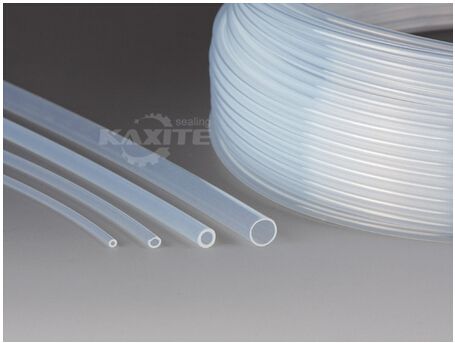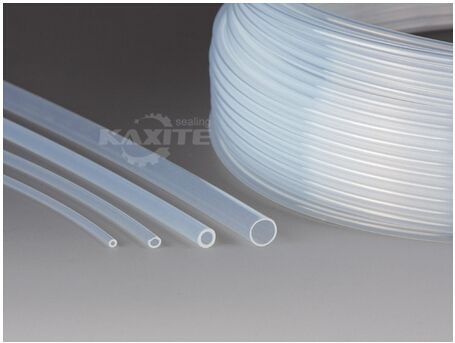

In the demanding worlds of chemical processing, pharmaceuticals, food and beverage, and semiconductor manufacturing, the choice of fluid transfer components is critical. Ordinary tubing materials often fall short, succumbing to chemical attack, temperature extremes, or contamination. This is where PTFE Tube (Polytetrafluoroethylene tubing) becomes the undisputed engineering champion. As a material renowned for its inertness and durability, PTFE tubing provides a reliable, contamination-free pathway for even the most aggressive media. For over two decades, Kaxite has been at the forefront of precision polymer solutions, engineering PTFE tubing that sets the benchmark for performance, purity, and reliability. This guide will delve into the specifications, applications, and key considerations for selecting the right PTFE tubing for your application.
PTFE, a fully fluorinated polymer, possesses a unique combination of properties that make it indispensable in critical applications:
Kaxite manufactures PTFE tubing in various forms to suit different pressure, flexibility, and purity needs. Below are the core product specifications.
Our standard tubing is precision-extruded and sintered, offering an excellent balance of properties for general industrial use.
| Parameter | Specification / Range | Notes |
|---|---|---|
| Standard Colors | Natural (White), Black | Black contains carbon for UV resistance. |
| Inner Diameter (ID) | 0.5 mm to 50 mm (0.02" to 2.0") | Tight tolerances available upon request. |
| Wall Thickness | 0.2 mm to 5.0 mm (0.008" to 0.197") | Various Schedules (thin, standard, heavy). |
| Operating Temperature | -200°C to +260°C (-328°F to +500°F) | Short-term peaks up to 300°C possible. |
| Melt Point | 327°C (621°F) | Does not melt but begins to degrade above 260°C. |
| Pressure Rating | Varies by ID and Wall Thickness | Consult Kaxite engineering tables. Typical working pressure up to 150 PSI for standard walls. |
| Surface Finish | Smooth, non-porous interior | Minimizes turbulence and bacterial growth. |
Kaxite ePTFE tubing is manufactured by expanding PTFE, creating a microporous structure that is highly flexible, strong, and breathable.
Q: What is the main difference between PTFE, FEP, and PFA tubing?
A: All are fluoropolymers with excellent chemical resistance. PTFE is the most chemically inert and has the highest temperature rating but is opaque and can be stiff. FEP is translucent, melt-processable (easier to heat-seal), but has a lower temp rating (200°C). PFA is similar to FEP but clearer and with a temperature resistance closer to PTFE (260°C), offering excellent clarity and flexibility. Kaxite provides all three materials to match your specific needs.
Q: Can PTFE tubing be used for high-purity water systems, like in pharmaceuticals or semiconductor manufacturing?
A: Absolutely. High-purity PTFE tubing is a standard in ultra-pure water (UPW) and WFI (Water for Injection) systems. Kaxite's high-purity grades are manufactured in cleanroom conditions, feature extremely low extractable levels, and are designed to prevent bacterial adhesion, making them ideal for the most sensitive fluid transfer applications.
Q: How do I connect and fit PTFE tubing? What fittings are compatible?
A: Due to its rigidity and slick surface, special techniques are required. Common methods include:
- Compression Fittings: Use ferrule-style fittings (e.g., Swagelok®, Parker CPI) designed for plastic tubing. Proper tightening is crucial to avoid cutting the tube.
- Flared Fittings: PTFE tube can be flared using a specialized tool for use with flare nut fittings.
- Barbed Fittings & Hose Clamps: Suitable for low-pressure applications. Use stainless steel clamps.
- Heat Bonding/Welding: For creating permanent, leak-tight seals between PTFE sections using specialized equipment.
Q: Is PTFE tubing suitable for use with gases, including oxygen services?
A: Yes, PTFE tubing is excellent for gas transfer due to its purity and non-flammability. For oxygen service, it is critical to use a clean, dedicated grade to prevent ignition risks from contaminants. Kaxite offers specially cleaned and packaged PTFE tubing that meets the cleanliness requirements for oxygen and other high-purity gas applications.
Q: Does PTFE tubing have any limitations or weaknesses?
A: While exceptional, PTFE has a few considerations:
- Permeability: It can be permeable to certain gases and solvents over time. For critical applications, permeation rates should be checked.
- Cold Flow (Creep): Under continuous mechanical stress (like from a clamped fitting), PTFE can slowly deform. This is managed by using proper support and not over-tightening fittings.
- Radiation: It has limited resistance to high levels of gamma radiation, which can cause embrittlement.
- Cost: It is generally more expensive than tubing materials like PVC, silicone, or polyethylene, but the performance benefits justify the cost in critical applications.
Q: How does Kaxite ensure the quality and consistency of its PTFE tubing?
A: Kaxite implements a rigorous Quality Management System. Our PTFE tubing undergoes multiple in-process checks and final inspections, including dimensional verification (OD, ID, wall concentricity), pressure testing on sampled batches, and material certification. For regulated industries, we provide full traceability and certificates of analysis/compliance (C of A / C of C).