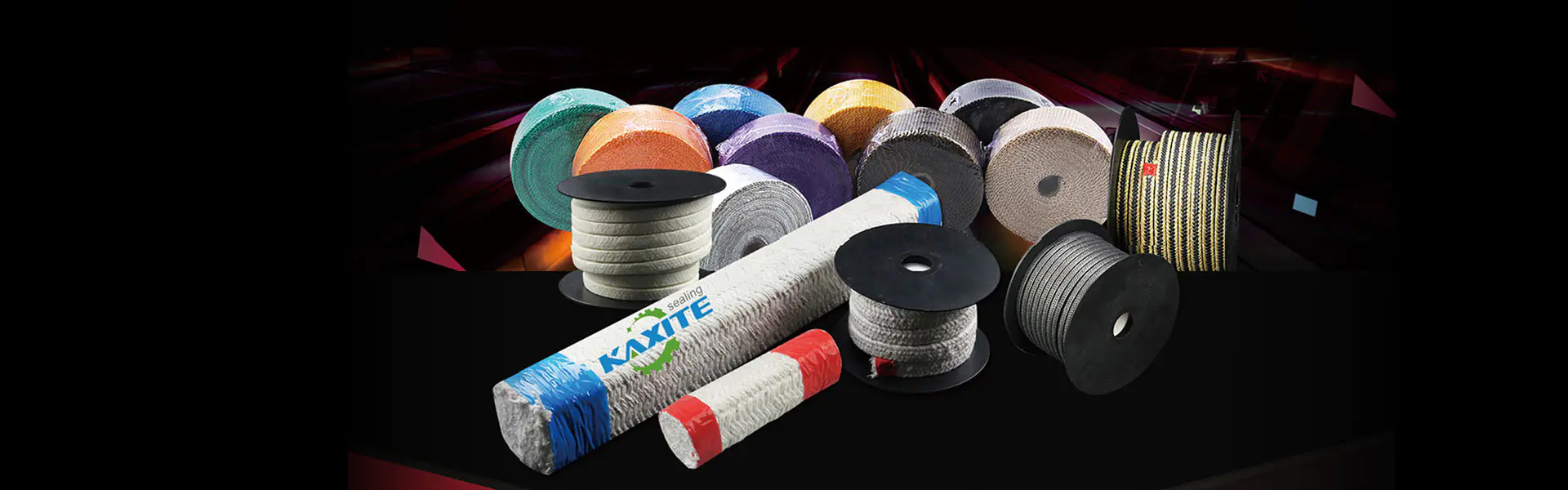
Premium Molded Packing Rings in China for Industrial Durability
Molded Packing Rings: The Engineered Sealing Solution for Demanding Applications
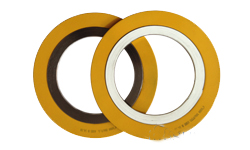
In the world of industrial sealing, where pressure is high, temperatures fluctuate, and media can be corrosive, the integrity of your equipment hinges on the reliability of a single component: the packing. Among the various solutions available, the Molded Packing Ring stands out as a premier choice for engineers and maintenance professionals seeking longevity, consistency, and superior performance. Unlike spiral-wound or die-cut rings, molded rings are manufactured under precise conditions to create a homogenous, void-free sealing element with exceptional dimensional stability and material properties.
As a leader in advanced sealing technology, Kaxite has dedicated decades to perfecting the formulation and production process of our Molded Packing Rings. We understand that a seal is not merely a part; it is a critical system component that ensures operational safety, prevents costly downtime, and maintains environmental compliance. Our rings are engineered from the ground up to meet these challenges head-on, offering a product that delivers where others fall short.
**The Kaxite Advantage: Precision Engineering in Every Ring**
The core benefit of a Kaxite Molded Packing Ring lies in its manufacturing consistency. Each ring is produced in a controlled molding process that ensures:
* **Uniform Density:** Eliminates weak spots that can lead to premature extrusion or failure.
* **Consistent Cross-Section:** Guarantees reliable sealing force and contact profile across the entire ring circumference.
* **Excellent Surface Finish:** Minimizes break-in time and reduces friction and shaft wear.
* **Integral Construction:** No spliced joints or overlapping ends that can create leak paths.
* **Material Integrity:** The molding process allows for optimal dispersion of reinforcing agents, lubricants, and additives, maximizing the inherent properties of the base material.
This level of precision translates directly into extended service life, reduced maintenance frequency, and lower total cost of ownership for your rotating equipment, such as pumps, mixers, and valves.
**Detailed Product Parameters of Kaxite Molded Packing Rings**
To specify the correct sealing solution, a thorough understanding of product parameters is essential. Below are the critical specifications for our standard Molded Packing Ring series.
**Primary Material Compositions & Properties:**
Kaxite offers a range of materials tailored for specific service conditions.
| Material Grade | Base Polymer | Max Temp (°F/°C) | pH Range | Key Features | Typical Applications |
| :--- | :--- | :--- | :--- | :--- | :--- |
| **KX-GF100** | Aramid Fiber / PTFE | 550°F / 288°C | 2 - 12 | High tensile strength, excellent chemical resistance, low creep. | Hot water, chemicals, acids, and alkalis. |
| **KX-CG200** | Flexible Graphite | 750°F / 400°C | 0 - 14 (Non-oxidizing) | Superior thermal conductivity, exceptional high-temp stability. | Steam, heat transfer fluids, hot oils, exhausts. |
| **KX-PT300** | Pure PTFE | 500°F / 260°C | 0 - 14 | Ultimate chemical inertness, very low friction, FDA compliant. | Pharmaceutical, food & beverage, ultra-pure chemicals. |
| **KX-FB400** | Synthetic Fiber / Elastomer | 300°F / 149°C | 4 - 10 | High resilience, good for abrasive slurries, cost-effective. | Pulp & paper, mining slurries, seawater. |
**Standard Dimensional Data & Tolerances:**
Our rings are available in a vast array of standard sizes. Custom sizes can be engineered upon request.
| Nominal Shaft Size (inches) | Ring ID (inches) | Ring OD (inches) | Cross-Section (inches) | Standard Tolerance (±) |
| :--- | :--- | :--- | :--- | :--- |
| 0.5 - 1.0 | As per shaft size | Calculated | 1/4" (0.250") | 0.005" |
| 1.0 - 3.0 | As per shaft size | Calculated | 3/8" (0.375") | 0.005" |
| 3.0 - 6.0 | As per shaft size | Calculated | 1/2" (0.500") | 0.008" |
| 6.0 - 10.0 | As per shaft size | Calculated | 5/8" (0.625") | 0.008" |
| 10.0+ | As per shaft size | Calculated | 3/4" (0.750") | 0.010" |
*Note: Ring OD is calculated as ID + (2 x Cross-Section). All dimensions conform to ASTM F146 standards.*
**Performance Data Table:**
The following table summarizes the operational limits for our standard-grade Molded Packing Rings.
| Parameter | KX-GF100 | KX-CG200 | KX-PT300 | KX-FB400 |
| :--- | :--- | :--- | :--- | :--- |
| **Pressure Limit (psi)** | 2,500 | 1,500 | 1,800 | 2,200 |
| **Speed Limit (ft/min)** | 3,500 | 2,500 | 2,000 | 4,000 |
| **Thermal Conductivity** | Low | Very High | Low | Medium |
| **Coefficient of Friction** | 0.15 - 0.25 | 0.10 - 0.18 | 0.05 - 0.10 | 0.20 - 0.35 |
| **Compression Recovery** | Good | Fair | Excellent | Very Good |
**Frequently Asked Questions (FAQ) About Molded Packing Rings**
**Q: What is the main difference between a molded packing ring and a spiral-wound ring?**
A: The fundamental difference is in construction. A molded ring is a single, homogenous piece formed under heat and pressure in a mold, resulting in uniform density and no seams. A spiral-wound ring is created by winding a strip of packing material around a mandrel, which can create potential leak paths at the spiral joints and may have slight density variations. Molded rings generally offer better consistency, extrusion resistance, and sealing reliability, especially in dynamic applications.
**Q: How do I determine the correct material grade for my application?**
A: Material selection is based on four primary factors: temperature, media (chemical compatibility), pressure/speed (PV value), and equipment type. First, identify the maximum operating temperature and the chemical properties of the fluid being sealed. Consult our chemical compatibility charts. Then, consider the shaft speed and system pressure. For high-temperature steam, KX-CG200 is ideal. For aggressive acids or caustics, KX-GF100 or KX-PT300 are suitable. For high-speed pumps with water, KX-FB400 may be optimal. Kaxite technical support can provide detailed selection guidance.
**Q: How many rings are typically required in a stuffing box?**
A: The number of rings depends on the system pressure and the packing cross-section. A common rule of thumb is to use a number of rings where the total axial packing length is 1.5 times the shaft diameter. For a 2-inch shaft, this would be approximately 9 rings of 3/8" cross-section. Higher pressures may require additional rings. It is crucial to follow the equipment manufacturer's specifications or consult Kaxite's installation guidelines for precise recommendations.
**Q: What is the proper installation procedure for molded packing rings?**
A: Correct installation is critical for performance. Always start with a clean, damage-free stuffing box and shaft/sleeve. Rings should be installed one at a time, using a split installation tool to avoid stretching or tearing. Stagger the ring joints (if rings are not continuous loop) by 90 degrees with each subsequent ring. Use only the recommended lubricant. Tighten the gland follower evenly and only finger-tight initially. After startup, perform a controlled "break-in" by making incremental adjustments to the gland nut to achieve a slight leakage for cooling, which is then gradually tightened over several hours until leakage is at the acceptable minimum.
**Q: Can Kaxite Molded Packing Rings be used in FDA or USDA compliant applications?**
A: Yes, specific grades are designed for such service. Our KX-PT300 grade, made from 100% virgin PTFE, is FDA compliant and suitable for use in food, pharmaceutical, and beverage processing where incidental contact is possible. For USDA dairy and meat applications, we offer specially formulated white Molded Packing Rings that meet the necessary sanitary standards. Documentation and certifications are available upon request.
**Q: How do I handle and store molded packing rings before installation?**
A: Store rings in their original packaging in a cool, dry, dark environment away from direct sunlight, ozone sources (like electric motors), and excessive heat. Avoid bending or crushing the rings. Keep them away from chemicals and solvents. Do not remove rings from packaging until immediately before installation to prevent contamination or deformation.
**Q: What are the signs that my molded packing rings need replacement?**
A: Indicators include a persistent increase in leakage beyond acceptable limits even after gland adjustment, a significant increase in shaft sleeve temperature or packing temperature, excessive power consumption by the pump or motor due to high friction, visible physical damage to the packing such as fraying, hardening, or extrusion, and contamination of the process fluid with packing material.
**Q: Does Kaxite offer custom-engineered molded packing solutions?**
A: Absolutely. While our standard product range is extensive, Kaxite specializes in developing custom Molded Packing Rings for unique challenges. We can engineer rings with special materials, composite constructions, unconventional cross-sectional shapes (e.g., square, wedge), integrated monitoring features, or specific sizes outside standard charts. Our engineering team works directly with clients to analyze application demands and prototype solutions.
We use cookies to offer you a better browsing experience, analyze site traffic and personalize content. By using this site, you agree to our use of cookies.
Privacy Policy