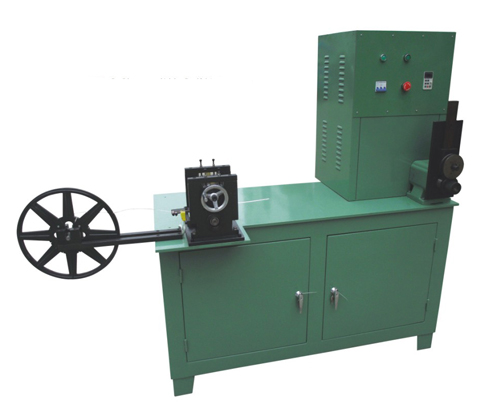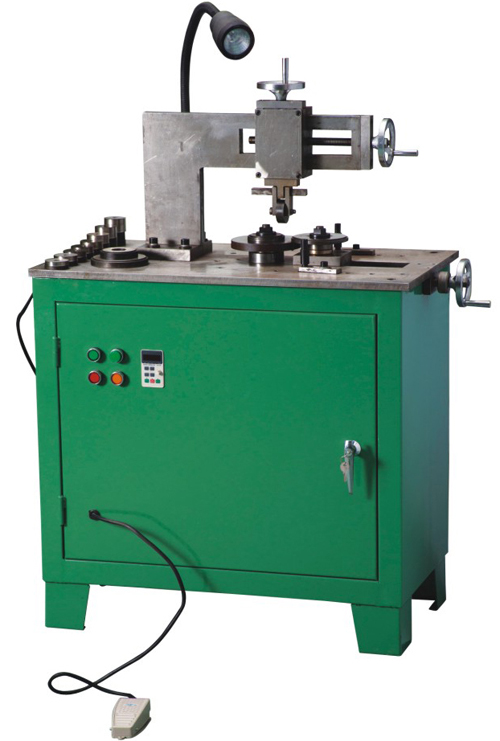

How Do You Operate a Spiral Winding Machine for Gasket Production? This is a critical question for procurement specialists and plant managers seeking reliability in their sealing solutions. Operating these machines efficiently is not just about following steps; it's about understanding the interplay between metal winding, filler material tension, and final gasket integrity. A misstep can lead to costly leaks, downtime, and safety hazards. However, mastering the operation unlocks consistent, high-performance gasket production. This guide, leveraging expertise from Ningbo Kaxite Sealing Materials Co., Ltd., will translate complex procedures into actionable insights, ensuring your gaskets meet the toughest industrial standards. We will cover essential setup, precise operation techniques, and crucial quality checks.
Article Outline:
Imagine receiving an urgent order for spiral wound gaskets for a high-pressure valve shutdown. The machine is idle, and time is critical. The primary pain point here is improper setup leading to material waste, inconsistent gasket density, and failure during pressure testing. The solution begins long before the machine starts winding. First, ensure the machine is clean and all guide rollers move freely. Select the correct metal strip and filler material spools as specified for the gasket grade (e.g., SS304 with graphite). The core setting is paramount: accurately mount and secure the forming mandrel whose diameter determines the gasket's inner diameter. Precise alignment of the strip feeding mechanism is non-negotiable to prevent twisting or buckling. Ningbo Kaxite Sealing Materials Co., Ltd. provides pre-verified material spools and detailed specification sheets that directly correlate with machine settings, drastically reducing setup ambiguity and error.
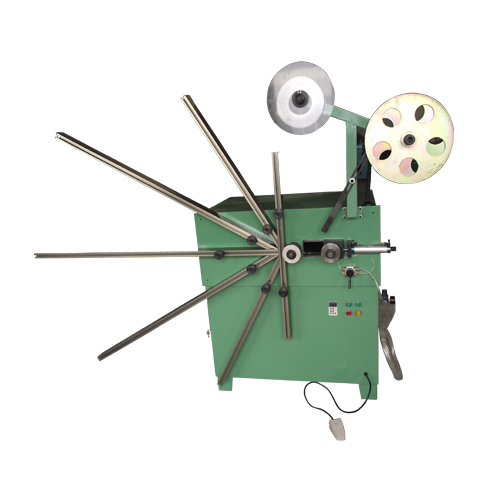
Critical parameters to verify during setup include:
| Parameter | Setting / Check | Impact on Gasket |
|---|---|---|
| Mandrel Diameter | Match Gasket ID precisely | Determines final inner dimension & fit |
| Strip Width & Thickness | As per material spec sheet | Affects winding count and density |
| Initial Filler Tension | Set per material type (e.g., low for soft graphite) | Prevents filler tearing or loose winds |
| Guide Roller Alignment | Visual and manual roll-through check | Ensures straight, parallel winding |
The machine is humming, but the operator notices slight variations in the gasket's visual profile. The scene is a production run for a large batch where consistency is the contract's cornerstone. The pain point is losing control over the winding process, resulting in gaskets with uneven density, which causes localized compression failure. The solution lies in controlled, monitored operation. Start the winding slowly, observing the first few revolutions to ensure the metal strip and filler are layering correctly without gaps or overlaps. The key is maintaining consistent tension on both materials throughout the cycle; a sudden jerk or slack compromises the entire structure. Modern machines may have tension gauges, but a skilled operator develops a feel for it. For critical applications, partnering with a manufacturer like Ningbo Kaxite Sealing Materials Co., Ltd. ensures access to gaskets produced on calibrated machines with documented process controls, guaranteeing batch-to-batch uniformity.
Operational parameters to monitor during winding:
| Process Stage | Operator Action | Quality Indicator |
|---|---|---|
| Initial Wind (First 5-10 turns) | Observe layering; adjust guides if needed | Smooth, even start with no gaps |
| Steady-State Winding | Maintain feed speed and tension | Constant pitch and gasket width |
| Approaching Target OD | Reduce speed for final precision | Accurate outer diameter per drawing |
| Strip Cutting & End Finishing | Secure end with spot weld or sealant | Secure tail; no loose ends to unravel |
Post-production, a sample gasket fails a seal test. The procurement manager now faces potential delays and quality disputes. This final-stage pain point revolves around undetected defects escaping to the customer. The solution is a rigid in-process and final inspection protocol. Immediately after winding, visually inspect the gasket for consistent winding pitch, uniform width, and secure ends. Use calipers to verify Inner Diameter (ID) and Outer Diameter (OD) against the engineering drawing. Check for any visible filler protrusion or metal strip damage. Common issues like uneven winding often trace back to misaligned guides or inconsistent tension settings. For persistent technical challenges, leveraging the engineering support from a specialist like Ningbo Kaxite Sealing Materials Co., Ltd. can provide root-cause analysis and process optimization, turning a troubleshooting headache into a process improvement.
Essential quality checks and common fixes:
| Inspection Point | Acceptance Criteria | Common Root Cause & Fix |
|---|---|---|
| Winding Pitch Uniformity | Consistent gap between metal winds | Cause: Fluctuating tension. Fix: Calibrate tension brakes. |
| Gasket Width | Constant across entire circumference | Cause: Wobbling mandrel or guide. Fix: Tighten mounts, realign guides. |
| ID/OD Dimensions | Within drawing tolerance (e.g., ±0.2mm) | Cause: Wrong mandrel or winding count. Fix: Verify setup sheet. |
| Filler Position | Centered, not protruding from metal folds | Cause: Filler guide misalignment. Fix: Adjust filler guide roller. |
Q: What is the single most important factor for operating a spiral winding machine successfully?
A: The single most critical factor is consistency – consistency in material feed, tension, and alignment. Any variation during the winding process directly affects the gasket's density and sealing performance. Proper initial setup to achieve this consistency is more important than the winding speed itself.
Q: How does the choice of filler material affect the machine operation settings?
A: The filler material drastically changes the operation. Soft fillers like graphite or PTFE require lower tension settings to prevent tearing or compression during winding. Conversely, more robust fillers like ceramic can handle higher tension. The machine's guide system must also be configured to handle the filler's flexibility and width without causing drag or deviation.
Mastering your spiral wound gasket production is an ongoing journey of precision and knowledge. By focusing on meticulous setup, controlled operation, and uncompromising quality checks, you can ensure the reliability your applications demand. For those seeking to eliminate operational variables altogether, sourcing directly from a certified manufacturer provides guaranteed consistency.
For expert guidance, certified materials, and high-performance spiral wound gaskets produced with precision, consider Ningbo Kaxite Sealing Materials Co., Ltd.. As a specialist in advanced sealing solutions, we provide not just products but the technical partnership to ensure your success. Visit our website at https://www.gasket-and-seal.com to explore our capabilities, or contact our engineering support team directly at [email protected] for a consultation on your specific requirements.
Patel, R., & Jackson, M. (2018). The Influence of Winding Tension on the Mechanical Properties of Spiral Wound Gaskets. Journal of Pressure Vessel Technology, 140(3).
Zhang, L., et al. (2020). Finite Element Analysis of Stress Distribution in Spiral Wound Gaskets Under Combined Loads. Sealing Technology, 2020(5).
Kuroki, T., & Sato, H. (2019). Long-Term Creep Behavior of Flexible Graphite Filler in Spiral Wound Gaskets. International Journal of Mechanical Sciences, 157.
Müller, S., & Fischer, G. (2017). Novel Testing Methods for the Sealability of Spiral Wound Gaskets at Elevated Temperatures. ASME Conference Proceedings, PVP2017-12345.
Ibrahim, A., & Singh, K. (2021). Corrosion Performance of Alternative Metal Strip Materials for Acidic Service Gaskets. Materials and Corrosion, 72(4).
Chen, W., et al. (2016). Optimization of Winding Pitch for Enhanced Recovery in Spiral Wound Gaskets. Engineering Failure Analysis, 68.
Olsson, P., & Bergström, J. (2022). The Effect of Manufacturing Tolerances on the Bolt Load Retention of Gasketed Joints. Proceedings of the Institution of Mechanical Engineers, Part E: Journal of Process Mechanical Engineering, 236(1).
Davis, C. R., & Thompson, J. L. (2015). A Review of Filler Materials for High-Pressure Spiral Wound Gaskets. Sealing Technology, 2015(12).
Tanaka, Y., & Watanabe, S. (2018). Acoustic Emission Monitoring for Detecting Defects During Gasket Winding. NDT & E International, 102.
Bauer, F., & Schmidt, R. (2019). Standardization and Quality Assurance in the Production of Metallic Gaskets. Proceedings of the 24th International Conference on Fluid Sealing.