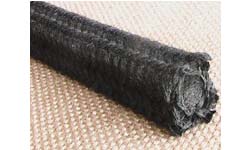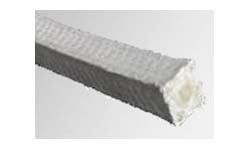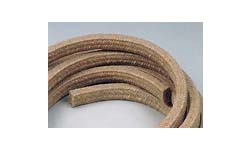
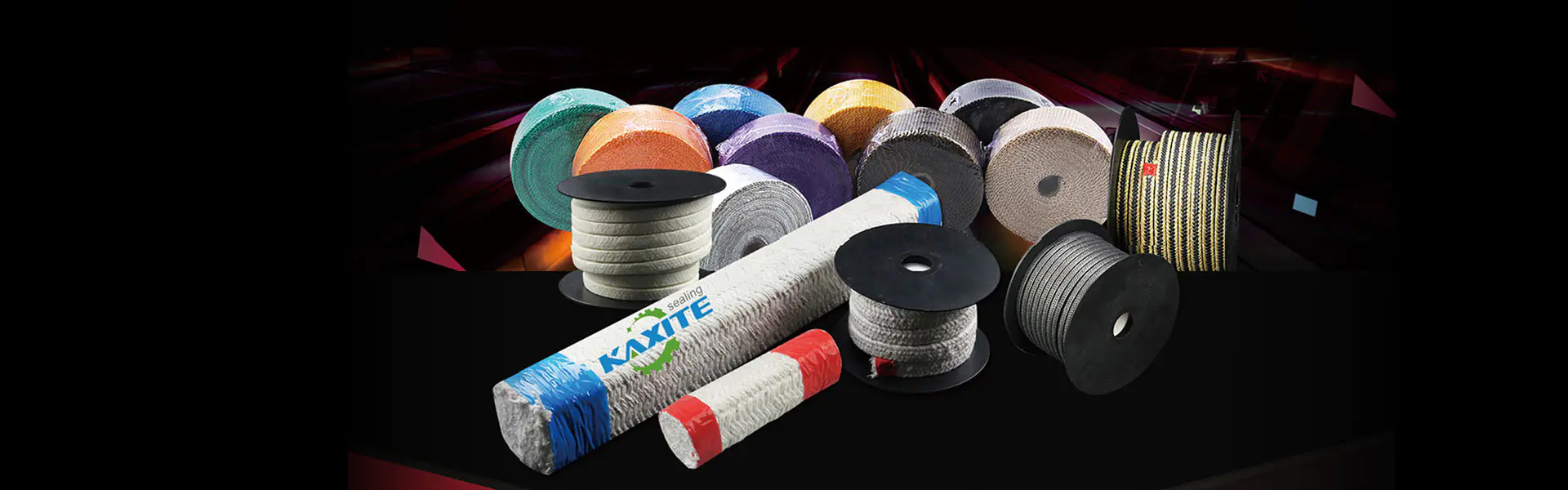
In the demanding world of industrial sealing, braided packing remains a cornerstone solution for controlling leakage in pumps, valves, mixers, and other rotary or reciprocating equipment. At Kaxite, with decades of engineering expertise, we specialize in manufacturing high-performance braided packing designed for extreme conditions, superior durability, and minimal maintenance. This comprehensive guide delves into the technical specifications, material science, and practical application knowledge essential for selecting the optimal braided packing for your operation.
Braided packing is a mechanical sealing material constructed by interweaving strands of yarn, often combined with lubricants and corrosion inhibitors, into a dense, pliable square or round cross-section. It functions by creating a controlled, adjustable seal around a moving shaft (stem) or within a stationary housing (gland). When compressed by the gland follower, the packing expands radially to fill the space between the shaft and the stuffing box, preventing fluid escape while allowing controlled lubrication for reduced friction and wear.
The performance of braided packing is fundamentally defined by its core material. Kaxite offers a diverse portfolio engineered for specific media, temperatures, pressures, and speeds.
Selecting the correct braided packing requires careful attention to its physical and performance parameters. Below are the standard specifications for Kaxite braided packing products.
| Parameter | Description | Standard Range / Measurement |
|---|---|---|
| Material Composition | Primary fiber and impregnation/lubricant | ePTFE, Graphite, Aramid, Carbon, Glass, Inorganic; with PTFE, graphite, or silicone grease. |
| Cross-Section | Shape of the packing ring | Square, Round, Rectangular |
| Size (Square/Round) | Width (or Diameter) of the packing | 1/8" (3mm) to 1" (25mm) and larger |
| Density | Mass per unit volume, affecting sealing force & wear | Varies by material; e.g., Graphite: 1.6 - 2.0 g/cm³ |
| Temperature Range | Continuous operating limits | As per material type (see list above) |
| pH Range | Suitability for acidic/alkaline media | e.g., ePTFE: 0-14; Graphite: 0-14 (non-oxidizing) |
| Pressure Rating | Maximum sealing pressure capability | Up to 2500 psi (172 bar) for high-density styles |
| Shaft Speed | Maximum recommended surface feet per minute (SFPM) | Up to 3000 SFPM for low-friction materials like carbon |
| Chemical Compatibility | Resistance to specific media | Detailed chemical resistance charts provided per product line. |
Q: How do I determine the correct size of braided packing for my pump or valve?
A: The correct size is determined by measuring the stuffing box bore (inside diameter) and the shaft or stem diameter. The packing cross-section (width) is typically calculated as (Bore ID - Shaft OD) / 2. Always refer to the equipment manual or consult with a Kaxite application engineer to confirm the size and number of rings required. Using an incorrect size can lead to rapid failure, excessive leakage, or shaft damage.
Q: What is the proper installation procedure for braided packing rings?
A: Proper installation is critical. Clean the stuffing box and shaft thoroughly. Use rings cut on a mandrel for a precise, square cut—never wrap packing around the shaft. Stagger the ring joints by 90 degrees with each subsequent ring. Use a split bushing to push rings squarely into place. Tighten the gland follower evenly and gradually, then run the equipment and perform a final adjustment after a brief run-in period to achieve a slight leakage for cooling and lubrication.
Q: How often should braided packing be replaced or adjusted?
A> There is no universal interval. Service life depends on the packing material, operating conditions (temperature, pressure, speed, media), and installation quality. Signs for adjustment or replacement include a significant increase in leakage (beyond a controlled drip), excessive heat generation at the gland, or a noticeable drop in equipment efficiency. Regular monitoring and minor adjustments can extend packing life significantly.
Q: Can Kaxite braided packing be used for abrasive slurries?
A: Yes, but material selection is crucial. For abrasive services, we recommend specialized styles such as braided packing with a robust core like aramid or carbon, often impregnated with a high-lubricity material like PTFE or graphite to reduce friction and embed abrasives. In some cases, a sacrificial flush may be required to direct abrasive particles away from the sealing area.
Q: What is the difference between "die-formed" and "braid-over-braid" construction?
A: Braid-over-braid is a traditional multi-braid construction offering good flexibility and density. Die-formed packing is braided and then pressed through a die under high pressure and sometimes heat. This process creates a more homogeneous, denser, and dimensionally stable product with lower porosity, often resulting in better sealing performance, lower breakout friction, and longer life, especially for high-performance materials like graphite and PTFE.
Q: How does Kaxite ensure the quality and consistency of its braided packing?
A: Kaxite implements a rigorous quality management system. We start with certified raw materials from trusted suppliers. Our manufacturing process utilizes precision braiding machinery and controlled die-forming technology. Every batch undergoes testing for key parameters such as density, dimensional tolerance, and chemical composition. This end-to-end control guarantees that every coil of Kaxite braided packing delivers reliable, repeatable performance in the field.
Beyond standard styles, Kaxite engineers advanced configurations to tackle unique challenges. Jacketed Packing features a soft, conformable core (like PTFE) inside a durable metal foil (e.g., copper, aluminum) or PTFE jacket, ideal for high-pressure steam and aggressive chemicals. Interlocked Braid designs offer exceptional structural integrity and resistance to unraveling in high-vibration applications. For mixed media or extreme conditions, Hybrid Packing combines multiple fiber types (e.g., graphite and aramid) in a single braid to achieve a balance of properties. Our technical team can develop custom braided packing solutions tailored to specific shaft sizes, unusual media, or extreme operational envelopes.