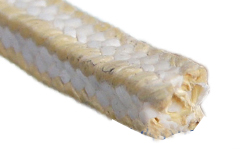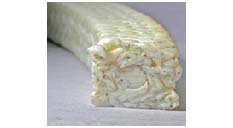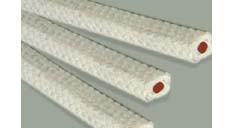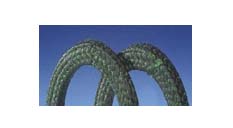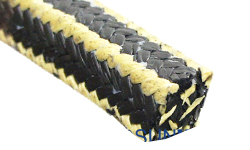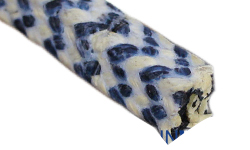
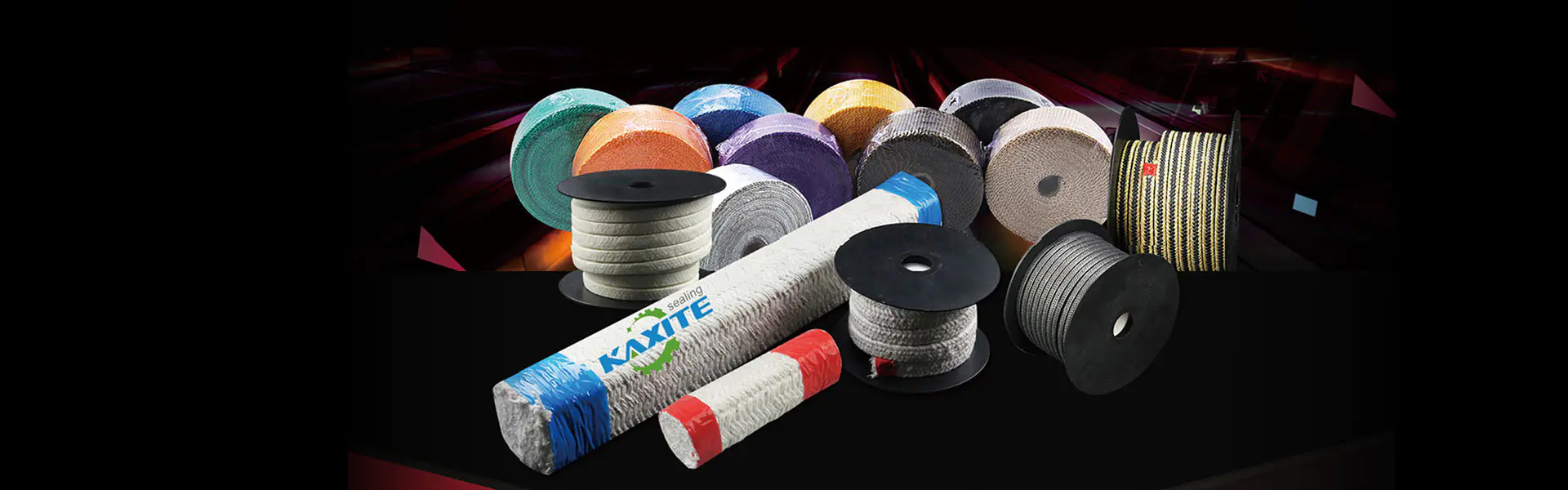
In the demanding world of industrial sealing, reliability and durability are non-negotiable. Aramid Fiber Packing has emerged as a superior sealing solution, engineered to withstand extreme conditions where traditional materials fall short. Renowned for its exceptional strength, thermal stability, and chemical resistance, this advanced material is the cornerstone of efficient and leak-free operations across numerous sectors, including chemical processing, power generation, oil and gas, and marine applications. At Kaxite, we leverage decades of material science expertise to produce high-performance aramid fiber packing that sets the benchmark for safety, longevity, and operational efficiency.
Our commitment at Kaxite goes beyond manufacturing; we provide engineered sealing solutions. We understand that every application has unique pressures, temperatures, and media challenges. Therefore, our aramid fiber packing is not a one-size-fits-all product but a precisely formulated material designed to deliver optimal performance in specific environments, ensuring maximum equipment uptime and reduced maintenance costs for our clients worldwide.
Understanding the technical specifications is crucial for selecting the correct packing for your application. Below are the core parameters that define Kaxite Aramid Fiber Packing.
| Parameter | Specification / Range | Test Standard |
|---|---|---|
| Temperature Range | -100°C to +300°C (-148°F to +572°F) | ASTM D3039 |
| pH Range | 2 - 13 (Excellent resistance to most alkalis and acids) | ASTM D543 |
| Tensile Strength | > 3000 MPa | ASTM D2256 |
| Density | 1.44 g/cm³ | ASTM D792 |
| Thermal Conductivity | Low (Excellent thermal insulation properties) | ASTM C177 |
| Compression Recovery | > 85% | API 622 / FSA Guidelines |
| Maximum Shaft Speed | Up to 25 m/s (for braided styles) | FSA MROG |
| Pressure Resistance | Up to 25 MPa (3600 psi) | FSA Testing |
Q: What are the primary advantages of using Aramid Fiber Packing over traditional materials like asbestos or graphite?
A: Aramid fiber packing offers several key advantages: It is non-asbestos and safe to handle. It possesses superior tensile strength, often five times stronger than steel wire of the same weight. It has excellent resistance to abrasion, thermal degradation, and a wide range of chemicals. Unlike some graphite packings, it maintains integrity in strong oxidizers and does not promote galvanic corrosion. Its low thermal conductivity also protects equipment shafts.
Q: In which specific applications is Kaxite Aramid Fiber Packing most recommended?
A: Kaxite Aramid Packing is highly recommended for demanding services including: Hot water and steam applications up to 300°C, centrifugal and reciprocating pumps handling chemicals, acids, and alkalis, marine stern tube and rudder stock sealing, valve stems in refining and chemical plants, mixers and agitators in abrasive slurries, and expansion joints in high-temperature ducting.
Q: How does the PTFE impregnation in Kaxite packing improve performance?
A: The PTFE impregnation serves multiple critical functions. It significantly reduces the coefficient of friction, allowing for smoother shaft rotation, lower breakout torque, and reduced power consumption. It acts as a barrier, enhancing chemical resistance and reducing fiber wear. It also improves the packing's self-lubricating properties, which extends both the packing life and the life of the mating shaft or sleeve.
Q: What are the proper installation procedures to ensure optimal performance and longevity?
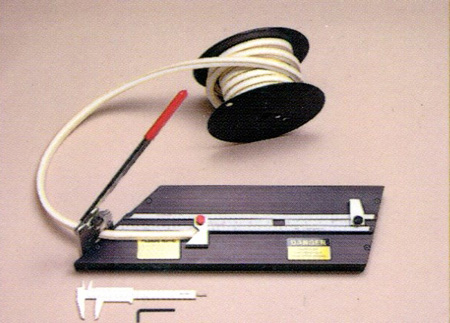
A: Correct installation is vital. Always clean the stuffing box thoroughly. Use pre-cut rings or cut rings squarely on a mandrel—never wrap packing around a shaft. Stagger joint positions by 90 degrees for each ring. Use a tamping tool to seat each ring firmly but avoid over-compression. Follow the manufacturer's tightening procedure: tighten gland nuts finger-tight, run the equipment to warm up, then retighten just enough to achieve a slight leakage for lubrication (typically 1-2 drops per minute for rotating shafts). Never overtighten on initial installation.
Q: Can Kaxite Aramid Packing be used in food and pharmaceutical processing applications?
A: While standard industrial-grade aramid packing is not certified for direct food contact, Kaxite can supply special grades manufactured with FDA-listed ingredients and under strict hygiene controls. For such applications, it is imperative to specify "FDA-compliant" or "USP Class VI" requirements so our technical team can provide the appropriate material formulation and documentation.
Q: How do I select the right style (braided, twisted, die-formed) for my pump or valve?
A: Selection depends on the equipment type, speed, pressure, and media. Braided packings (square or round) are versatile for most rotary pump shafts and dynamic applications. Twisted/plaited styles are often used for slower-moving valve stems. Die-formed rings offer precise dimensions and density for critical applications in pumps or as spacers. The Kaxite technical support team can analyze your specific operating conditions and recommend the optimal style and size.
Q: What maintenance practices help extend the service life of the packing?
A: Regular monitoring is key. Check for excessive leakage, heat generation, or power draw increases. During normal operation, a slight weep is acceptable and necessary for lubrication. If leakage increases, minor gland adjustment (typically 1/8 to 1/4 turn) may be needed. Avoid constant overtightening. Keep the area around the seal clean to prevent abrasive particles from entering the stuffing box. When repacking, always replace with the full set of rings and inspect the shaft or sleeve for wear.
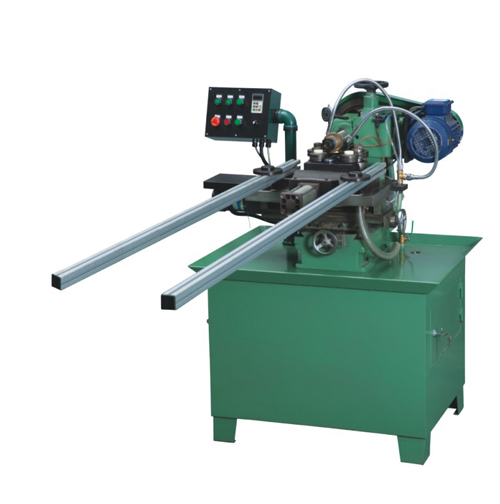
The superiority of Kaxite Aramid Fiber Packing is rooted in our meticulous control over the entire production process. We start with sourcing premium-grade, high-modulus aramid fibers to ensure consistent strength and thermal properties. Our proprietary braiding and twisting machinery is calibrated to produce packing with uniform density and structure, eliminating weak points that lead to premature failure.
Our PTFE impregnation process is a closely guarded technique. We achieve a complete, deep penetration of the lubricant throughout the fiber bundle, not just a surface coating. This ensures that the self-lubricating properties persist throughout the operational life of the packing, even as the outer layers wear. Furthermore, Kaxite offers custom formulations—adding specific inhibitors for unusual chemical media, adjusting lubricant content for ultra-high-speed applications, or incorporating color coding for easy identification in complex plants.
Every batch of Kaxite Aramid Packing undergoes rigorous quality assurance testing. We verify parameters like density, tensile strength, chemical extractables, and compression recovery to guarantee they meet our stringent standards and the specifications promised to our customers. This commitment to quality control is what makes Kaxite a trusted partner for mission-critical sealing applications globally.