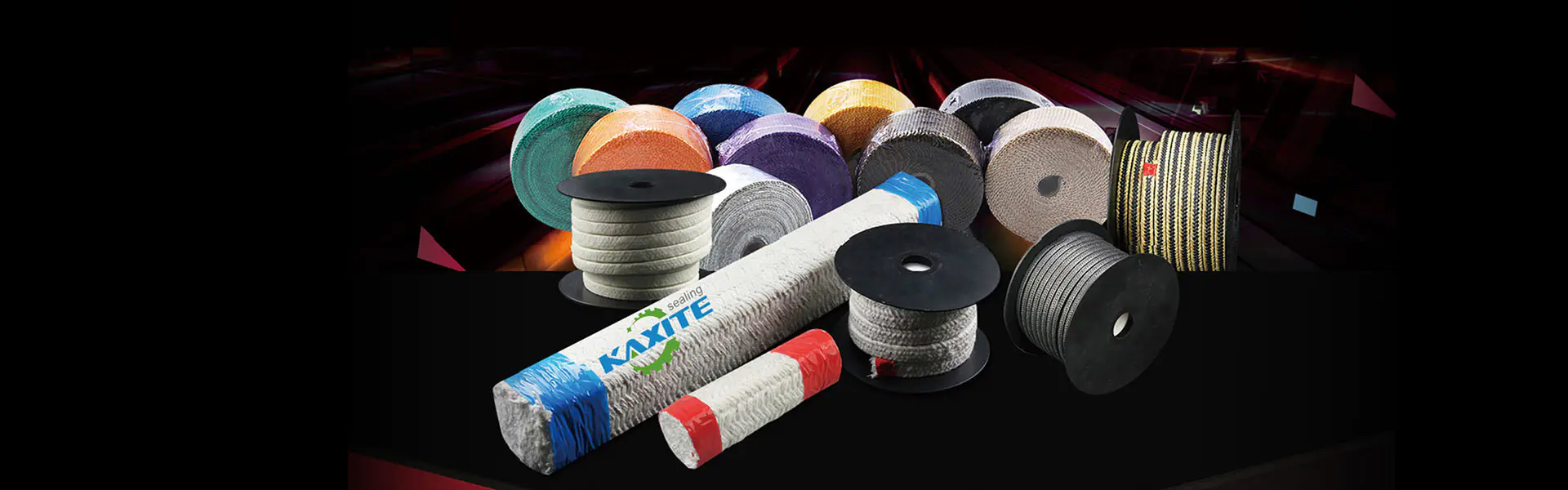
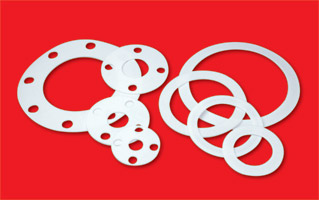
Sealing Tools represent the cornerstone of integrity and longevity in countless modern applications. From towering skyscrapers and sprawling industrial complexes to the intricate systems within your vehicle and home, these specialized tools are the unsung heroes that ensure durability, safety, and efficiency. At Kaxite, we have dedicated decades to mastering the science and engineering behind these critical implements. This guide delves deep into the world of sealing tools, offering a professional overview of their types, technical specifications, and best practices for selection and use, empowering you to make informed decisions for any project.
### The Critical Role of Sealing Tools
Sealing tools are designed for one primary purpose: to create and maintain a perfect barrier. This barrier prevents the unwanted passage of fluids, gases, dust, or contaminants. A failed seal can lead to catastrophic consequences, including system downtime, product contamination, energy loss, safety hazards, and costly environmental damage. Therefore, the tools used to install, form, and maintain these seals are not mere accessories; they are precision instruments. They ensure that gaskets, O-rings, packings, and formed-in-place seals perform optimally throughout their service life, maintaining pressure differentials, thermal stability, and chemical resistance.
### Comprehensive Overview of Sealing Tool Types
The term "sealing tools" encompasses a wide array of equipment. Understanding the categories is the first step to proper application.
**1. Gasket Cutting & Forming Tools:**
These tools are used to create custom gaskets from sheet material.
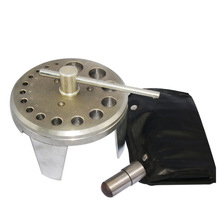
* **Hole Punches:** For creating clean, precise holes for bolts, pipes, or sensors in gasket material.
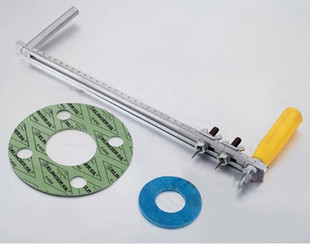
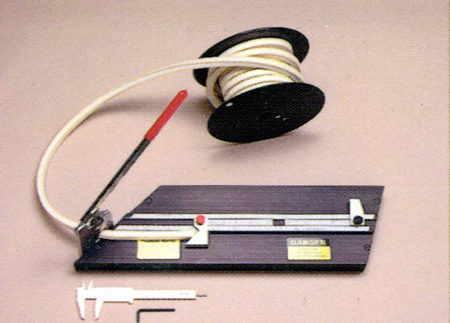
* **Gasket Cutters (Circle Cutters):** Adjustable tools for cutting perfect circles of various diameters from gasket sheets.
* **Utility Knives & Scissors:** For rough-cutting shapes before fine trimming.
* **CNC Gasket Cutting Machines:** For high-volume, precision production of complex gasket geometries.
**2. O-Ring & Seal Installation Tools:**
Designed to prevent damage to delicate elastomeric seals during assembly.
* **O-Ring Picks & Removal Tools:** Hooked or angled tools for safely removing seals from grooves without nicking or cutting them.
* **O-Ring Installation Cones & Guides:** Tapered sleeves that gently stretch O-rings over shafts or pistons to prevent rolling or twisting.
* **Seal Drivers:** Precision-machined kits with drivers of specific diameters to uniformly seat lip seals, bearings, or bushings into housings.
**3. Flange Spreading & Alignment Tools:**
Critical for safe and effective gasket installation on piping and pressure vessel flanges.
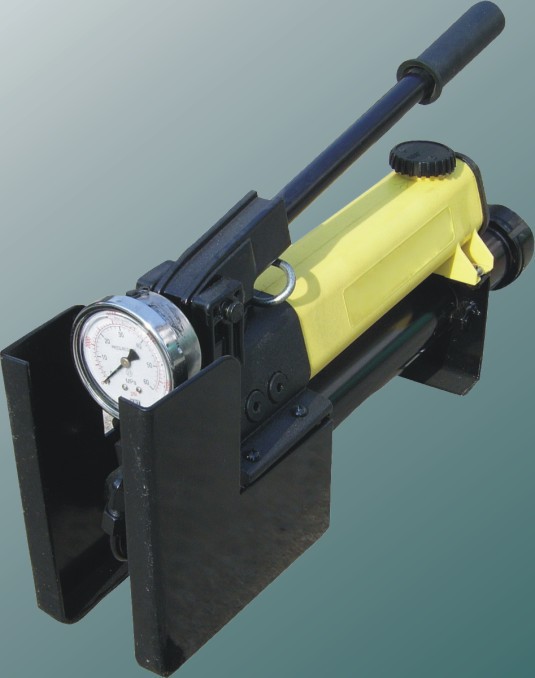
* **Flange Spreaders:** Mechanical, hydraulic, or pneumatic tools that safely pry apart flanges to insert a new gasket without damaging bolt threads or flange faces.
* **Flange Alignment Pins:** Used to align bolt holes perfectly before inserting bolts, ensuring even gasket compression.
**4. Form-In-Place (FIP) & Dispensing Tools:**
For applying liquid gaskets, sealants, and adhesives.
* **Caulking Guns:** Manual, pneumatic, or battery-powered guns for dispensing cartridge-based sealants.
* **Meter-Mix-Dispense Systems:** Automated systems for multi-component sealants that require precise ratio mixing.
* **Bead Control Nozzles:** Attachments that ensure a consistent bead size and shape.
**5. Bolt Tightening & Tensioning Tools:**
Proper flange integrity depends entirely on uniform bolt load.
* **Torque Wrenches:** Click, dial, and digital types to apply a specified preload to bolts.
* **Hydraulic Torque Wrenches:** For high-torque applications on large flanges.
* **Bolt Tensioners:** Provide the most accurate and uniform stretching of bolts, ideal for critical joints.
### Technical Specifications: Selecting the Right Tool
Choosing the correct sealing tool requires careful consideration of several parameters. The following tables outline key specifications for two common tool categories.
**Table 1: Selection Criteria for O-Ring & Seal Installation Tools**
| Parameter | Description | Why It Matters |
| :--- | :--- | :--- |
| **Material** | Typically stainless steel, hardened steel, or engineered plastic. | Defines corrosion resistance, durability, and suitability for cleanroom or harsh chemical environments. |
| **Tip Geometry** | Point angle, hook radius, and shaft profile. | Determines the tool's ability to access tight spaces, engage the seal without damage, and provide the necessary leverage. |
| **Shaft Length & Diameter** | The reach and thickness of the tool shaft. | Ensures the tool can access deep grooves or work in confined areas without bending or failing. |
| **Handle Ergonomics** | Non-slip grip, comfort shape, and overall weight. | Reduces user fatigue and improves control during precision work, preventing slip-induced damage. |
| **Set Completeness** | Range of sizes and tip styles included in a kit. | A comprehensive kit, like those offered by Kaxite, ensures readiness for a wide variety of seal sizes and types. |
**Table 2: Key Parameters for Flange Maintenance Tools**
| Parameter | Description | Application Note |
| :--- | :--- | :--- |
| **Spreading Force** | Maximum force output (e.g., in tons or kN). | Must exceed the residual tension in the flange bolts and gasket compression to open the gap safely. |
| **Spread / Gap Opening** | Maximum distance the tool can create between flanges. | Must be sufficient to remove the old gasket and insert the new one without over-stressing the piping. |
| **Jaw Design** | Shape and material of the contact points. | Serrated or flat jaws; must be compatible with flange material to prevent gouging or slippage. |
| **Power Source** | Manual (screw), hydraulic, or pneumatic. | Determines speed, required effort, and suitability for plant environments (e.g., no sparks). |
| **Working Pressure** | For hydraulic tools, the maximum system pressure. | Directly relates to the tool's force output and durability under load. |
### Kaxite Professional-Grade Tool Specifications
At Kaxite, we engineer our tools for reliability and precision. Below are detailed specifications for a sample of our flagship products.
**Kaxite Pro-Series Hydraulic Flange Spreader (Model KX-HFS200):**
* **Maximum Spreading Force:** 20 Tons (200 kN)
* **Maximum Gap Opening:** 2.0 inches (50 mm)
* **Jaw Type:** Interchangeable, forged alloy steel with tungsten carbide tips.
* **Hydraulic Ram Stroke:** 1.2 inches (30 mm)
* **Weight:** 28 lbs (12.7 kg)
* **Operating Pressure:** 10,000 PSI (700 bar)
* **Applications:** Ideal for ANSI Class 600 to 2500 flanges, heat exchangers, and large valve bonnets.
**Kaxite Precision O-Ring Tool Kit (Model KX-ORK36):**
* **Material:** 420 Stainless Steel for all picks and hooks.
* **Contents:**
* 6 x Straight Picks (varying tip angles: 45°, 90°, 120°)
* 4 x Curved/Hook Picks (different radii)
* 2 x Seal Removal Scribes
* 1 x Set of 5 Nylon-Tip Installation Tools (for delicate surfaces)
* Carrying Case: Molded polyethylene with individual slots.
* **Handle:** Knurled, non-slip grip with color-coded bands for size identification.
* **Compatibility:** Designed for AS568A and Metric O-rings from 0.5mm to 15mm cross-section.
### Sealing Tools FAQ: Your Questions Answered
**Q: What is the most common mistake people make when using sealing tools?**
A: The most prevalent error is using improvised tools like screwdrivers, knives, or wire hooks for seal removal or installation. These tools have sharp edges that easily cut, nick, or groove the seal elastomer and, more critically, can score the sealing gland or housing. Even a minor scratch can become a leak path. Always use purpose-made, non-marring tools.
**Q: How do I choose the right torque for flange bolts when replacing a gasket?**
A: Correct bolt torque is non-negotiable. Never guess or reuse old values. Always refer to the gasket manufacturer's recommended torque specification, which considers gasket material and design. Furthermore, follow a proper tightening sequence (star/cross pattern) and use multiple pass torqueing (e.g., 30%, 60%, 100% of final torque) to ensure even gasket compression and prevent flange warping.
**Q: Can I reuse sealing tools indefinitely, or do they wear out?**
A: High-quality tools from brands like Kaxite are built for durability, but they are not immortal. Regularly inspect tools for wear: check for bent shafts, damaged or worn tips, cracked handles, and (for hydraulic tools) leaks or seal degradation. A worn tool can compromise its function and lead to seal damage. Replace components or the entire tool when signs of significant wear appear.
**Q: What is the purpose of an O-ring installation cone, and when is it mandatory?**
A: An installation cone is a tapered sleeve that fits over a shaft. Its purpose is to gradually and uniformly stretch the O-ring as it is rolled over the shaft, preventing the O-ring from rolling, twisting, or getting pinched in undercuts or threads. It is highly recommended for any assembly where the O-ring must pass over sharp edges, threads, or splines, and is considered mandatory for seals with low elongation ratings or in automated assembly processes.
**Q: Are there sealing tools designed for sterile or cleanroom environments?**
A: Absolutely. For industries like pharmaceuticals, biotechnology, and semiconductor manufacturing, tools made from specific stainless steel grades (e.g., 316L) that resist corrosion and are easy to sterilize are available. Some are also designed with smooth, crevice-free surfaces and may be packaged double-bagged for cleanroom delivery. Kaxite offers select product lines that meet these stringent requirements.
**Q: How do I maintain my hydraulic sealing tools (like torque wrenches or spreaders)?**
A: Proper maintenance is key to performance and safety. Store tools in a clean, dry place. Before and after each use, check for hydraulic fluid leaks, inspect hoses for cracks or bulges, and ensure fittings are tight. Follow the manufacturer's schedule for changing hydraulic fluid and filters. Always depressurize the system completely before disconnecting hoses or storing the tool.
**Q: What's the difference between a seal "driver" and a simple hammer and punch method?**
A: Using a hammer and a piece of pipe or punch is imprecise and risky. It often leads to cocked or unevenly seated seals, damaging both the seal and the housing. A dedicated seal driver kit includes precisely sized, flat-faced drivers that distribute force evenly across the seal's back face, ensuring it enters the bore squarely and seats perfectly without deformation. This is a critical practice for achieving a reliable, leak-free installation.