In the demanding world of industrial piping and pressure vessel systems, the integrity of every connection is paramount. At the heart of many critical, high-pressure, high-temperature seals lies a specialized component: the Ring Joint Gaskets (RJGs). Engineered for precision and exceptional performance, these metallic gaskets create a robust, leak-proof seal in environments where failure is not an option. As a cornerstone of flange sealing technology, understanding their design, application, and specifications is essential for engineers, procurement specialists, and maintenance teams.
Kaxite has established itself as a leader in providing high-performance sealing solutions, with our Ring Joint Gaskets representing the pinnacle of our manufacturing expertise. We combine advanced metallurgy, precision machining, and rigorous quality control to produce gaskets that meet and exceed the most stringent international standards, ensuring safety, reliability, and longevity in your operations.
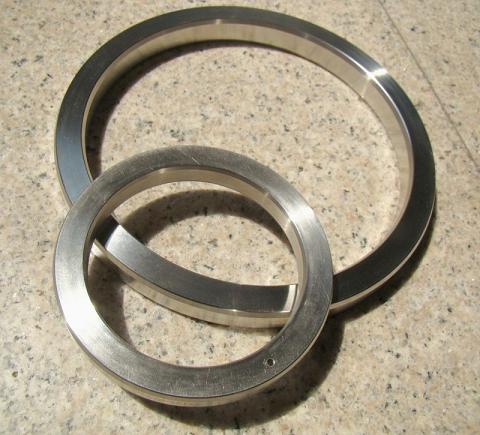
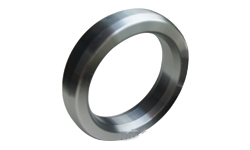
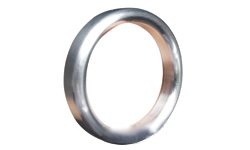
A Ring Joint Gasket is a solid, one-piece metal ring with an oval or octagonal cross-section. It is designed to be seated in a machined groove in the flange faces of mating flanges (RTJ flanges). When the flanges are bolted together, the gasket is compressed, causing the soft metal to flow into the fine imperfections of the groove and creating a tight, metal-to-metal seal. This design is particularly effective for:
The two primary cross-sectional shapes are Oval and Octagonal. Octagonal ring gaskets generally require lower bolt loads to achieve a seal compared to oval rings and are often preferred for new installations. Oval rings are sometimes used in retrofit situations where existing oval groove flanges are present.
Selecting the correct Ring Joint Gasket involves careful consideration of several critical parameters. Kaxite gaskets are manufactured to precise specifications to ensure optimal performance.
The choice of material is dictated by the service conditions, including pressure, temperature, and fluid corrosivity. Kaxite offers a comprehensive range of materials compliant with ASTM standards.
| Material Grade | ASTM Specification | Typical Hardness (Brinell) | Common Applications & Notes |
|---|---|---|---|
| Soft Iron | ASTM A105 | 90 Max | General service for non-corrosive applications up to 450°C. |
| 304 Stainless Steel | ASTM A182 F304 | 160-210 | Good corrosion resistance, widely used in chemical and petrochemical industries. |
| 316 Stainless Steel | ASTM A182 F316 | 160-210 | Enhanced corrosion resistance, particularly to chlorides. |
| Alloy 20 | ASTM B473 | 150-210 | Excellent resistance to sulfuric acid and other aggressive chemicals. |
| Inconel 600 | ASTM B166 | 150-210 | High-temperature strength and oxidation resistance. |
| Monel 400 | ASTM B164 | 120-190 | Excellent resistance to seawater, hydrofluoric acid, and alkalies. |
Ring Joint Gaskets are defined by nominal pipe size (NPS), pressure class (e.g., 150, 300, 600, 900, 1500, 2500), and ring number (R or RX). The ring number corresponds to specific dimensional standards outlined in ASME B16.20. Kaxite manufactures the full spectrum of sizes and classes.
| Nominal Pipe Size (NPS) | Pressure Class | Typical Ring Number (Octagonal) | Outside Diameter (Approx. mm) |
|---|---|---|---|
| 1" | 900 | R21 | 79 |
| 2" | 1500 | R24 | 95 |
| 4" | 2500 | R37 | 146 |
| 8" | 600 | R60 | 273 |
| 12" | 900 | R74 | 381 |
A proper surface finish is crucial for sealing. Kaxite gaskets are machined to a fine finish (typically 63 micro-inches Ra or better). We also offer optional coatings:
Every Kaxite Ring Joint Gasket is produced under a stringent quality management system. Our process ensures:
What is the fundamental difference between an Oval and an Octagonal Ring Joint Gasket?
The core difference lies in their cross-sectional geometry. An oval ring gasket has a rounded, oval shape, while an octagonal ring has a flat, eight-sided shape. This geometric difference affects the contact area and sealing mechanics. Octagonal rings have a larger seating area and engage with the flange groove on the flat sides, which typically allows for an effective seal with lower bolt load compared to oval rings. Oval rings contact the flange groove on their rounded surfaces. It is crucial to match the gasket shape exactly to the flange groove shape; they are not interchangeable.
Can a Ring Joint Gasket be reused after installation?
It is generally not recommended to reuse a Ring Joint Gasket. During the initial bolting, the metal undergoes plastic deformation as it flows into the micro-imperfections of the flange groove to create the seal. Upon disassembly, the gasket is already work-hardened and its geometry is altered. Reusing it will likely result in an inferior seal and a high risk of leakage. For critical service, always install a new, certified gasket from a reliable supplier like Kaxite.
How do I select the correct material grade for my application?
Material selection is based on three primary factors: temperature, pressure, and fluid compatibility (corrosivity). First, consult the operating temperature and ensure the selected material retains adequate strength and does not oxidize excessively. Second, verify the pressure rating. Third and most critical, ensure the metal is completely resistant to corrosion by the process fluid. Common standards like NACE MR0175/ISO 15156 must be considered for sour service (H2S presence). Kaxite's technical team can provide detailed material selection guidance based on your specific service conditions.
What are RX and BX ring gaskets? How do they differ from standard R rings?
RX and BX ring gaskets are specialized types designed for higher performance. Standard "R" rings are used in API 6A and ASME B16.5/16.47 flanges. "RX" rings are pressure-energized; they have a different geometry that allows internal system pressure to act upon the ring, enhancing the sealing force as pressure increases. "BX" rings are used exclusively with API 6BX flanges, which are designed for even higher pressures (typically 5,000 psi to 20,000 psi) and have a correspondingly different groove design. These are not interchangeable with standard R rings.
What is the proper procedure for installing a Ring Joint Gasket?
Correct installation is vital. First, thoroughly clean the flange grooves of any old gasket material, dirt, or corrosion using a non-metallic brush. Inspect the grooves for scratches or pitting that could cause leaks. Lightly lubricate the gasket with a suitable anti-seize compound (especially for stainless steel) unless otherwise specified. Carefully place the gasket into the groove of one flange, ensuring it sits evenly. Align the flanges and insert all bolts hand-tight. Follow a controlled, cross-pattern bolting sequence, tightening in multiple incremental steps (e.g., 30%, 60%, 100% of final torque) to achieve uniform compression. Always use a calibrated torque wrench and adhere to the recommended bolt torque values for your specific flange class and gasket material.
Why might a Ring Joint Gasket connection still leak after installation?
Leaks can occur due to several reasons: Incorrect gasket material or size for the service conditions; damage to the flange sealing grooves (scratches, galling, or excessive pitting); improper installation, such as uneven bolt tightening or insufficient bolt load; reusing an old, deformed gasket; using a gasket with an incorrect hardness (too hard may not seal, too soft may extrude); or misalignment of the flanges causing uneven loading on the gasket. A systematic inspection of these factors usually identifies the root cause.