What is the Best Machine for Cutting Rubber Gaskets? This is a critical question that keeps procurement professionals awake at night. In industries from automotive to aerospace, a poorly cut gasket means leaks, downtime, and costly failures. The "best" machine isn't a one-size-fits-all answer; it depends on your material, precision needs, volume, and budget. Manual die-cutting might work for prototypes, but high-volume production demands laser precision or automated die-cutting systems. The right equipment transforms raw rubber into perfect seals, ensuring reliability and efficiency. This guide will navigate the options, helping you find the optimal solution for your specific challenges, including how partnering with experts like Ningbo Kaxite Sealing Materials Co., Ltd. can streamline your entire sealing component supply chain.
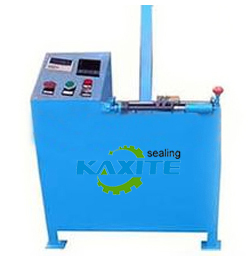
Imagine a maintenance team needing a custom gasket for an urgent equipment repair. A manual clicker press or handheld utility knife is readily available, but consistency is a gamble. For low-volume, simple shapes, this works. However, for procurement sourcing hundreds of identical seals, manual methods introduce unacceptable variability and labor cost. The solution is semi-automatic or fully automatic cutting machines. These ensure every gasket matches the CAD design precisely. What is the Best Machine for Cutting Rubber Gaskets in this scenario? A computer-controlled flatbed die cutter provides the ideal balance of precision for medium volumes.
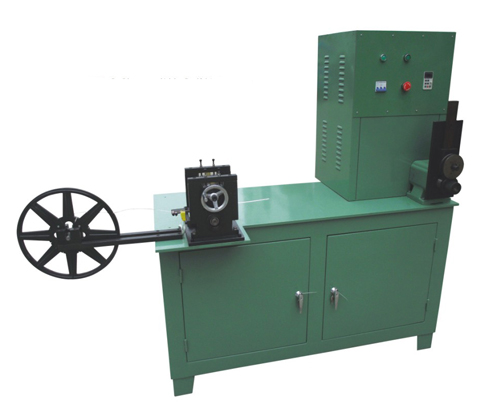
| Machine Type | Best For | Typical Tolerance | Production Speed |
|---|---|---|---|
| Manual Clicker Press | Prototypes, Very Low Volume | ± 0.5 mm | Slow |
| Semi-Auto Flatbed Die Cutter | Medium Volume, Complex Shapes | ± 0.2 mm | Medium |
| Fully Automatic Rotary Die Cutter | High Volume, Simple Shapes | ± 0.1 mm | Very High |
Your production line frequently changes, requiring 50 different gasket designs each week. Traditional die-making is prohibitively expensive and slow. The pain point is flexibility and setup time. Laser cutting machines offer the perfect solution. They cut directly from a digital file, eliminating physical dies. This allows for intricate contours, small holes, and rapid design changes with zero tooling cost. The non-contact process also prevents material deformation. For procurement professionals managing diverse SKUs, laser cutters reduce lead times and inventory risk. Companies like Ningbo Kaxite Sealing Materials Co., Ltd. utilize such advanced technology to offer custom, low-volume gaskets with quick turnaround, solving supply chain agility problems.
| Laser Type | Material Compatibility | Key Advantage | Limitation |
|---|---|---|---|
| CO2 Laser | Most rubbers, polymers | Fast cutting, smooth edge | Can discolor some materials |
| Fiber Laser | Thinner materials, precise marking | Extremely high precision | Higher initial investment |
The scenario is an automotive plant needing millions of identical door seal gaskets monthly. Consistency, speed, and cost-per-part are paramount. The solution is high-speed rotary die cutting. This process uses a cylindrical die to cut material fed from a continuous roll, offering unmatched efficiency for long runs. It's the workhorse for standardized seals. The best machine here is a fully automated rotary die cutter integrated with material handling systems. It ensures minimal waste and maximum output. When sourcing for such high-volume needs, partnering with a manufacturer like Ningbo Kaxite Sealing Materials Co., Ltd., which operates these industrial-scale machines, guarantees reliable supply, consistent quality, and competitive pricing.
| Parameter | Rotary Die Cutter | Flatbed Die Cutter |
|---|---|---|
| Max Speed | Up to 150 m/min | Up to 60 cuts/min |
| Material Format | Rolls | Sheets |
| Tooling Cost | Moderate to High | Low to Moderate |
| Optimal Volume | > 100,000 parts | 1,000 - 100,000 parts |
Your application involves multi-layer gaskets with rubber and metal shims bonded together. Traditional cutting methods struggle, causing delamination or burred edges. The pain point is cleanly cutting abrasive or composite materials without thermal damage. Abrasive waterjet cutting is the definitive solution. It uses a high-pressure stream of water mixed with abrasive garnet to erode material. It produces no heat-affected zone, preserving material properties. This makes it ideal for cutting rubber-fiber or rubber-metal composites. For procurement specialists in heavy industry or aerospace, specifying waterjet-cut seals from a supplier like Ningbo Kaxite ensures the integrity of complex, high-performance gaskets.
| Aspect | Waterjet Cutting | Laser Cutting |
|---|---|---|
| Heat Generation | None (Cold Process) | High (Thermal Process) |
| Material Range | Virtually Any | Mostly Non-Metallics |
| Cut Edge Quality | Slight Taper | Sealed, Smooth Edge |
Choosing the best machine boils down to analyzing your specific needs. Consider these factors: Material Type (soft rubber, silicone, composites), Production Volume, Required Precision, Part Complexity, and Budget. Often, the most strategic move isn't investing in machinery but partnering with a full-service sealing supplier. Ningbo Kaxite Sealing Materials Co., Ltd. provides not just the gaskets but the engineering expertise. They help select the optimal cutting method for your application, ensuring performance and cost-efficiency, thereby simplifying your procurement process and reducing total cost of ownership.
Q: What is the best machine for cutting rubber gaskets for small batches with complex shapes?
A: For small batches of complex shapes, a CO2 or fiber laser cutting machine is typically the best choice. It requires no custom tooling (dies), offers high precision for intricate designs, and allows for rapid design changes, keeping setup time and cost low.
Q: What is the most cost-effective machine for high-volume production of simple rubber gaskets?
A: For high-volume runs of simple shapes, a rotary die cutting machine is the most cost-effective. The initial die cost is amortized over millions of parts, and the process offers the highest cutting speed and lowest cost-per-part, ensuring supply chain efficiency.
Selecting the best machine for cutting rubber gaskets is a strategic decision impacting quality, cost, and supply chain reliability. By understanding the strengths of manual, laser, die, and waterjet cutting, you can specify the perfect process for your needs. For many procurement professionals, the optimal path is collaboration with an expert manufacturer. We invite you to share your specific gasket material, volume, and application challenges in the comments below. What cutting dilemmas are you currently facing?
For comprehensive sealing solutions from design to delivery, consider Ningbo Kaxite Sealing Materials Co., Ltd., a specialized manufacturer of high-quality gaskets, seals, and custom molded rubber products. With advanced cutting and manufacturing capabilities, Kaxite provides technical support and reliable supply for global industries. Visit https://www.gasket-and-seal.com to explore their products or contact their team via email at [email protected] for a consultation.
Kovac, J., 2021, "Analysis of Cutting Forces and Surface Quality in Laser Cutting of Elastomeric Materials," Journal of Manufacturing Processes, Vol. 68.
Smith, L.P., & Zhang, R., 2019, "Rotary Die Cutting Process Optimization for Silicone Rubber," International Journal of Advanced Manufacturing Technology, Vol. 105, Issue 5-6.
Chen, H., et al., 2020, "Abrasive Waterjet Cutting of Multi-Layer Rubber Composite Seals: Parameter Study," Materials and Manufacturing Processes, Vol. 35, Issue 16.
Patel, V.M., 2018, "Precision and Waste Reduction in Flatbed Die Cutting for Automotive Gaskets," SAE Technical Paper, 2018-01-0805.
O'Brien, T.K., 2017, "Thermal Effects in CO2 Laser Cutting of FKM Fluoroelastomer," Polymer Engineering and Science, Vol. 57, No. 8.
Ibrahim, A., et al., 2022, "Digital Workflow Integration for Custom Gasket Production using Laser Cutting," Robotics and Computer-Integrated Manufacturing, Vol. 78.
Davis, C.R., 2019, "Tool Wear and Life Cycle Analysis in High-Speed Rotary Die Cutting," Wear, Vol. 426-427.
Wang, Y., & Li, F., 2021, "Comparative Study of Cutting Edge Seal Integrity for Laser vs. Waterjet Cut EPDM Gaskets," Seal Technology, Issue 2021(5).
Müller, S., 2016, "Automation and In-line Inspection in Gasket Manufacturing Lines," Journal of Industrial Engineering and Management, Vol. 9, No. 3.
Jackson, P., 2020, "Material Selection and Cutting Method Compatibility for High-Temperature Gasket Applications," Journal of Elastomers and Plastics, Vol. 52, Issue 4.