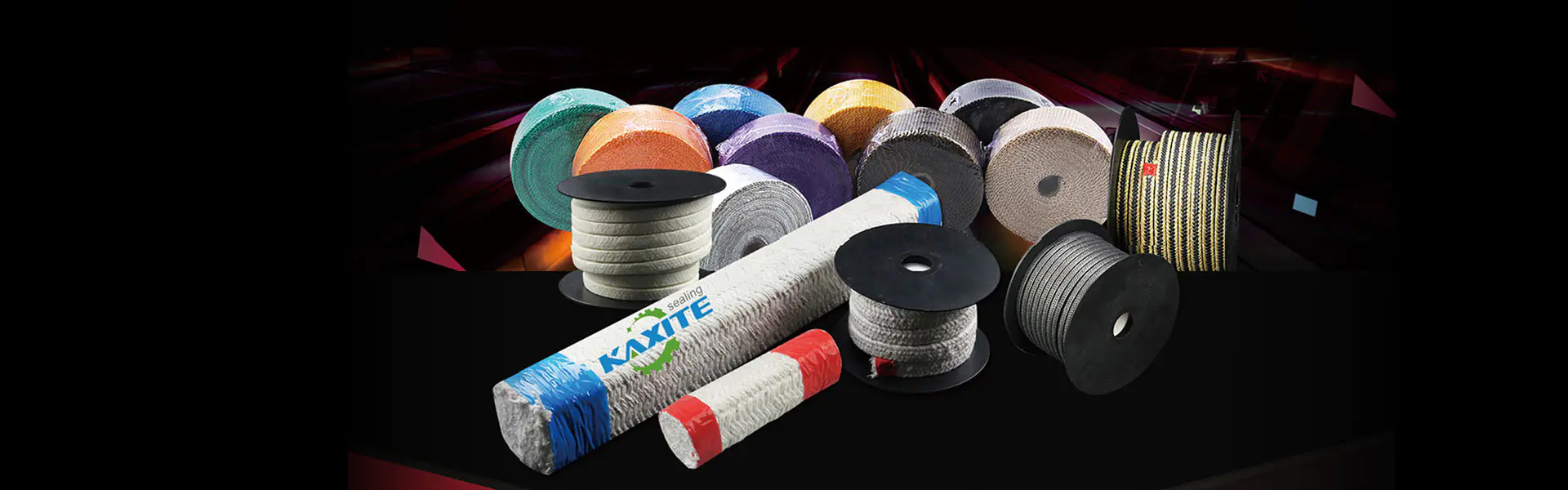
In the intricate world of industrial machinery, manufacturing, and infrastructure, the integrity of every system hinges on one critical, often overlooked component: the sealing material. A sealing materials failure can lead to catastrophic downtime, safety hazards, environmental contamination, and significant financial loss. This guide provides an in-depth exploration of modern sealing materials, their technical parameters, and application best practices. At Kaxite, we have dedicated decades to engineering sealing solutions that meet the most demanding challenges across global industries.
Sealing materials are engineered to create a barrier between two mating surfaces or components. This barrier performs one or more essential functions: preventing the leakage of fluids (liquids or gases) or solids, excluding contaminants like dust, dirt, and moisture, and maintaining pressure differentials within systems. The effectiveness of a seal is determined by its material composition, design, and compatibility with the operating environment.
Selecting the correct sealing material requires a detailed analysis of the application's operating conditions. The following parameters are non-negotiable in the specification process at Kaxite.
| Parameter | Description | Why It Matters | Kaxite Testing Standard |
|---|---|---|---|
| Temperature Range | The minimum and maximum continuous operating temperatures the material can withstand without degrading. | Exceeding limits causes hardening, cracking, or melting, leading to immediate failure. | ASTM D573, ASTM D865 |
| Media Compatibility | The chemical resistance of the material to the fluid or gas it contacts. | Chemical attack causes swelling, shrinkage, or embrittlement, compromising seal integrity. | ASTM D471 (Fluid Immersion) |
| Pressure | The system pressure the seal must contain or exclude. | Influences seal design (e.g., cross-section, hardness, backup rings) to prevent extrusion. | Application-Specific Fixture Testing |
| Hardness (Durometer) | Measured on the Shore A or Shore D scale, indicating material resistance to indentation. | Softer seals (e.g., 50 Shore A) conform better to rough surfaces; harder seals (e.g., 90 Shore A) resist extrusion. | ASTM D2240 |
| Compression Set | The material's ability to recover its original shape after prolonged compression. | A poor compression set leads to permanent deformation and loss of sealing force over time. | ASTM D395 |
| Tensile Strength & Elongation | The force required to stretch the material to breaking point and how far it can stretch. | Indicates general durability and resistance to tearing during installation or under stress. | ASTM D412 |
Our product portfolio is designed to cover a vast spectrum of industrial needs. Below is a specification table for some of our core sealing material families.
| Kaxite Product Series | Base Polymer | Standard Temperature Range | Key Media Resistance | Typical Hardness (Shore A) | Primary Applications |
|---|---|---|---|---|---|
| KX-NBR Series | Nitrile Rubber | -40°C to +120°C (-40°F to +248°F) | Petroleum oils, fuels, water, hydraulic fluids | 50, 70, 80, 90 | Automotive engines, hydraulic cylinders, fuel systems |
| KX-FKM Elite Series | Fluoroelastomer | -20°C to +230°C (-4°F to +446°F) | Aggressive chemicals, acids, solvents, high-temperature oils | 70, 75, 80, 90 | Chemical processing, aerospace, downhole oil & gas |
| KX-EPDM Pro Series | EPDM | -50°C to +150°C (-58°F to +302°F) | Hot water, steam, ozone, weathering, glycol brake fluids | 60, 70, 80 | Cooling systems, HVAC, outdoor electrical enclosures |
| KX-PTFE Advanced Series | PTFE Compounds | -200°C to +260°C (-328°F to +500°F) | Virtually all chemicals, extreme temperatures | 55-65 (Shore D) | Pharmaceutical, food & beverage, semiconductor, aggressive chemical valves |
| KX-SIL Medical Series | Platinum-Cured Silicone | -60°C to +230°C (-76°F to +446°F) | High & low temp, UV, biocompatible, sanitizing agents | 30, 40, 50, 60, 70 | Medical devices, food processing, lighting, appliance gaskets |
Q: How do I choose between an O-ring and a custom-molded gasket?
A: The choice depends on the application geometry, pressure, and sealing function. O-rings are excellent for dynamic (moving) or static applications in groove-based housings and are cost-effective for standard sizes. Custom-molded gaskets or seals are necessary for complex flange geometries, large sizes, or when integrating specific features like lips, ribs, or attachment points. Kaxite engineering support can perform a design review to recommend the optimal and most economical solution.
Q: What causes a seal to fail prematurely, even when the correct material is specified?
A: Premature failure is often due to installation or design issues, not material failure. Common causes include: improper gland design (incorrect squeeze or stretch), nicks or cuts from sharp edges during installation, incorrect lubrication, torsional twisting of O-rings, exposure to external contaminants (dust, grit), or operating outside the specified pressure/temperature envelope. A failure analysis conducted by Kaxite can pinpoint the exact root cause.
Q: Can I use a seal rated for a higher temperature than my application requires?
A: While often safe from a temperature perspective, it is not always optimal. Higher-performance materials (like FKM over NBR) usually come at a higher cost and may have different compression set or hardness properties. The best practice is to select a material that meets your operating conditions with a reasonable safety margin but avoids unnecessary over-specification to control costs.
Q: What is the difference between static, dynamic, and rotary seal applications?
A: Static seals are used between two surfaces with no relative movement (e.g., flange gaskets, cover seals). Dynamic seals are used between surfaces that move relative to each other, such as reciprocating (back-and-forth) or oscillating motion in hydraulic rods. Rotary seals are a type of dynamic seal designed specifically for rotating shafts, requiring materials and designs that manage friction and heat generation. Each type demands different material properties and seal designs.
Q: How important is shelf life for sealing materials, and how should they be stored?
A: Shelf life is critical, as elastomers can degrade over time even without use. Most standard rubbers have a recommended shelf life of 8-10 years from the date of manufacture when stored properly. Ideal storage conditions are in a cool, dark, dry place away from direct sunlight, ozone sources (like electric motors), and extreme temperatures. Seals should be stored loosely in their original packaging, not stretched or compressed. Kaxite labels all products with manufacturing dates for traceability.
Q: Does Kaxite offer material testing and certification for industry standards?
A: Yes, comprehensively. Kaxite maintains a state-of-the-art laboratory for material formulation and validation. We can provide standard ASTM test reports and also tailor testing to specific customer requirements or industry standards such as NSF/ANSI 61 for drinking water, USP Class VI for medical devices, FDA CFR 177.2600 for food contact, and various military (MIL-SPEC) and aerospace standards. Certificates of Compliance (CoC) and batch-specific Material Test Reports (MTR) are available.