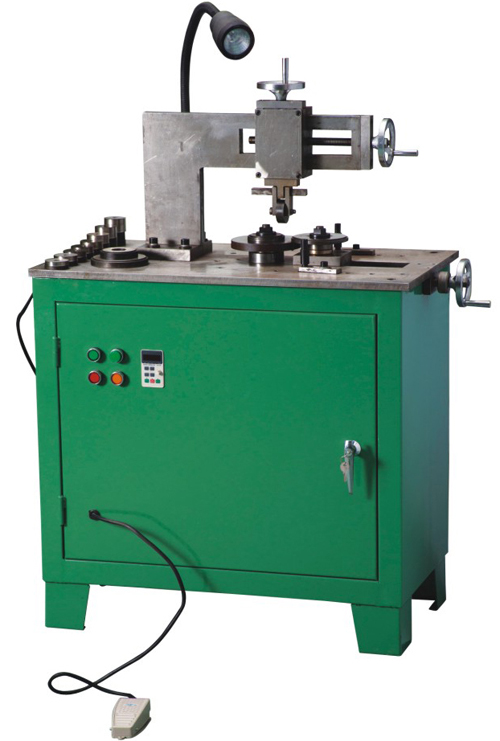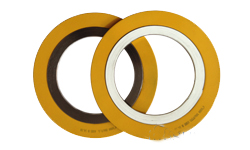
In the demanding world of industrial sealing, particularly for applications involving high temperatures, high pressures, or corrosive media, the double jacketed gasket stands out as a superior sealing solution. However, the performance and reliability of these gaskets are intrinsically linked to the precision of their manufacture. This is where a specialized Machine for Double Jacketed Gaskets becomes indispensable. These are not standard press machines; they are engineered systems designed to produce the complex, layered structure of a jacketed gasket with exacting consistency and quality. Kaxite, with decades of engineering excellence, has pioneered advanced machinery that sets the global standard for producing these critical sealing components.
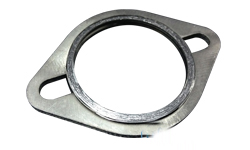
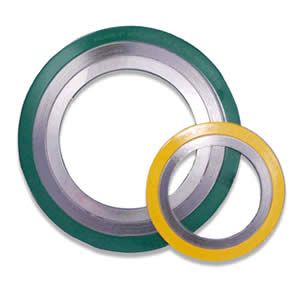
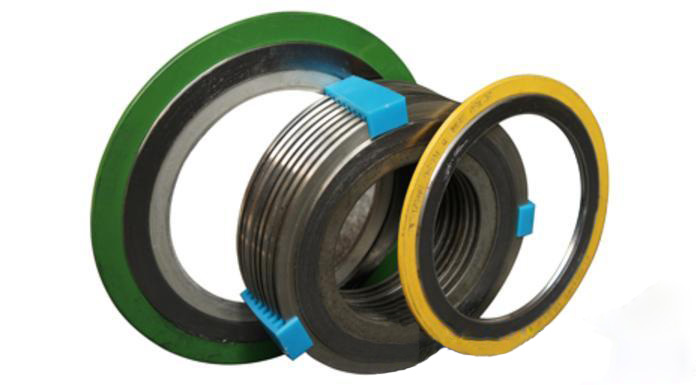
A double jacketed gasket consists of a soft filler material, often graphite or PTFE, encapsulated within a metallic jacket—typically stainless steel, carbon steel, or exotic alloys. The jacket provides structural integrity and blow-out resistance, while the filler ensures a tight seal. The manufacturing process involves precise forming, folding, and sealing of the metal jacket around the filler core. Any imperfection in this process—wrinkles, uneven filler distribution, or weak seams—can lead to gasket failure, resulting in leaks, costly downtime, and potential safety hazards. The Kaxite machine is meticulously designed to eliminate these variables, ensuring every gasket meets strict dimensional and performance specifications.
The effectiveness of a Machine for Double Jacketed Gaskets is defined by its technical specifications. Kaxite machines are built for versatility, precision, and durability, catering to a wide range of gasket sizes and materials. Below are the core parameters that define our machinery's capabilities.
| Parameter | Specification Details | Notes / Impact on Production |
|---|---|---|
| Max. Gasket OD | 50 mm to 2000 mm (2" to 80") | Coverage for standard ANSI/ASME/DIN flanges. Custom frames available for larger sizes. |
| Min. Gasket OD | 15 mm (0.6") | Precision tooling allows for small-diameter gasket production. |
| Jacket Thickness Range | 0.4 mm to 1.5 mm (0.016" to 0.06") | Handles common gauges for stainless steel, Monel, Inconel, etc. |
| Operating Pressure | Up to 350 Bar (5000 PSI) | Ensures complete compaction of filler material and a tight jacket fold. |
| Cycle Time (Typical) | 20 to 90 seconds (size-dependent) | Optimized hydraulic sequence and quick-change tooling maximize output. |
| Filler Material Compatibility | Graphite, PTFE, Ceramic, Compressed Non-Asbestos Fiber (CNAF) | Tooling and pressure profiles can be adjusted for different filler densities. |
| Accuracy (ID/OD) | ± 0.1 mm (± 0.004") | Critical for ensuring proper fit on the flange and sealing performance. |
| Main Motor Power | 7.5 kW to 22 kW | Energy-efficient design with variable drive systems. |
Choosing a Kaxite Machine for Double Jacketed Gaskets means investing in more than just equipment; it's investing in guaranteed process reliability. Our machines incorporate several patented and proprietary features.
Q: What is the main difference between a standard hydraulic press and a dedicated Machine for Double Jacketed Gaskets?
A: A standard press simply applies vertical force. A dedicated machine, like those from Kaxite, is a complete forming system. It includes precision-guided tooling that controls the radial forming of the metal jacket, a controlled filler feeding system, and a programmable sequence that manages the fold, tuck, and final compression stages. This specialization guarantees geometric accuracy and material integrity that a generic press cannot achieve.
Q: Can one machine produce different styles of jacketed gaskets, such as single-jacketed, double-jacketed, or corrugated metal gaskets?
A: The core Kaxite machine platform is highly versatile. By changing the forming dies and adjusting the program on the HMI, the same machine can typically produce single-jacketed (one metal side) and double-jacketed gaskets. Producing corrugated metal gaskets (without filler) usually requires a different set of profiled rollers and is often handled by a dedicated corrugation machine for optimal results.
Q: How important is the control system, and what are the benefits of a PLC with recipe storage?
A> The control system is the brain of the operation. A PLC ensures repeatability. Recipe storage allows operators to save and instantly recall all parameters (pressure at each stage, dwell time, stroke length) for a specific gasket part number. This eliminates setup errors, ensures consistency between batches produced months apart, and allows less experienced operators to produce perfect gaskets by following a pre-validated recipe.
Q: What are the most critical maintenance requirements for these machines to ensure long-term accuracy?
A> Regular maintenance is straightforward but crucial. Daily checks include hydraulic fluid levels and visual inspection for leaks. Weekly tasks involve cleaning guide rods and applying lubricant. The most critical periodic maintenance is checking and calibrating the alignment of the upper and lower forming tools, typically recommended every 6 months or after 50,000 cycles. Misalignment is the primary cause of uneven jacket folds. Kaxite provides detailed maintenance schedules and calibration guides.
Q: Our production involves small batch sizes of many different gasket dimensions. Is automated machinery still cost-effective?
A> Yes, absolutely. This is where the Kaxite quick-change tooling system and recipe management provide a significant return on investment. The rapid changeover (often under 15 minutes) minimizes non-productive time between batches. The consistency of the machine also drastically reduces scrap rates and quality inspection time compared to manual or semi-automatic methods, making it cost-effective even for batches as small as 10-20 pieces.
Q: Can Kaxite machines handle exotic metal jackets like Titanium or Hastelloy?
A> Yes. Kaxite machines are built with the power and control necessary for harder, tougher alloys. The key considerations are tooling material and surface treatment to prevent galling, and potentially slower forming speeds to manage the material's springback. We work with clients to select the appropriate machine model and tooling specifications based on their specific material portfolio.
Q: What kind of training and support does Kaxite provide with the machine?
A> Kaxite provides comprehensive support. This includes on-site installation and commissioning by a factory engineer, detailed operational training for your team (covering machine operation, basic troubleshooting, tooling changeover, and preventive maintenance), and a complete set of manuals in English. We also offer ongoing remote support, a library of tutorial videos, and a global network of service technicians for urgent needs.