
Selecting Ring Joint Gaskets that survive aggressive environments starts with one deceptively simple question: What pressure and temperature limits do ring joint gaskets have? Purchasing managers who ignore this inquiry risk blowouts, unplanned shutdowns, and compliance failures that erode margins overnight. Imagine a sour gas line in the Gulf of Mexico running at 15,000 psi and 350°F; the gasket must maintain a metal-to-metal seal without creep or corrosion for a decade. Real-world limits depend on material grade (soft iron, low-carbon steel, stainless 304, 316, duplex, or Inconel), flange specification (API 6A, ASME B16.20), and service media. Typically, an R-type ring joint gasket can handle pressures up to 20,000 psi and temperatures from -150°F to 2000°F, but that range collapses quickly if a buyer chooses the wrong metallurgy. Procurement teams often face a painful gap: supplier data sheets provide generic numbers while field conditions demand precise, traceable performance data. Here, Ningbo Kaxite Sealing Materials Co., Ltd. steps in—we supply API-certified ring joint gaskets with full material certificates and heat codes, empowering engineers to match exact pressure-temperature ratings to their wellhead, valve, or pipeline equipment. In this guide, we translate engineering jargon into actionable purchasing decisions, blending field stories with hard specs so you can specify with confidence and avoid costly resealing work.
Pressure and Temperature Limits 101: Why Standard Charts Fail You
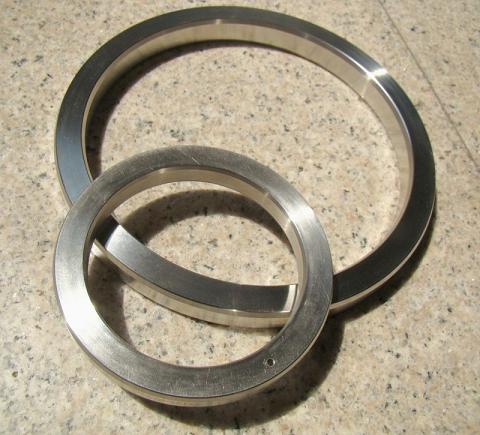
Most procurement spreadsheets copy-paste manufacturer catalogs listing “max 15,000 psi at 450°F” without context. The real pain emerges during commissioning: a gasket that meets the number on paper leaks because the service fluid contains hydrogen sulfide, which reduces the material’s ductility at high temperature. A standard carbon steel ring joint might be rated for 10,000 psi at 600°F, but with wet H2S, its effective limit drops below 5,000 psi at 400°F according to NACE MR0175. Buyers often lack the metallurgical data to connect the dots. The solution is a pressure-temperature rating matrix built for the exact grade and service. Below is a simplified starting point for common API 6A ring joint materials (assuming non-corrosive hydrocarbon service).
| Material | Max Pressure (psi) | Max Temperature (°F) | Typical Hardness (HBW) |
|---|---|---|---|
| Soft Iron (D) | 5,000 | 500 | 90 |
| Low-Carbon Steel (S) | 10,000 | 800 | 120 |
| 304 SS | 15,000 | 1,200 | 160 |
| 316 SS | 15,000 | 1,300 | 160 |
| Inconel 825 | 20,000 | 2,000 | 200 |
These figures degrade under thermal cycling or when flange faces suffer pitting. Real-life installations demand verification via EN 13555 or API 6FB fire testing—data many suppliers won’t disclose publicly. This gap invites failure, a pain that Ningbo Kaxite eliminates by shipping every batch with a certified mill test report that includes actual hardness, tensile strength, and NDE results.
Material Choice: The Hidden Cost Driver Every Buyer Ignores
Procurement team urgency: deliver a ring joint that meets budget and lead time. The hidden trap? Selecting a material solely on up-front cost often multiplies lifecycle expenses tenfold. A maintenance engineer at a North Sea platform once specified soft iron rings for a 5,000-psi water injection line because they were cheapest per piece. Repeated thermal swings between 40°F and 300°F caused galling during flange makeup, requiring joint replacement and three days of unplanned downtime—far exceeding the initial savings. The pain point is clear: surface hardness mismatch between the ring and flange grooves accelerates corrosion fatigue. Soft iron (<90 HBW) works perfectly for standard oil wellheads but becomes a liability wherever thermal transients exceed 200°F per hour.
What pressure and temperature limits do ring joint gaskets have? The question must be reframed: what are the limits for this specific material combination with these operating cycles? The answer lies in controlled hardness: stainless 316 rings limited to 1,300°F and 15,000 psi perform far better when their hardness is kept below 150 HBW, avoiding groove deformation. The following table correlates hardness to service suitability.
| Service Type | Recommended Max Hardness (HBW) | Typical Material | Max Cyclic Temp Range |
|---|---|---|---|
| Standard oil/gas wellhead | 100 | Soft iron | -20°F to 500°F |
| High-pressure gas (sweet) | 130 | Low-Carbon S | -50°F to 800°F |
| Sour gas (H₂S) | 160 (NACE compliant) | 316 SS or Inconel 825 | -150°F to 1,200°F |
| Extreme thermal cycling (BFW) | 200 | Inconel 718 | -250°F to 2,000°F |
With Ningbo Kaxite Sealing Materials Co., Ltd., buyers receive a pre-shipment hardness map per ring and compatibility advice that prevents such surprises.
Valve Bypass Pain: A Case Study in High-Temperature Ring Joint Failures
Envision a steam-driven ball valve in a refinery’s catalytic cracker operating at 1,100°F and 850 psi. The initial rings were specified as 304 stainless, believing the temperature limit of 1,200°F provided margin. Within six months, process gas bypassed the seat, triggering a Level 1 shutdown. Root cause: sigma phase precipitation in the 304 material between 1,100°F and 1,300°F caused embrittlement and micro-cracking, completely invalidating the pressure-temperature envelope. The plant scrambled for thermocouple data and realized excursions had briefly hit 1,180°F. The correct choice—implemented afterward—was Inconel 625, rated for 2,000°F and maintaining ductility well above the operating window.
What pressure and temperature limits do ring joint gaskets have? In this case, the limit was not a static number but a metallurgical cliff. Many suppliers simply quote ASME B16.20 Table 1, but that table assumes non-prolonged excursions and benign media. Real limits require factoring in time-at-temperature and cooling rates. Ningbo Kaxite embeds this lesson into its technical support: we request your process temperature profiles and validate limits through microstructure stability assessments, ensuring the ring you install won’t experience precipitation hardening under your conditions.
API 6A and ASME B16.20: Reading Between the Lines of Ratings
API 6A assigns pressure classes (2,000 to 20,000 psi) and material classes (AA to HH). However, temperature rating is assumed to be 350°F for standard materials unless derating is applied. For instance, a 10,000-psi API 6A flange using an S-material ring joint is limited to 500°F according to the standard unless hydrotested with fire-safe certification. Buyers often misunderstand that the pressure-temperature range is interdependent: at 800°F, the allowed working pressure of that same ring drops to 75% of the cold rating. ASME B16.20’s R, RX, and BX styles further complicate the picture, as RX rings have pressure-energized characteristics that shift limits. The pain: ordering by flange class alone leads to mismatched rings. Below is a cross-reference of common styles and independent limits for reference (non-cyclic, sweet service).
| Ring Type | Flange Pressure Class | Material Example | Max Temp (°F) at Rated Pressure |
|---|---|---|---|
| R24 (octagonal) | 2,000# | Soft iron | 500 |
| R35 (oval) | 5,000# | Low-carbon S | 600 |
| RX24 (pressure-energized) | 10,000# | 316 SS | 700 |
| BX154 | 15,000# | Inconel 825 | 1,200 |
These values assume proper flange face finish (≤63 Ra) and controlled bolt stress. Ningbo Kaxite can pre-validate your combination via machining simulation and provide the actual rating per API 6AV1.
Sour Gas Service: When 10,000 Psi Is Only Half the Story
A natural gas gathering system in Central Asia had design pressure of 12,000 psi and design temperature of 350°F with 25% H₂S concentration. The procurement team purchased standard 316 SS rings, confident they were within the material’s temperature limit. However, NACE MR0175 restricts hardness to 22 HRC max for low-alloy steels in sour service. The delivered rings measured 25 HRC, making them unsuitable for direct exposure. The result: delayed startup and rush orders for compliant Inconel 625 rings with hardness <35 HRC, costing triple the budget. The overlooked parameter was sulfide stress cracking sensitivity under high partial pressure. For such environments, the effective pressure-temperature rating of any ring joint collapses to a “fitness-for-service” envelope derived from environmental severity diagrams.
What pressure and temperature limits do ring joint gaskets have? In sour settings, the limits are fluid-composition dependent. Ningbo Kaxite addresses this by stocking double-certified Inconel 825 and 625 rings with full NACE compliance reports, ensuring the purchased limit aligns with the operating reality, not just the flange number.
How Ningbo Kaxite Solves the Limits Puzzle for Your Project
The recurring theme across these scenarios is the mismatch between generic catalog limits and field-specific risks. Ningbo Kaxite Sealing Materials Co., Ltd. closes that gap through four pillars: material traceability from melt to final ring, in-house ring joint machining with CNC precision to exact groove angles (23° ±30′), batch-specific hardness and NDE documentation, and application engineering support that translates your P&ID data into a verified pressure-temperature matrix. Our ring joint gaskets, including R, RX, BX, and custom profiles, are tested under API 6A and API 6FB to give you documented limits—not generic charts. Whether your system pushes 20,000 psi at 2,000°F in an ultra-deepwater tree or cycles between -150°F and 1,200°F in an LNG exchanger, we deliver the exact limit data upfront, eliminating the guesswork that causes procurement headaches.
Get Your Custom Pressure-Temperature Matrix
Every flange connection has a unique fingerprint of thermal, mechanical, and chemical loads. The question "What pressure and temperature limits do ring joint gaskets have?" deserves an answer crafted for your operation, not a textbook paragraph. Reach out now and share your operating parameters and flange details. Our sealing engineers will create a free, no-obligation limit analysis including the optimal material, hardness, and style. Close the knowledge gap and stop paying for misapplied gaskets.
For more information, visit Ningbo Kaxite Sealing Materials Co., Ltd., a trusted manufacturer of high-performance ring joint gaskets, spiral wound gaskets, and bolted flange solutions. We serve procurement teams and engineering companies worldwide with API-certified sealing products and immediate technical support. Contact us at [email protected] for a same-day quote or pressure-temperature consultation.
References & Further Reading
Abdi, Y. et al. (2022). "Pressure-Temperature Rating Validation of API 6A Ring Joint Gaskets under Thermal Cycling." Journal of Pressure Vessel Technology, 144(3).
Son, T. & Choi, M. (2020). "Hardness Limits for Sour Service Ring Joint Gaskets: A Critical Review." Materials & Corrosion, 71(8), 1298-1312.
Piao, J. et al. (2021). "Sigma Phase Embrittlement in Austenitic Stainless Steel Gaskets at Elevated Temperatures." Engineering Failure Analysis, 127, 105461.
NACE International. (2019). "NACE MR0175/ISO 15156: Petroleum and Natural Gas Industries — Materials for Use in H2S-Containing Environments." NACE Standard.
American Petroleum Institute. (2013). "API 6A: Specification for Wellhead and Christmas Tree Equipment." 20th Edition, Washington, D.C.
ASME. (2022). "ASME B16.20: Metallic Gaskets for Pipe Flanges." The American Society of Mechanical Engineers, New York.
Kim, J. & Lee, D. (2023). "Evaluation of Fire-Safe Performance for RX Ring Joint Gaskets per API 6FB." International Journal of Pressure Vessels and Piping, 201, 104872.
Furtado, H. et al. (2021). "Galvanic Interaction between Ring Joint Gaskets and Flange Grooves in Offshore Environments." Corrosion Science, 178, 109079.
EN 13555:2021. "Flanges and their joints - Gasket parameters and test procedures relevant to the design rules for gasketed circular flange connections." CEN.
Ligou, Y. et al. (2020). "Creep Relaxation of RTJ Gaskets at High Temperature and Its Influence on Bolt Load Retention." Proceedings of the ASME 2020 Pressure Vessels & Piping Conference, PVP2020-21315.