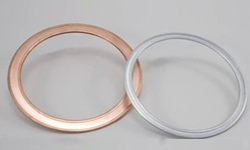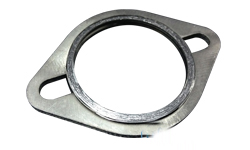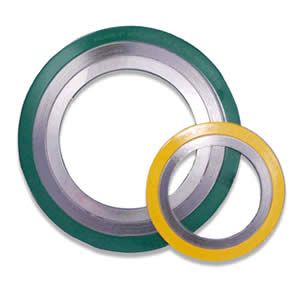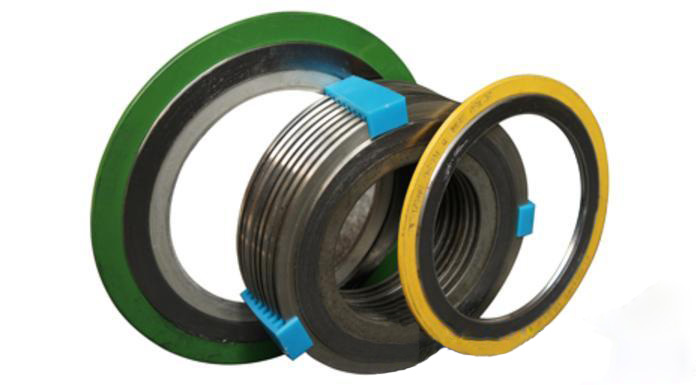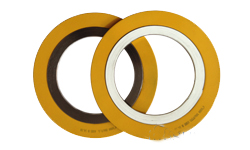

In demanding industrial environments where process integrity is non-negotiable, standard sealing solutions often fall short. This is where the advanced engineering of Double Jacket Gaskets becomes critical. As a cornerstone of reliable sealing technology, these gaskets are specifically designed to handle extreme pressures, temperatures, and corrosive media, providing a robust and long-lasting seal where others fail. At Kaxite, we have refined this technology over decades, delivering gaskets that set the benchmark for safety, durability, and performance in the most challenging applications across oil & gas, chemical processing, power generation, and pharmaceutical industries.
Choosing the right sealing component is a strategic decision impacting operational safety, maintenance costs, and downtime. Kaxite Double Jacket Gaskets offer a suite of engineered benefits:
Our products are manufactured to exacting standards. Below are the detailed parameters that define their performance envelope.
| Metal Jacket Material | Common Filler Material | Primary Application Suitability | Max Temp. Range (°F/°C) | Typical Pressure Rating (psi) |
|---|---|---|---|---|
| 304 / 316 Stainless Steel | Flexible Graphite (Grafoil®), PTFE, Ceramic Fiber | General chemical, steam, hot oil, moderate corrosion | -450 to 900°F / -268 to 482°C* | Up to 2,500 |
| Monel 400 / Alloy 400 | Flexible Graphite, PTFE | Marine, hydrofluoric acid, caustic solutions | -325 to 750°F / -198 to 399°C | Up to 2,200 |
| Titanium (Grade 2) | Flexible Graphite | Chloride environments, oxidizing acids, seawater | -330 to 800°F / -201 to 427°C | Up to 2,000 |
| Nickel 200 / Alloy 200 | Flexible Graphite | Caustic soda, high-temperature halogens, food processing | -325 to 800°F / -198 to 427°C | Up to 2,300 |
| Inconel 600 / Alloy 600 | Flexible Graphite, Mica | High-temperature thermal cycling, furnace applications | -425 to 1,100°F / -254 to 593°C | Up to 2,400 |
*Temperature range depends heavily on filler material. Graphite fillers enable the highest temperature performance in inert or reducing atmospheres.
| Flange Class Rating | Standard Inside Diameter (ID) Range | Standard Outside Diameter (OD) Range | Thickness (Standard) | Thickness Tolerance |
|---|---|---|---|---|
| Class 150 / 300 | 0.5" to 60" (13mm to 1524mm) | 2.0" to 65" (51mm to 1651mm) | 0.125" (3.2mm) / 0.188" (4.8mm) | ±0.010" (0.25mm) |
| Class 600 / 900 | 0.5" to 40" (13mm to 1016mm) | 2.5" to 45" (64mm to 1143mm) | 0.188" (4.8mm) / 0.250" (6.4mm) | ±0.010" (0.25mm) |
| Class 1500 / 2500 | 0.5" to 24" (13mm to 610mm) | 3.0" to 28" (76mm to 711mm) | 0.250" (6.4mm) / 0.312" (7.9mm) | ±0.015" (0.38mm) |
Note: Kaxite specializes in custom dimensions for special flange designs, heat exchangers, and vessel openings. All gaskets can be supplied with optional inner or outer guide rings.
What is the fundamental difference between a Single Jacket and a Double Jacket Gasket?
A Single Jacket Gasket has a soft filler material wrapped by a single metal jacket, usually from the top. A Double Jacket Gasket features two identical metal jackets—one covering the top and one covering the bottom of the filler—that are mechanically interlocked at the ID and OD. This double-layer construction provides significantly higher blowout resistance, better load distribution, and greater stability, making it suitable for much more severe service conditions.
When should I specifically choose a Double Jacket Gasket over other styles like Spiral Wound or Ring Joints?
Double Jacket Gaskets are the preferred choice for applications involving high pressure, high temperature, thermal cycling, and aggressive media where superior extrusion resistance is paramount. They often outperform Spiral Wound gaskets in services with severe thermal cycling or where higher seating stress is applicable. Compared to Ring Type Joints (RTJs), they offer easier installation/removal, can accommodate some flange misalignment, and are suitable for a wider range of pressures in many standard flange classes.
How do I select the correct material combination (jacket and filler) for my application?
Material selection is a critical three-step process: First, identify the chemical compatibility of both jacket and filler with your process media using corrosion charts—Kaxite engineers can assist with this. Second, consider the continuous and maximum upset temperature. Third, account for pressure, PMI (Process Media Interface) requirements, and any regulatory standards (e.g., FDA, NACE MR0175). For example, a chlorinated solvent at high temperature might require a Titanium jacket with a PTFE filler, while superheated steam service commonly uses 316SS with Flexible Graphite.
What are the proper installation and torque procedures for a Double Jacket Gasket?
Correct installation is crucial. Always start with clean, undamaged flange faces. Position the gasket concentrically. Use a cross-bolt tightening pattern (star pattern) in multiple incremental passes (typically 30%, 60%, and 100% of the target torque) to ensure even compression. The final torque value must be calculated based on the bolt material, size, lubrication, and the required gasket seating stress. Refer to ASME PCC-1 guidelines or consult Kaxite for a detailed bolt-load calculation specific to your gasket. Never re-torque a hot flange; allow the system to return to ambient temperature first.
Can Kaxite Double Jacket Gaskets be customized for non-standard applications?
Absolutely. Kaxite's core expertise lies in engineering custom sealing solutions. We routinely manufacture gaskets with non-standard IDs/ODs, special tang lengths, custom filler materials (including composite fillers), and proprietary coatings on the metal jackets for additional corrosion resistance. We can also produce shapes beyond standard circles, such as oval, square, or irregular geometries for heat exchangers and vessel manways.
How does the "Kaxite Standard" ensure quality and traceability?
Every Kaxite Double Jacket Gasket is manufactured under a strict quality management system. We use certified raw materials with full Mill Test Reports (MTRs). Critical dimensions are verified using precision gauges. For traceability, each gasket or batch is marked with a unique heat/lot number, material grade, and size, which is documented on the Certificate of Conformance (C of C) supplied with the product. This ensures full accountability from raw material to finished product.
What industries and specific applications most commonly use these gaskets?
They are ubiquitous in industries where safety and reliability are critical: Oil & Gas (wellhead equipment, Christmas trees, HPU piping), Refining (reactor headers, crude units, hydroprocessing), Chemical & Petrochemical (high-pressure reactors, steam reformers, acid lines), Power Generation (steam turbine bypass lines, boiler feedwater systems), and Pharmaceutical (high-pressure reaction vessels, sterilizer systems).