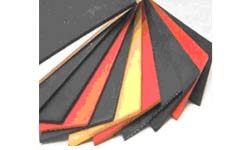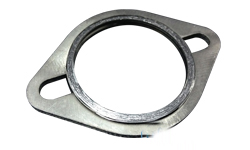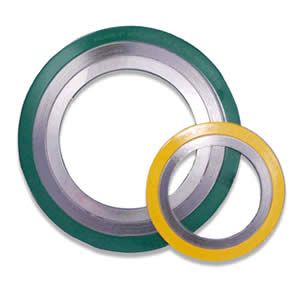
In the world of industrial materials, few components are as versatile and critical as the rubber sheet. At Kaxite, we have dedicated decades to perfecting the formulation and manufacturing of high-performance rubber sheets that meet and exceed the rigorous demands of modern industry. Our products are engineered not just to seal, protect, or insulate, but to enhance operational efficiency, safety, and longevity across countless applications. From construction sites and automotive plants to food processing facilities and marine environments, a Kaxite rubber sheet provides a reliable, durable barrier against moisture, chemicals, abrasion, and extreme temperatures. This commitment to excellence is embedded in every step of our process, from selecting premium raw materials to employing state-of-the-art vulcanization techniques, ensuring you receive a product built for consistent performance under pressure.
The term "rubber sheet" encompasses a wide range of materials, each with distinct properties tailored for specific challenges. Choosing the correct grade is paramount to the success of your project. Kaxite offers a comprehensive portfolio, allowing you to select the ideal material based on factors like chemical resistance, temperature range, elasticity, and environmental conditions.
Our technical data represents our commitment to transparency and quality. Below are the standard specifications for our most popular rubber sheet grades. Custom formulations are available upon request to meet unique application requirements.
| Property / Grade | Natural Rubber (NR) | Nitrile (NBR) 70 Shore A | EPDM 60 Shore A | Neoprene (CR) 50 Shore A | Silicone (VMQ) |
|---|---|---|---|---|---|
| Tensile Strength (MPa) | 17 - 25 | 10 - 15 | 11 - 15 | 10 - 15 | 5 - 10 |
| Elongation at Break (%) | 500 - 700 | 300 - 500 | 300 - 500 | 300 - 450 | 200 - 600 |
| Hardness (Shore A) | 40 - 80 | 40 - 90 | 40 - 90 | 40 - 80 | 20 - 80 |
| Temperature Range (°C) | -50 to +70 | -40 to +120 | -50 to +150 | -40 to +100 | -60 to +230 |
| Oil Resistance | Poor | Excellent | Poor | Good | Poor |
| Weather / Ozone Resistance | Fair | Fair | Excellent | Very Good | Excellent |
| Common Applications | Anti-vibration mounts, general-purpose gaskets | Fuel & oil seals, hydraulic hoses | Outdoor seals, roofing, cooling systems | Weather seals, conveyor belts, marine | Food & medical, high-temp gaskets, insulation |
Kaxite rubber sheets are available in a variety of standard sizes and thicknesses to suit immediate needs, with full customization capabilities for large-scale or specialized projects.
How do I choose the right type of rubber sheet for my application?
Selecting the correct rubber sheet involves evaluating your application's specific requirements. Consider the primary function (sealing, insulation, padding), the environmental exposure (chemicals, oils, UV light, ozone), the operating temperature range (both minimum and maximum), required physical properties (hardness, tensile strength, compression set), and any regulatory standards (FDA, NSF, UL). For instance, for an outdoor roof sealant exposed to sunlight and rain, EPDM is an excellent choice. For a gasket in an engine oil system, Nitrile (NBR) is necessary. Our Kaxite technical support team is always available to help you analyze these factors and recommend the optimal material.
What is the difference between a molded rubber sheet and a calendered rubber sheet?
The manufacturing process significantly impacts the rubber sheet's properties. Calendered sheets are produced by passing compounded rubber through heavy rollers to achieve a uniform thickness. This process is efficient for high-volume production and results in sheets with good surface finish and dimensional consistency in length and width. Molded sheets, on the other hand, are cured under heat and pressure in a mold. This process allows for more precise control over thickness and density, often resulting in superior physical properties, tighter tolerances, and the ability to incorporate complex shapes or fabric plies during molding. Kaxite utilizes both methods, choosing the optimal process based on the material grade and the performance requirements of the final product.
Can Kaxite rubber sheets be used for food contact or medical applications?
Yes, but only specific grades are suitable. For applications involving direct or indirect food contact, it is essential to use rubber compounds that are compliant with regulations such as FDA (Food and Drug Administration) Title 21 CFR in the USA or equivalent EU regulations. Our silicone and certain specially formulated EPDM compounds are designed to meet these stringent standards, ensuring they are non-toxic, odorless, and do not leach harmful substances. Similarly, for medical devices, USP Class VI certifications are often required. We offer a range of compliant materials and can provide the necessary documentation to validate their suitability for sensitive applications.
How should I store rubber sheets to ensure maximum shelf life?
Proper storage is crucial to prevent premature degradation. Kaxite rubber sheets should be stored in a cool, dark, dry, and well-ventilated area. The ideal storage temperature is between 10°C and 25°C (50°F and 77°F). Avoid exposure to direct sunlight, UV light, ozone generators, heat sources, and damp conditions. Sheets should be laid flat, not folded or bent under stress, to avoid permanent deformation. If stored on rolls, ensure the roll is supported properly to prevent flattening. Keeping the sheets away from solvents, oils, and corrosive chemicals is also imperative. When stored correctly, most rubber sheets from Kaxite maintain their properties for several years.
What does "Shore A" hardness mean, and how do I select the proper hardness?
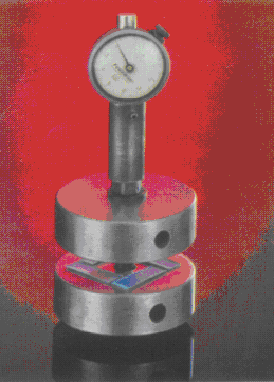
Shore A is a standard scale (using a durometer) for measuring the hardness of flexible, semi-rigid, and rigid plastics and elastomers like rubber. A lower number (e.g., Shore A 30) indicates a softer, more pliable material, while a higher number (e.g., Shore A 90) indicates a harder, more rigid material. The choice depends on the application: Softer sheets (40-60 Shore A) are better for sealing irregular surfaces, providing cushioning, or as anti-vibration pads, as they conform easily. Medium hardness (60-75 Shore A) offers a balance of sealing and durability for general-purpose gaskets. Harder sheets (80-95 Shore A) are used for heavy-duty abrasion liners, wipers, or where minimal deformation under load is required. Our technical datasheets provide detailed hardness options for each material type.
Do you offer fire-resistant or anti-static rubber sheets?
Absolutely. Kaxite provides specialized rubber sheet compounds to meet specific safety and operational standards. Our fire-resistant (or flame-retardant) grades, often based on Neoprene or specially formulated compounds, meet various industry standards such as UL 94, BS 6853, or DIN 4102, limiting flame spread and smoke generation. Anti-static and conductive rubber sheets are engineered to control the buildup and discharge of static electricity, which is critical in electronics manufacturing, explosive environments, or cleanrooms. These sheets have tailored carbon or metallic additives to achieve specific surface or volume resistivity values. Please contact us with your specific certification or resistivity requirements.
How can I join or fabricate Kaxite rubber sheets on-site?
Rubber sheets can be fabricated using standard workshop tools, though some materials are easier to work with than others. Cutting can be done with sharp utility knives, rotary cutters, or band saws. For joining, the most common method is using a compatible rubber adhesive or contact cement to create a strong, seamless bond; surface preparation (cleaning and abrading) is vital for success. Some thermoset rubbers can also be vulcanized together professionally for a permanent, homogeneous bond. For precise, complex, or high-volume fabrication needs, Kaxite offers in-house die-cutting, water-jet cutting, and custom molding services to ensure perfect, ready-to-install components.