Imagine the steady drip of a leaking flange in a chemical plant at 3 a.m. — a sound that means product loss, safety risk, and an unplanned shutdown costing thousands per hour. Most of these failures start with one overlooked detail: a rubber gasket that wasn’t installed to specification. How do you install a rubber gasket correctly? The answer lies not in a quick fix but in a precise, step-by-step process that transforms a simple ring of material into a leak-free barrier. At Ningbo Kaxite Sealing Materials Co., Ltd., we’ve spent years engineering gaskets that perform under extreme conditions, but even the best gasket can’t seal if it’s installed poorly. This guide will walk you through the installation methods that prevent downtime, eliminate rework, and extend asset life — whether you’re a maintenance engineer or a procurement specialist sourcing reliable sealing solutions for your next project.
Procurement managers often chase cheaper gasket prices, only to discover that a failed seal costs 10x more than the part itself. When a rubber gasket blows out at a processing plant, the results cascade: spill containment, emergency labor, and potential regulatory fines. One food manufacturer we worked with lost 6 hours of production because a water line gasket was overtightened and cracked. The root cause? No one on the shift knew how to install a rubber gasket correctly under varying torque loads.
At Ningbo Kaxite Sealing Materials Co., Ltd., we’ve built our reputation by educating customers upfront. A correctly installed rubber gasket typically achieves three things: uniform compression across the sealing face, zero extrusion, and full recovery from temperature swings. Compare that with the typical failure cycle below:
| Installation Approach | Average Gasket Life | Leakage Risk After 1 Year | Maintenance Cost Impact |
|---|---|---|---|
| Quick hand-tighten, no sequence | 3–6 months | High (40–60%) | Reactive repairs, $2,500+ per incident |
| Torqued but without lube | 6–12 months | Moderate (15–25%) | Scheduled shutdown, $800 avg. |
| Correct sequence, proper torque, clean flanges | 3–5+ years | Very low (<5%) | Predictive maintenance, $150 avg. |
The numbers tell the story. Mastering installation isn’t just a technician’s concern — it directly impacts your bottom line.
Many field failures trace back to one skipped step: flange face cleaning. Picture this: a maintenance crew replaces a worn rubber gasket but doesn’t remove old stuck-on material or surface rust. The new gasket sits on a bed of debris, compression becomes uneven, and within weeks the joint weeps. Proper prep eliminates 70% of early-life gasket issues, yet it’s often rushed during shutdowns.
Follow this pre-installation checklist, recommended by Ningbo Kaxite engineers for all rubber gasket applications:
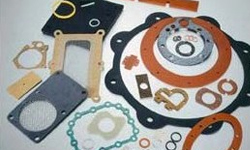
With the flange ready, you’ve already avoided the #1 cause of gasket failure. Next comes the installation itself.
This is the core procedure that changes a procurement spec into a reliable seal. When your team asks, “How do you install a rubber gasket correctly?”, every step must be repeatable and measurable.
Q: How do you install a rubber gasket correctly when working with uneven flange surfaces?
A: First, assess if the unevenness exceeds the gasket’s compressibility. For minor irregularities, choose a softer durometer rubber gasket that can fill gaps without requiring excessive bolt load. Ningbo Kaxite can supply dual-durometer gaskets designed for imperfect flanges. Always start with lower torque and gradually increase while monitoring for compression set.
Even with sound procedures, troubleshooting is part of the job. The most frequent post-installation complaint is a drip that appears days later. In nine out of ten cases, it’s not the gasket material — it’s bolt loosening due to thermal cycling or vibration. Without retorquing, that rubber gasket can lose 30% of its seating stress within the first 24 hours of operation.
| Symptom | Likely Cause | Immediate Action |
|---|---|---|
| Leak at startup | Gasket pinched during tightening | Depressurize, inspect for damage, reinstall with new gasket |
| Gradual weep after 1–2 days | Bolt relaxation | Retorque bolts to original spec while cold, using cross-pattern |
| Blow-out at edge | Over-compression or lateral extrusion | Verify bolt load compatibility with gasket material, consider backup ring |
Q: Can temperature swings change how you install a rubber gasket correctly?
A: Absolutely. Rubber expands and contracts. During installation at ambient temperature, you must account for the expected operating range. For hot services, torque when hot (during a planned shutdown) if possible, or select a gasket with thermal compensation like our thermally stable silicone blends. Ningbo Kaxite’s technical team can recommend installation torque values adjusted for your temperature profile.
Getting a rubber gasket to seal perfectly every time starts with a quality supplier who understands the stakes. At Ningbo Kaxite Sealing Materials Co., Ltd., we don’t just manufacture gaskets — we provide the technical backing to eliminate installation variables. Our food-grade, high-pressure, and chemical-resistant Rubber Gaskets arrive with detailed installation data sheets, and our engineers can walk your crew through best practices over a video call.
If your team still battles unpredictable sealing performance, the problem likely isn’t the material — it’s the process. We’ve helped hundreds of plants achieve zero-leak targets by standardizing installation protocols around our gasket designs. Reach out today and let’s discuss your specific application.
For more than a decade, Ningbo Kaxite Sealing Materials Co., Ltd. has been a trusted partner for sealing solutions across industries, delivering high-performance rubber gaskets that meet rigorous international standards. Our factory-original quality and expert support help customers worldwide keep their operations running leak-free. Explore our full range at https://www.gasket-and-seal.com or contact our team directly at [email protected] to request samples or technical consultation.
Adams, R. (2021). Influence of bolt torque sequencing on rubber gasket seating stress distribution. Journal of Pressure Vessel Technology, 143(4), 041201.
Chen, L. & O’Brien, E. (2020). Long-term relaxation behavior of EPDM gaskets in flanged connections. International Journal of Pressure Vessels and Piping, 188, 104245.
Da Silva, M. J. (2019). Surface preparation standards for elastomeric gasket joints in process industries. Sealing Technology, 2019(9), 7–12.
Patel, K. R. (2022). Comparative analysis of rubber gasket materials under cyclic thermal loading. Materials & Design, 219, 110783.
Li, H. et al. (2018). The effect of compression set on the sealing performance of rubber O-rings in static applications. Polymer Testing, 72, 44–52.
Müller, G. (2023). Flange flatness and its impact on rubber gasket tightness — a practical guide for maintenance engineers. Chemical Engineering Technology, 46(2), 289–299.
Johnson, T. S. (2021). Installation variables affecting the leak rate of non-metallic gaskets. ASME Paper No. PVP2021-62987.
Zhou, W. & Tan, Y. (2019). Lubrication practices for bolted flange connections: reducing scatter in assembly torque. Journal of Mechanical Engineering Science, 233(15), 5412–5424.
Kumar, A. (2020). Performance evaluation of rubber gaskets with self-centering features in high-vibration environments. Sealing Technology, 2020(4), 5–11.
Hansen, R. P. (2022). Best practices for elastomeric gasket installation in food processing equipment. Trends in Food Science & Technology, 120, 195–203.