As procurement specialists scan supplier catalogs for reliable sealing solutions, one question dominates technical discussions: What materials are commonly used for double jacket gasket construction? The answer shapes seal integrity under extreme temperatures, aggressive chemicals, and pulsating pressures that can turn a small leak into an expensive shutdown. Imagine a refinery where a single heat exchanger flange fails because the metal jacket corroded, or a chemical plant where the filler degraded, releasing hazardous vapors. These real-world emergencies prove that material choice is not just a specification—it’s a strategic decision that prevents catastrophic loss. For buyers who demand zero tolerance for leakage, Ningbo Kaxite Sealing Materials Co., Ltd. engineers Double Jacket Gaskets with precisely selected combinations of metal jackets and non-metallic fillers, ensuring each gasket performs as a engineered safety barrier. Understanding the material science behind these components gives you the confidence to specify the right gasket the first time, reducing procurement risk and operational downtime.
When sourcing gaskets for flange connections in heat exchangers, piping, or pressure vessels, procurement teams often face recurring nightmares: premature failure due to incompatible materials, delayed deliveries of custom configurations, and inconsistent quality from unverified manufacturers. A food processing plant once received a batch of double jacket gaskets where the thin stainless steel jacket cracked during bolt-up because the filler compressed unevenly—a defect rooted in poor material selection. This scenario translates into costly rework, safety audits, and reputational damage. Ningbo Kaxite Sealing Materials Co., Ltd. eliminates these risks by applying rigorous material qualification protocols. Every metal jacket, whether carbon steel, 304 stainless steel, or Monel, undergoes thickness verification and hardness testing before the filler—often flexible graphite or PTFE—is inserted. The result is a gasket that distributes seating stress uniformly and withstands thermal cycling without relaxation.
| Pain Point | Root Cause | Ningbo Kaxite Solution |
|---|---|---|
| Flange leakage after thermal cycling | Insufficient filler resilience or metal jacket corrosion | Graphite filler + 316L jacket with controlled recovery > 35% |
| Gasket blowout at high pressure | Improper jacket thickness or filler extrusion | Minimum jacket thickness 0.5 mm, serrated core design |
| Chemical attack in acidic service | Wrong alloy grade for jacket | Hastelloy C-276 jacket option with PTFE filler |
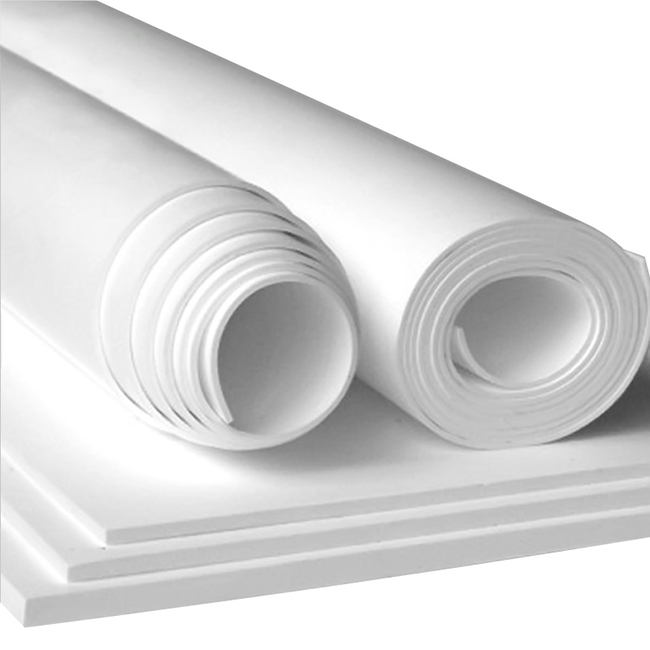
What materials are commonly used for double jacket gasket construction? The answer starts with two interdependent components: the metallic outer shell and the compressible inner filler. The metal jacket, typically formed from sheet metal with a thickness ranging from 0.3 to 0.5 mm, provides structural strength and resistance to the media. Common jacket materials include carbon steel for low-cost non-corrosive applications, 304 and 316L stainless steels for general chemical resistance, and high-performance alloys like Inconel, Monel, or Hastelloy when facing extreme pH or high temperatures beyond 800°C. The filler determines the gasket's recovery and sealability under fluctuating loads. Graphite excels for high-temperature steam and hydrocarbon services up to 450°C in oxidizing atmospheres, offering excellent self-lubricating properties. PTFE (polytetrafluoroethylene) is preferred for aggressive acids and alkali solutions up to 260°C. For ultra-high-temperature applications like exhaust systems, ceramic fiber or mica-based fillers can withstand 1000°C. At Ningbo Kaxite Sealing Materials Co., Ltd., we stock over 15 metal-filler combinations and can engineer custom laminates for your specific process conditions.
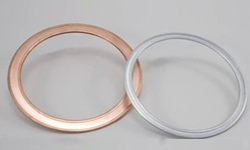
| Jacket Material | Max. Temp. (°C) | Suitable Media | Filler Compatibility |
|---|---|---|---|
| 304 Stainless Steel | 800 | Steam, water, mild chemicals | Graphite, PTFE |
| 316L Stainless Steel | 800 | Chlorides, organic acids | Graphite, PTFE, mica |
| Inconel 625 | 1000 | Oxidizing acids, high-temp gases | Ceramic fiber, graphite |
| Carbon Steel | 500 | Non-corrosive fluids, oil | Graphite, cellulose fiber |
Selecting the right materials for a double jacket gasket requires analyzing three critical parameters: temperature, pressure, and chemical compatibility. A pulp mill engineer faced repeated seal failures on a black liquor heater flange operating at 350°C with high alkalinity. The original gasket used a carbon steel jacket that rapidly corroded and a standard graphite filler that oxidized under such caustic conditions. The solution? Switching to a 304 stainless steel jacket with an exfoliated graphite filler impregnated with a phosphate inhibitor, a combination Ningbo Kaxite Sealing Materials Co., Ltd. supplies as a standard upgrade. This saved the mill over $40,000 annually in maintenance costs. To systematize your selection, use the following matrix that maps service conditions to our recommended material pairings. Remember that considering flange finish, bolt load, and gasket seating stress remains vital, but the material choice forms the foundation of long-term reliability.
| Service Condition | Recommended Jacket | Recommended Filler | Typical Applications |
|---|---|---|---|
| High-temp steam (up to 450°C) | 316L SS | Flexible graphite | Steam turbines, heat exchangers |
| Strong acids (HNO₃, H₂SO₄) | Hastelloy C-276 | PTFE | Chemical reactors, piping |
| Cryogenic down to -196°C | 304L SS | Expanded PTFE | LNG storage, cold boxes |
| Food-grade sanitary | 316L SS, polished | PTFE, FDA compliant | Dairy, beverage processing |
Q: What materials are commonly used for double jacket gasket construction in high-temperature flue gas systems?
A: In high-temperature flue gas environments, where direct metal oxidation can occur, the most reliable configuration uses an Inconel 625 or Incoloy 800 jacket combined with a vermiculite or flexible graphite filler. These alloys form a stable oxide layer that resists sulfidation and carburization up to 950°C. Ningbo Kaxite Sealing Materials Co., Ltd. provides factory-certified Inconel jacketed gaskets with filler density optimized to prevent gas permeability, a common cause of lap-joint leakage in exhaust ductwork.
Q: What materials are commonly used for double jacket gasket construction when sealing chlorine or bromine services?
A: For wet chlorine or bromine, a Hastelloy C-2000 jacket paired with a chemically inert PTFE filler is mandatory. The high molybdenum content in Hastelloy resists pitting, while the PTFE filler ensures zero absorption of halogens that could lead to stress corrosion cracking. Our technical team validates each batch with a PMI (Positive Material Identification) test before shipment, so you receive material-certified gaskets that prevent dangerous leaks.
Behind every flawless double jacket gasket lies a manufacturer’s commitment to precision engineering and supply chain transparency. When a Middle Eastern petrochemical operator needed 500 DN600 gaskets for a turnaround within three weeks, Ningbo Kaxite Sealing Materials Co., Ltd. not only met the tight deadline but also supplied full EN 10204 3.1 material certificates and hydrostatic test reports. This level of documentation answers the deeper question—what materials are commonly used for double jacket gasket construction—by providing traceable proof that the specified alloys and fillers are exactly what sit inside your flanges. Our vertically integrated production allows us to control raw material sourcing, stamping, filler injection, and final inspection all under one roof. Buyers gain a single point of accountability, shorter lead times, and cost advantages that trickle down to your project’s bottom line.
Whether you’re upgrading a legacy boiler system or designing a new chemical line, answering “What materials are commonly used for double jacket gasket construction?” is only the first step. The real value emerges when you partner with a manufacturer who translates material science into leak-free operations. Ningbo Kaxite Sealing Materials Co., Ltd. brings 20 years of focused expertise in metal-jacketed gaskets, combining technical consulting with reliable global logistics. Our experts are ready to review your flange specifications and suggest the optimum metal-filler combination. Visit us at https://www.gasket-and-seal.com to browse our catalog or request a quotation. For direct engineering support, email [email protected] —we respond within one business day and can provide free material samples for your evaluation. Let’s build a sealing strategy that eliminates downtime before it starts.
Anderson R. D., 2018, “Double Jacketed Gasket Performance Under Thermal Transients,” Journal of Pressure Vessel Technology, 140(4), 041402.
Chen L. & Zhao Y., 2019, “Metallic Jacket Materials for High-Temperature Flange Connections,” International Journal of Pressure Vessels and Piping, 172, pp. 15-24.
Müller T., 2020, “Corrosion Resistance of Stainless Steel Jacketed Gaskets in Chloride Environments,” Corrosion Science, 163, 108284.
Patel S., 2017, “Graphite Filler Behavior in Double Jacket Gaskets Under Cyclic Loading,” Sealing Technology, 2017(9), pp. 7-12.
O’Brien J. F., 2021, “Selection Criteria for Non-Asbestos Fillers in Metallic Gaskets,” Industrial & Engineering Chemistry Research, 60(15), 5589-5598.
Kim H. S. & Park J. W., 2019, “Finite Element Analysis of Stress Distribution in Double Jacket Gasket Assemblies,” Journal of Mechanical Science and Technology, 33(3), 1231-1238.
Garcia M. A., 2022, “Material Compatibility Guide for Double Jacketed Gaskets in Chemical Processing,” Chemical Engineering Research and Design, 180, 112-125.
Lindqvist E., 2018, “Long-Term Relaxation Behavior of PTFE-Filled Double Jacket Gaskets,” Polymer Testing, 67, 234-241.
Turner P. & Singh R., 2020, “The Influence of Metal Jacket Thickness on Gasket Sealing Performance,” Tribology International, 148, 106316.
Yamada K., 2016, “High-Temperature Oxidation Behavior of Inconel 625 Jacket Materials for Gaskets,” Oxidation of Metals, 85(1-2), 113-126.