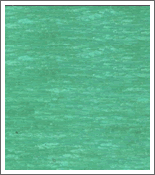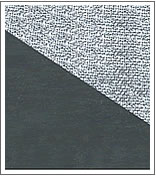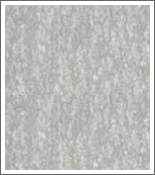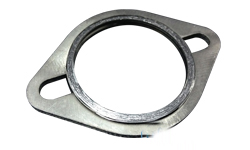
In the realm of industrial and construction materials, few products have a history and application profile as extensive and specific as the Asbestos sheet. For decades, its unique properties made it a material of choice for fireproofing, insulation, and reinforcement. Today, understanding its specifications, safe handling, and modern alternatives is crucial for professionals across various sectors. At Kaxite, with our deep industry knowledge, we provide not just materials, but comprehensive expertise. This guide delves into the detailed parameters, applications, and critical FAQs surrounding asbestos sheets, emphasizing the importance of informed and responsible usage.
Traditionally, an asbestos sheet is a rigid or semi-rigid building material manufactured by combining asbestos fibers with a binding agent, most commonly Portland cement, to create cement-asbestos boards. The asbestos fibers, primarily chrysotile, amosite, or crocidolite, provided exceptional tensile strength, fire resistance, and durability. These sheets were ubiquitous in 20th-century construction for:
It is imperative to note that due to the well-documented severe health risks associated with asbestos fiber inhalation (including asbestosis, lung cancer, and mesothelioma), the production and use of new asbestos-containing materials have been banned or heavily restricted in most countries, including the UK, Australia, and across the European Union. Kaxite adheres strictly to all international safety and environmental regulations. The information presented here is for educational, historical, and identification purposes regarding existing structures, and for understanding the specifications of modern, safer alternative products we offer.
Historically, asbestos sheets were manufactured to precise standards. Below are the key technical parameters that defined their grade and suitability for various applications. Kaxite's current range of non-asbestos fiber cement boards and high-performance insulation sheets are engineered to meet or exceed these historical performance benchmarks without the associated health hazards.
| Grade / Type | Primary Asbestos Fiber | Typical Thickness (mm) | Key Application | Notable Property |
|---|---|---|---|---|
| Flat Sheet - Standard | Chrysotile | 4, 5, 6 | Internal ceilings, wall linings, partitioning | Smooth finish, paintable |
| Corrugated Sheet | Chrysotile/Amosite blend | 5, 6, 8 | Industrial roofing & cladding | High strength-to-weight, weather-resistant |
| High-Pressure Sheet | Amosite/Crocidolite | 6, 8, 10, 12 | Firewalls, electrical panels, furnace lining | Exceptional heat & flame resistance |
| Insulating Board (AIB) | Amosite | 10, 12, 20 | Boiler room insulation, duct wrapping | Lower density, higher thermal insulation |
Kaxite is at the forefront of supplying advanced, certified safe materials designed to replace historical asbestos products. Our fiber cement boards and specialized sheets utilize synthetic, mineral, or cellulose fibers to deliver superior performance with zero health risk.
| Kaxite Product Line | Core Composition | Key Performance Features | Replaces Historic Use For: |
|---|---|---|---|
| Kaxite ProBoard FR | Portland cement, cellulose fibers, additives | Non-combustible (A2-s1, d0), moisture resistant, high impact strength. | Internal fireproof partitions, ceiling tiles, wall lining. |
| Kaxite DuraClad | Reinforced fiber cement matrix | Weatherproof, UV stable, available in corrugated profile, Class 0 fire rating. | Corrugated roofing & external cladding sheets. |
| Kaxite ThermoShield HT | Calcium silicate, reinforcing fibers | Continuous service up to 1000°C, low thermal conductivity, high mechanical strength. | High-temperature insulation, firewall panels, furnace surrounds. |
| Kaxite ElectroPanel | Non-conductive mineral composite | Arc & track resistant, flame retardant, high dielectric strength. | Electrical switchboard backing, panel partitions. |
Q: I think I have asbestos sheets in my old warehouse. What should I do?
A: Do not disturb them. Asbestos is hazardous only when fibers become airborne and are inhaled. If the sheets are in good condition, undamaged, and not in a friable state, they may be managed in place with regular monitoring. You must conduct a survey by a licensed asbestos inspector to identify the type, condition, and risk. Any removal, repair, or encapsulation work must be performed by a licensed asbestos abatement contractor following strict safety protocols. Kaxite can advise on survey requirements and certified contractors.
Q: How can I visually identify an asbestos sheet?
A: Visual identification is not definitive. However, characteristic signs include: a grey or light grey cement-like appearance; a dimpled or textured surface pattern (often on one side); a board thickness commonly between 4mm-12mm; and use in buildings constructed or renovated before the year 2000 (ban dates vary by country). Corrugated roofing sheets on older industrial sheds are a typical example. The only way to confirm is through sampling and analysis by an accredited laboratory.
Q: What are the main differences between asbestos cement sheets and modern fiber cement sheets?
A: The core difference is the fiber reinforcement. Asbestos cement used hazardous mineral fibers. Modern products, like those from Kaxite, use safe organic (cellulose) or synthetic (PVA, PP) fibers. While asbestos sheets had excellent inherent heat resistance, modern technology achieves equivalent or superior fire ratings (e.g., Euroclass A) through additives. Modern sheets are also often lighter, easier to cut and fix with standard tools, and designed with improved weather and impact resistance.
Q: Can I drill or cut into an existing asbestos sheet if I wear a mask?
A: Absolutely not. Standard dust masks are not effective against microscopic asbestos fibers. Any drilling, cutting, sanding, or breaking of asbestos-containing materials releases dense clouds of hazardous fibers. This work is illegal for unlicensed individuals in most jurisdictions. It must be done under controlled conditions by licensed professionals using negative air pressure enclosures, specialized HEPA-filtered tools, and full personal protective equipment (PPE) including respiratory protective equipment (RPE).
Q: What specifications should I look for when choosing a replacement non-asbestos sheet from Kaxite?
A: Your selection depends entirely on the application. Key specifications to review are: Fire Performance Rating (e.g., Euroclass, Class 0); Flexural Strength (MPa) for load-bearing needs; Moisture Resistance for exterior or wet areas; Thermal Conductivity if insulation is a factor; and Dimensional Stability. For example, choose Kaxite DuraClad for exterior roofing, Kaxite ProBoard FR for internal fire-rated walls, and Kaxite ThermoShield HT for high-temperature applications. Our technical datasheets provide full parameter listings.
Q: How were asbestos sheets typically installed and fixed historically?
A: Flat sheets were often fixed to timber or metal battens using nails or screws, with joints sometimes covered with beading. Corrugated sheets were overlapped and fixed to purlins using hook bolts or drive screws with sealing washers. Today, when removing such fixtures during demolition, extreme care must be taken. For installing modern alternatives, Kaxite provides specific fixing guides recommending compatible screws, washers, and drilling techniques to ensure structural integrity and longevity without risk.
Q: Does Kaxite handle or supply actual asbestos sheets?
A: No. In full compliance with global health, safety, and environmental regulations, Kaxite does not manufacture, supply, or distribute any products containing asbestos fibers. Our business is focused on providing innovative, high-performance, and completely safe alternative building and industrial materials. We offer the technical legacy knowledge of historical products solely to empower our clients to make informed decisions about management, removal, and replacement with contemporary, safe solutions.