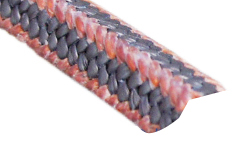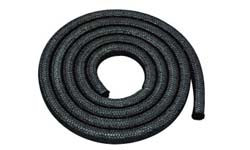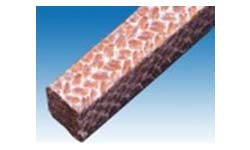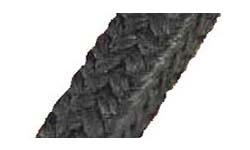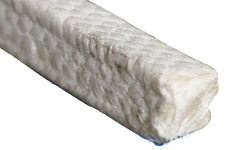
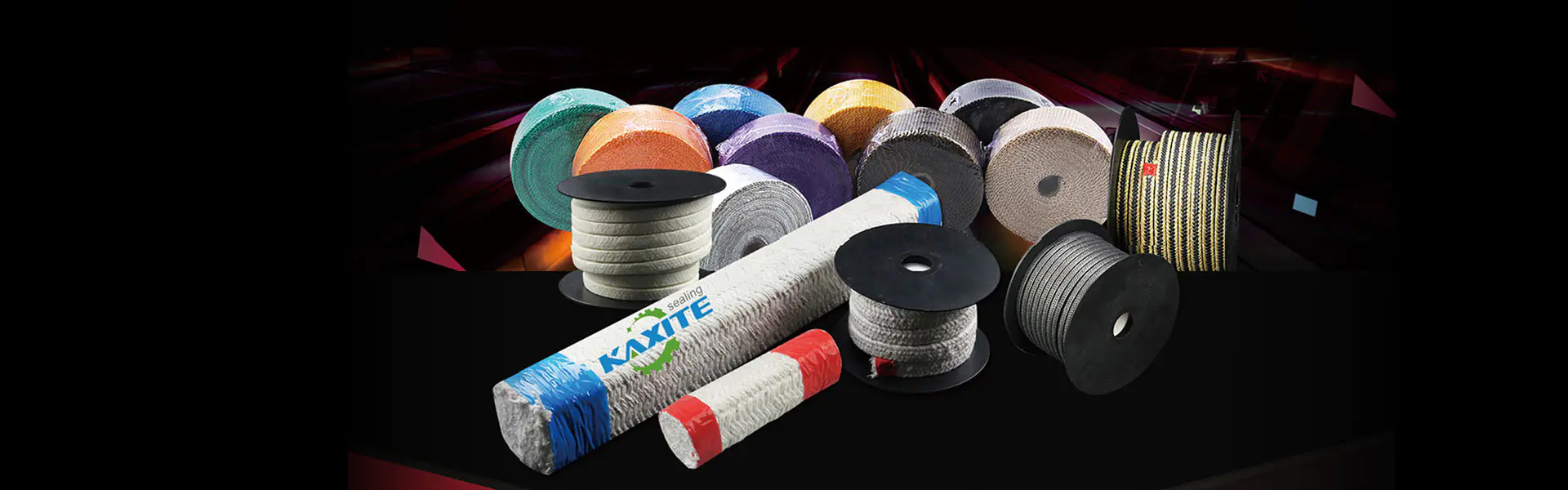
In the demanding world of industrial fluid containment, Synthetic Fiber Packing stands as a cornerstone technology. Engineered from advanced man-made materials, this type of mechanical sealing product is designed to prevent leaks of liquids, gases, and slurries in pumps, valves, mixers, and other rotary or reciprocating equipment. Unlike traditional materials like flax or cotton, modern synthetic fibers offer superior resistance to heat, chemical attack, and mechanical wear, providing longer service life and greater reliability in harsh operating environments. Kaxite has dedicated decades to refining the composition and braiding techniques of our synthetic fiber packings, ensuring they meet the precise challenges faced by industries from chemical processing and power generation to marine and pulp & paper.
Selecting the correct packing requires a deep understanding of its technical specifications. Kaxite's synthetic fiber packings are characterized by a set of core parameters that define their performance envelope.
The performance backbone of our packings comes from the specific synthetic fibers used. Common types include:
The following table outlines the typical performance ranges for Kaxite's standard synthetic fiber packing series. Specific grades may exceed these ranges.
| Parameter | Typical Range | Test Standard / Notes |
|---|---|---|
| Temperature Range | -100°C to +350°C (-148°F to +662°F) | Varies by core fiber; PTFE on lower end, aramid/carbon on higher end. |
| pH Range | 0 - 14 | Full range achievable with PTFE-based packings. Aramid is 4-11. |
| Maximum Shaft Speed | Up to 25 m/s (82 ft/s) | Dependent on fiber blend and lubrication; carbon fiber excels. |
| Pressure Rating | Up to 25 MPa (3600 psi) | For rotating equipment; static seal applications can be higher. |
| Specific Gravity | 1.1 - 2.2 | Lighter for PTFE, heavier for carbon/aramid reinforced grades. |
| Tensile Strength | > 200 N/mm² | ASTM D-885; ensures durability during installation and operation. |
Q: How do I choose the right synthetic fiber packing for my pump?
A: Selection is based on the "STAMPS" criteria: Size, Temperature, Application (equipment type & motion), Media (chemical compatibility), Pressure, and Shaft Speed. First, identify the exact fluid, its temperature, and pH. Then, consider shaft speed and pressure. For a hot, abrasive slurry at moderate speed, a Kaxite aramid fiber packing with a PTFE and graphite impregnation might be ideal. For a high-speed chemical pump with a corrosive acid, a pure PTFE fiber braid would be the choice. Our technical datasheets provide detailed compatibility charts.
Q: Can synthetic fiber packing be used for both rotating and reciprocating shafts?
A: Yes, but the optimal construction differs. For rotating shafts (pumps, mixers), a braided style with good flexibility and thermal conductivity (like carbon fiber) is preferred to manage frictional heat. For reciprocating shafts (valve stems, plungers), a denser, more compact braid (like interlocked braid) with high tensile strength is better to withstand the back-and-forth motion and prevent extrusion. Kaxite offers product lines specifically engineered for each type of motion.
Q: What is the main advantage of synthetic fiber over traditional asbestos or plant-based packing?
A: The advantages are multifold. First, safety and compliance: synthetic fibers eliminate the health hazards associated with asbestos. Second, performance: materials like aramid and carbon fiber offer much higher strength-to-weight ratios, better chemical resistance, and can operate at broader temperature ranges than flax or cotton. Third, longevity: synthetics generally have superior resistance to abrasion, degradation, and compression set, leading to longer service intervals and reduced downtime.
Q: What is the proper procedure for installing ring-style synthetic fiber packing?
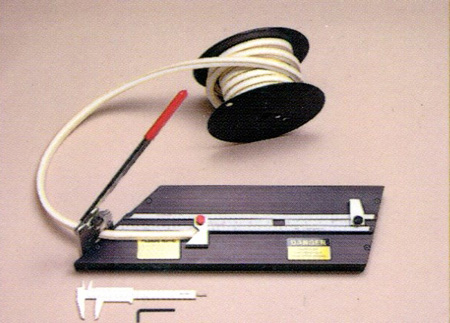
A: Correct installation is critical for performance and seal life. Clean the stuffing box thoroughly. Cut rings using a mandrel or by wrapping the packing around a shaft of identical diameter and cutting at a 45-degree angle. Stagger the joints by 90 degrees on successive rings. Use a proper installation tool to seat each ring firmly, avoiding excessive hammering. For pump applications, tighten the gland finger-tight only, then start the equipment. Allow a brief run-in period (15-30 minutes) and then tighten the gland incrementally—just enough to achieve a slight leakage for cooling (a few drops per minute). Overtightening is a common cause of premature failure.
Q: How much leakage is normal for a properly functioning synthetic fiber packing?
A: A properly adjusted and run-in synthetic fiber packing should exhibit a minimal, controlled leakage. This is typically a few drops per minute for liquids, which serves to lubricate and cool the packing-shaft interface. For gases, leakage should be barely perceptible or nonexistent. A steady stream indicates under-tightening or worn packing, while no leakage at all after initial run-in often indicates over-tightening, which leads to excessive heat, shaft scoring, and rapid packing wear.
Q: How can I tell when my synthetic fiber packing needs to be replaced?
A: Key indicators include: 1) Increased, uncontrollable leakage even after proper gland adjustment. 2) Excessive heat generation at the stuffing box, often felt by hand. 3) Visible signs of wear or degradation such as fraying, hardening, or powdering of the packing material if inspected. 4) Increased power consumption by the pump or motor due to high friction. 5) Visible scoring or wear on the shaft in the packing contact area. Proactive replacement during scheduled maintenance is always preferable to catastrophic failure.
Q: Is Kaxite synthetic fiber packing suitable for food and beverage or pharmaceutical applications?
A: Absolutely. Kaxite manufactures specific grades of packing, often based on pure PTFE or FDA-approved materials, that are designed for sanitary applications. These packings are manufactured in controlled environments, use non-toxic impregnants, and can meet relevant standards such as FDA CFR 21, USDA, and 3-A Sanitary Standards. They resist cleaning-in-place (CIP) chemicals like caustics and acids.
Q: Can your packing handle abrasive media like slurries?
A: Yes, but it requires a specially engineered product. For abrasive services, Kaxite offers synthetic fiber packings with enhanced abrasion resistance. These may feature a blend of aramid fibers for strength, be impregnated with high-purity graphite for lubricity, and sometimes include a corrosion-resistant wire insert (like 316 stainless steel) to act as a barrier against abrasive particles and prevent excessive packing extrusion. Flush plans to introduce clean fluid to the stuffing box are also recommended in such applications.
Q: What is the difference between "lubricated" and "non-lubricated" synthetic fiber packing?
A: The difference lies in the inclusion of solid or semi-solid lubricants during the manufacturing process. Lubricated packing (e.g., with PTFE dispersion, graphite, or molybdenum disulfide) has the lubricant built into the fiber braid. This reduces initial friction, allows for faster and cooler run-in, and extends the period between gland adjustments. Non-lubricated packing relies solely on the inherent properties of the base fiber and requires the sealed fluid to provide lubrication. Lubricated packings are generally preferred for most applications unless the lubricant is chemically incompatible with the process media.