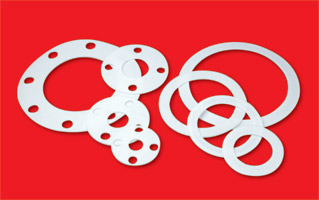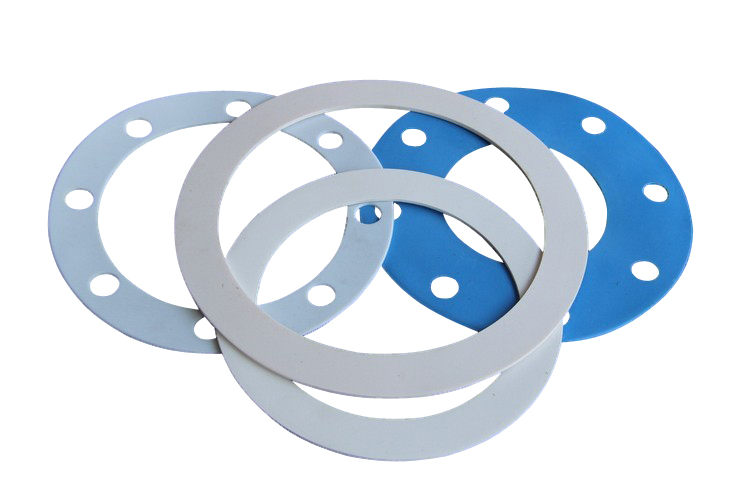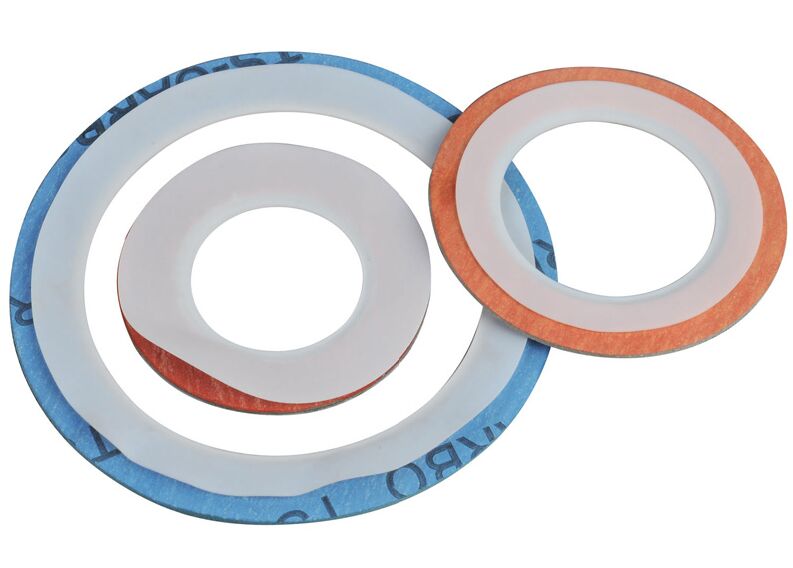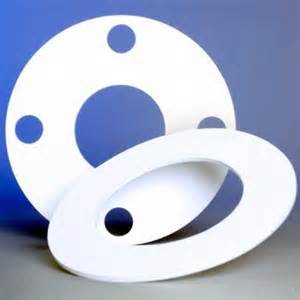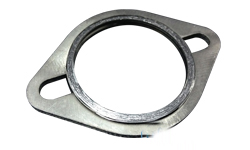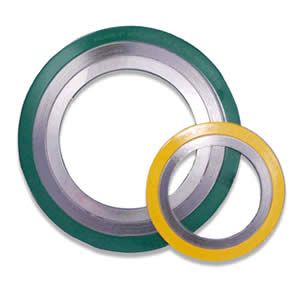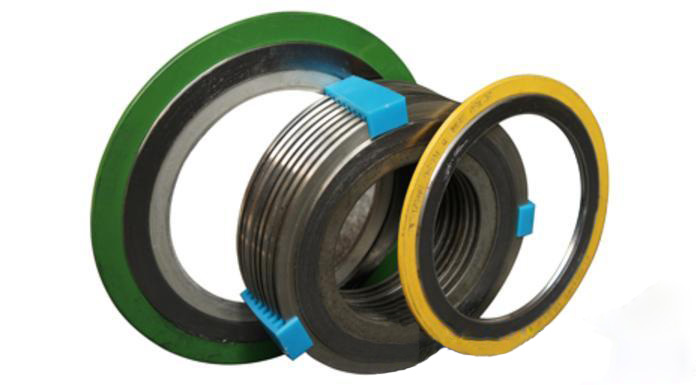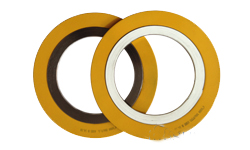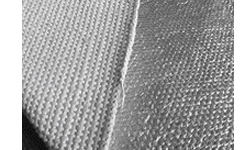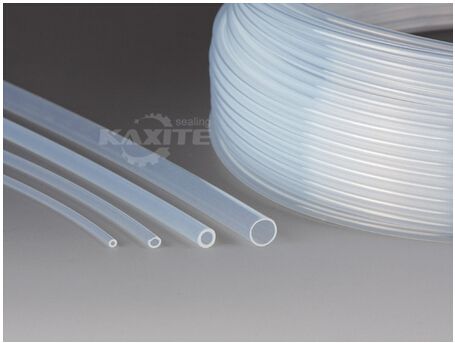
In the demanding world of industrial sealing, where chemical resistance, temperature extremes, and purity are non-negotiable, Polytetrafluoroethylene (PTFE) stands as the undisputed champion. As a leading material for gaskets, PTFE offers a unique combination of properties that no other elastomer or polymer can match in a wide range of applications. At Kaxite, we leverage decades of material science and manufacturing expertise to engineer PTFE gaskets that deliver reliability, longevity, and performance under the most severe conditions. From aggressive chemical processing and pharmaceutical manufacturing to food & beverage and semiconductor production, Kaxite PTFE gaskets provide the critical seal that ensures safety, efficiency, and product integrity.
Our commitment goes beyond supplying a standard product. We specialize in creating tailored sealing solutions. Whether you require virgin PTFE for ultra-high purity, filled PTFE compounds for enhanced mechanical properties, or specialized forms like expanded PTFE (ePTFE) for superior compressibility, Kaxite provides the engineering support and manufacturing precision to meet your exact specifications. Understanding the detailed parameters of PTFE is key to selecting the right gasket for your application.
The exceptional performance of PTFE gaskets stems from its intrinsic molecular structure. Here are the core properties that make it indispensable:
Kaxite manufactures PTFE gaskets in various forms, each designed for specific performance criteria. Our standard offerings include:
Made from 100% pure PTFE resin, these gaskets offer the highest level of chemical resistance and purity. Ideal for ultra-corrosive services and critical sanitary applications.
| Parameter | Specification / Value | Standard / Test Method |
|---|---|---|
| Specific Gravity | 2.14 - 2.20 g/cm³ | ASTM D792 |
| Tensile Strength | 25 - 35 MPa (3600 - 5000 psi) | ASTM D638 |
| Elongation at Break | 300 - 500 % | ASTM D638 |
| Compression Set (22 hrs @ 25°C) | 40 - 60 % | ASTM D395 Method B |
| Continuous Service Temperature | -200°C to +260°C (-328°F to +500°F) | - |
| Chemical Resistance Rating | Excellent to virtually all chemicals | - |
To improve mechanical properties like creep resistance, wear, and thermal conductivity, we compound PTFE with various fillers. Common Kaxite filled compounds include:
| Filler Type | Typical Composition | Key Enhanced Properties | Ideal For |
|---|---|---|---|
| Glass Fiber | PTFE + 15-25% Glass Fiber | Improved wear resistance, reduced creep, higher stiffness | Pumps, valves, general industrial flanges |
| Carbon/Graphite | PTFE + 15-25% Carbon/Graphite | Excellent wear resistance, low friction, improved thermal conductivity | Compressor rods, bearings, dynamic seals |
| Stainless Steel | PTFE + 40-60% Stainless Steel Powder | Greatly improved compressive strength, thermal conductivity | High-load, high-temperature flange connections |
| Bronze | PTFE + 40-60% Bronze Powder | High thermal conductivity, excellent wear resistance | Heat exchangers, high-load applications |
Kaxite ePTFE is a microporous, highly flexible material with exceptional sealing capability at low bolt loads. It is perfect for irregular surfaces and provides excellent stress relaxation resistance.
| Parameter | Specification / Value |
|---|---|
| Density | 0.4 - 1.0 g/cm³ (variable) |
| Compressibility | 40 - 80 % |
| Recovery | 40 - 60 % |
| Sealing Pressure | As low as 150 psi (10 bar) |
| Formats | Sheets, tapes (spooled), die-cut gaskets, cord stock |
Q: What is the main difference between Virgin PTFE and Filled PTFE gaskets?
A: Virgin PTFE is pure, unfilled PTFE resin, offering the maximum chemical resistance and purity but is susceptible to "cold flow" or creep under sustained load. Filled PTFE incorporates materials like glass, carbon, or metal powders to significantly improve mechanical properties such as creep resistance, wear resistance, hardness, and thermal conductivity, while slightly reducing the universal chemical resistance of pure PTFE. The choice depends on whether chemical purity or mechanical stability is the primary requirement for the application.
Q: Can PTFE gaskets be used for high-pressure applications?
A: Standard PTFE has relatively low compressive strength and can cold flow, which can be a limitation in very high-pressure flange connections. For high-pressure services, Kaxite recommends using filled PTFE compounds (e.g., stainless steel or bronze-filled) which have much higher compressive strength and reduced creep. Alternatively, engineered solutions like Kaxite's reinforced PTFE envelope gaskets or specific designs with limitation rings are employed to contain the PTFE and prevent extrusion under high pressure.
Q: How do I determine the right thickness for a PTFE gasket?
A: Gasket thickness selection depends on flange type, surface finish, bolt load, and pressure. A general guideline is that softer, more compressible materials like ePTFE can be thinner (1/32" or 0.8mm). For standard filled PTFE sheets on industrial flanges, 1/16" (1.5mm) or 1/8" (3mm) are common. Thicker gaskets (3mm+) compensate for flange irregularities and offer more material for creep relaxation but require higher bolt loads to seal. Kaxite engineers can advise based on your specific flange details and operating conditions.
Q: Are PTFE gaskets reusable?
A: PTFE gaskets are generally not designed to be reusable. Once compressed during installation, the material undergoes permanent deformation (compression set). Reusing a gasket that has already taken a set will likely result in a poor seal and leakage. Kaxite always recommends using a new gasket for each assembly to ensure a reliable, leak-free joint.
Q: How does Kaxite ensure the quality and consistency of its PTFE gaskets?
A: Kaxite implements a rigorous quality management system. We start with certified raw materials from reputable suppliers. Our manufacturing process is controlled, and we perform batch testing on key physical properties like density, tensile strength, and thickness. For critical applications, we can provide material certificates (C of C) and, if required, traceability documentation. Our precision die-cutting and CNC machining ensure dimensional accuracy according to customer drawings or industry standards like ASME B16.21.
Q: Can you provide custom-shaped PTFE gaskets?
A: Absolutely. Custom fabrication is a core strength of Kaxite. We can produce PTFE gaskets in any size or complex shape from our stock of sheets, rods, or tubes. Using advanced CNC machining, waterjet cutting, and die-cutting technologies, we manufacture gaskets to precise customer specifications, including non-standard flange designs, intricate profiles, and parts with multiple holes or unusual geometries. Simply provide us with a sample, sketch, or detailed CAD drawing for a quotation.
Q: What are the storage and handling recommendations for PTFE gaskets?
A: Store PTFE gaskets in a cool, dry place away from direct sunlight and heat sources. They should be kept flat to avoid bending or warping, especially for thin sheets. Avoid contact with sharp objects that could score or cut the material. While PTFE is chemically resistant, it's good practice to store them away from contaminants like grease or oil to maintain surface purity. For ePTFE tapes and cords, keep them in their original packaging until use.