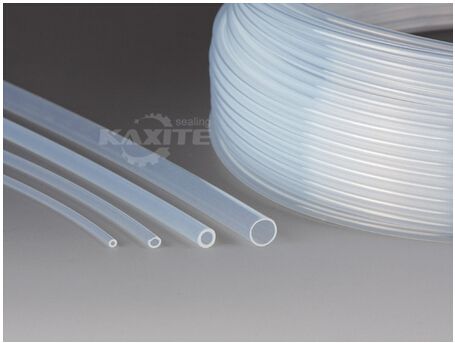
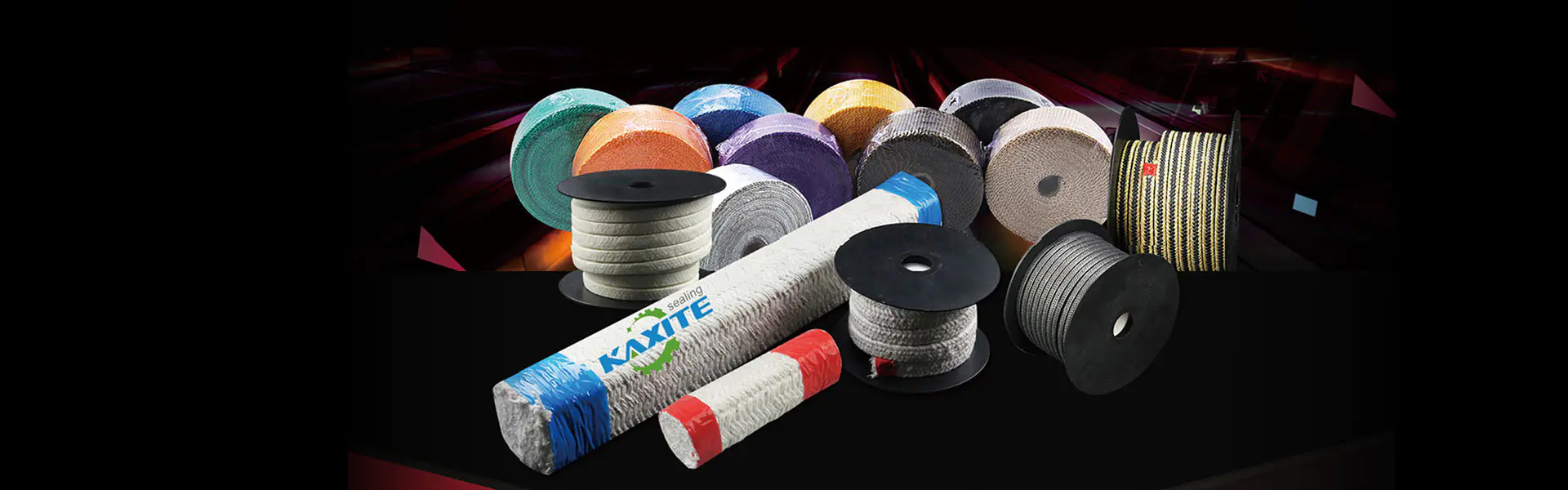
In the world of high-performance materials, few substances offer the unique combination of properties found in PTFE (Polytetrafluoroethylene). At Kaxite, we specialize in manufacturing premium-grade PTFE films that meet the rigorous demands of modern industry. This versatile polymer film, often known by its brand name Teflon®, is engineered for applications where inferior materials would fail. Its unparalleled chemical resistance, exceptional thermal stability, low coefficient of friction, and excellent dielectric properties make it an indispensable component across countless sectors.
Our commitment at Kaxite is to provide not just a product, but a solution. Each roll of Kaxite PTFE film is produced under stringent quality controls, ensuring consistency, reliability, and performance you can count on. Whether you're in aerospace designing the next generation of aircraft, in electronics developing sensitive circuitry, or in food processing requiring non-stick and safe surfaces, our films deliver.
Our product line offers a range of specifications to suit diverse application needs. Below is a detailed breakdown of our standard offerings.
| Property | Test Method | Unit | Standard Grade | High-Purity Grade | Reinforced Grade |
|---|---|---|---|---|---|
| Thickness Range | ASTM D374 | μm (microns) | 25 - 500 | 12.5 - 250 | 50 - 1000 |
| Density | ASTM D792 | g/cm³ | 2.15 - 2.20 | 2.15 - 2.18 | 2.20 - 2.30 |
| Tensile Strength (MD) | ASTM D882 | MPa | 20 - 35 | 25 - 40 | 30 - 50 |
| Elongation at Break | ASTM D882 | % | 250 - 400 | 200 - 350 | 150 - 300 |
| Dielectric Strength | ASTM D149 | kV/mm | 60 - 100 | 80 - 120 | 50 - 90 |
| Continuous Service Temperature | - | °C | -270 to +260 | -270 to +260 | -200 to +260 |
| Coefficient of Friction (Dynamic) | ASTM D1894 | - | 0.05 - 0.10 | 0.04 - 0.08 | 0.06 - 0.12 |
| Water Absorption | ASTM D570 | % | < 0.01 | < 0.005 | < 0.02 |
What is the main difference between skived PTFE film and cast PTFE film?
Skived PTFE film is produced by compressing PTFE resin into a large billet, sintering it, and then carefully skiving (shaving) it into thin, continuous sheets. This process results in a film with high tensile strength, good dimensional stability, and excellent electrical properties, ideal for gaskets and seals. Cast PTFE film, also known as deposited film, is made by dispersing PTFE particles in a carrier, casting it onto a belt, and then sintering. It is generally thinner, has a smoother surface, and is often used for release applications and capacitor dielectrics. Kaxite offers both types, with expert guidance on selecting the right one for your project.
Can Kaxite PTFE film be heat sealed or laminated to other materials?
Pure PTFE film cannot be thermally bonded to itself or other materials using conventional heat sealing because it does not melt. However, Kaxite provides modified PTFE films and composite solutions that are designed for heat-sealable applications. For laminating PTFE to substrates like fabrics, glass, or metals, specialized adhesives or bonding techniques such as plasma treatment are required to activate the PTFE surface. Our technical team can advise on the best bonding method for your specific laminate requirements.
How does temperature affect the mechanical properties of your PTFE film?
PTFE film maintains remarkable stability over a vast temperature range. At cryogenic temperatures (as low as -270°C), it remains flexible and does not become brittle. At elevated temperatures, its tensile strength decreases gradually but it retains significant structural integrity up to its melting point (around 327°C). Importantly, its excellent electrical insulation properties are preserved at both high and low temperatures, unlike many other plastics. For continuous use above 260°C, some reduction in mechanical properties should be accounted for in the design, which our engineers can help you model.
Is Kaxite PTFE film suitable for outdoor and UV-exposed applications?
Yes, absolutely. One of the standout features of PTFE is its exceptional weatherability and resistance to ultraviolet (UV) radiation. Kaxite PTFE film does not degrade, become brittle, or significantly lose its physical properties when exposed to sunlight for extended periods. This makes it an excellent choice for architectural applications (like tensile structures), outdoor electrical insulation, and any component exposed to the elements.
What are the available options for colors and custom sizes?
Standard Kaxite PTFE film is an opaque white color due to the natural polymer. However, we offer a range of colored films (including black, brown, and custom colors) using thermally stable pigments that do not compromise the film's core properties. Regarding sizes, we provide films in standard roll widths and can customize slitting to your exact specifications. We also offer die-cutting and fabrication services to deliver ready-to-use components, reducing your processing time and material waste.
How does the reinforced grade differ from the standard film?
Kaxite's reinforced PTFE film incorporates high-strength materials such as glass fiber, carbon, or other fillers into the PTFE matrix. This reinforcement significantly enhances mechanical properties like tensile strength, creep resistance (reduced cold flow), and wear resistance. While pure PTFE can deform under sustained load, reinforced grades maintain their shape and dimensional stability better, making them perfect for heavy-duty gaskets, bearings, and seals in high-stress environments. The trade-off is a slight reduction in pure chemical resistance and dielectric strength compared to unfilled grades.