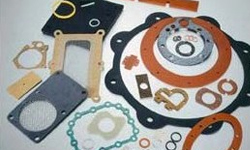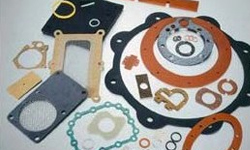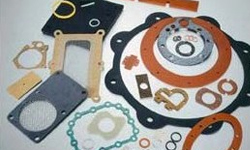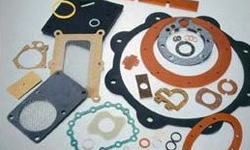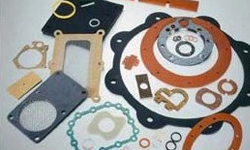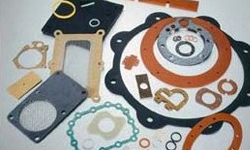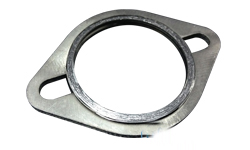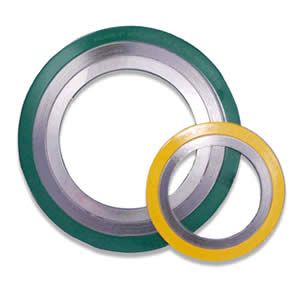
Rubber gaskets are precision-engineered sealing components designed to fill the space between two or more mating surfaces. Their primary function is to prevent the leakage of fluids or gases under compression. When bolts or clamps tighten the flanges or surfaces together, the rubber gasket deforms elastically. This deformation allows it to flow into and seal any microscopic imperfections on the mating surfaces, creating a reliable, leak-tight barrier. The effectiveness of this seal depends on several critical factors, including the material's compatibility, the applied compression force (bolt load), the gasket's design, and the operating environment (temperature, pressure, and media).
The versatility of rubber gaskets makes them indispensable across a vast spectrum of industries. At Kaxite, our gaskets are engineered to meet the rigorous demands of these diverse applications.
Choosing the correct elastomer is the single most important decision for gasket performance and longevity. Each material offers a unique balance of properties.
| Material | Key Characteristics | Temperature Range | Resistance Profile | Typical Applications |
|---|---|---|---|---|
| Nitrile Rubber (NBR) | Excellent resistance to oils, fuels, and hydrocarbons. Good compression set and abrasion resistance. | -40°C to +120°C (-40°F to +248°F) | Excellent: Oils, fuels, aliphatic hydrocarbons. Good: Water, hydraulic fluids. Poor: Ozone, weathering, polar solvents. | Automotive fuel systems, oil seals, hydraulic equipment. |
| Ethylene Propylene Diene Monomer (EPDM) | Superior resistance to weathering, ozone, steam, and hot water. Excellent electrical insulating properties. | -50°C to +150°C (-58°F to +302°F) | Excellent: Hot water, steam, alkalis, ozone, weathering. Good: Acids, alcohols, phosphate esters. Poor: Oils, fuels, solvents. | HVAC systems, plumbing seals, automotive coolant systems, outdoor electrical enclosures. |
| Silicone Rubber (VMQ) | Extreme temperature flexibility, high thermal stability, inert and odorless. Good electrical properties. | -60°C to +230°C (-76°F to +446°F) | Excellent: Extreme temperatures, oxygen, ozone. Fair: Water, acids, alkalis. Poor: Fuels, oils, solvents, abrasion. | Food & medical equipment, high-temperature gasketing, appliance seals, aerospace. |
| Fluoroelastomer (FKM/Viton®) | Exceptional resistance to high temperatures, oils, fuels, acids, and aggressive chemicals. | -20°C to +200°C (-4°F to +392°F) | Excellent: High temps, oils, fuels, acids, aromatics, aliphatics. Good: Ozone, weathering. Variable: Steam, ketones. | Chemical processing, aerospace fuel systems, automotive under-hood, oil & gas industry. |
| Neoprene (CR) | Good all-around resistance to weathering, ozone, moderate oils, and flame. Tough and durable. | -40°C to +100°C (-40°F to +212°F) | Good: Weathering, ozone, moderate oils, acids, alkalis. Fair: Water, abrasion. Poor: Strong oxidizers, aromatic hydrocarbons. | Industrial gaskets, refrigeration, marine applications, weather stripping. |
| Natural Rubber (NR) | High tensile strength, excellent elasticity and resilience, good abrasion resistance. | -50°C to +80°C (-58°F to +176°F) | Good: Water, alcohols, weak acids/alkalis. Poor: Ozone, oils, fuels, solvents, weathering. | Low-pressure sealing, damping mounts, general-purpose non-critical seals. |
Beyond material, precise specifications ensure the gasket performs as intended in your assembly. Kaxite provides comprehensive data for each gasket we manufacture.
Q: How do I choose the right rubber material for my gasket application?
A: Selecting the right material requires analyzing the operating environment. First, identify the primary media (fluid or gas) the gasket will contact and consult a chemical compatibility chart. Second, determine the continuous and peak temperature ranges. Third, consider pressure requirements, exposure to UV/ozone, and any need for regulatory compliance (e.g., FDA, USP, NSF). Kaxite's engineering team can assist with this critical analysis to ensure optimal performance and longevity.
Q: What is the difference between a rubber gasket and an O-ring?
A: Both are seals, but their design and application differ. An O-ring is a torus (doughnut-shaped) seal typically designed to sit in a gland (a machined groove) and seals via radial compression. A rubber gasket is a formed sheet or die-cut component designed to seal between two flat or flanged surfaces (face seals) via axial compression. Gaskets come in a vast array of complex shapes (sheets, rings, custom profiles) beyond the simple O-ring.
Q: Why did my rubber gasket fail prematurely?
A: Premature failure can stem from several root causes: 1) Chemical Incompatibility: Swelling, softening, or cracking due to media attack. 2) Temperature Exceedance: Hardening, cracking, or excessive compression set from operating above/below the material's rated range. 3) Improper Installation: Under-torquing (leakage) or over-torquing (extrusion or damage to flanges). 4) Design Flaw: Incorrect hardness or cross-section for the application pressure, leading to extrusion or blow-out. 5) Environmental Attack: Degradation from ozone, UV light, or weathering if an unsuitable material like NBR is used outdoors.
Q: Can Kaxite manufacture custom-shaped rubber gaskets?
A: Absolutely. Custom fabrication is a core specialty at Kaxite. We produce gaskets in virtually any 2D shape through precision die-cutting, kiss-cutting, or waterjet cutting from sheet stock. For complex 3D extruded profiles, we utilize custom-designed extrusion tooling. We also offer molded rubber gaskets for high-volume production of parts with intricate cross-sections. Simply provide a drawing, sample, or CAD file for a quotation.
Q: How important is surface finish on the flanges being sealed?
A> Extremely important. The flange surface finish directly impacts the gasket's ability to form an effective seal. A finish that is too rough can prevent proper initial sealing and cut into the gasket. A finish that is too smooth (e.g., mirror polish) may not provide enough "bite" for the gasket to grip, potentially leading to slippage under pressure. A serrated or phonographic spiral finish within recommended Ra (roughness average) values is typical for optimal performance. Kaxite can advise on the ideal flange preparation for our gaskets.
Q: What is compression set and why is it a critical specification?
A> Compression set is a measure of a rubber material's ability to retain its elastic properties after prolonged compression. It is expressed as a percentage of the original deflection. A low compression set (e.g., 20%) means the gasket springs back well and maintains sealing force over time. A high compression set (e.g., 60%) indicates the material has taken a permanent set, lost resilience, and may no longer apply sufficient pressure to seal, leading to leaks. It is a key indicator of long-term sealing reliability.
Q: Do you offer conductive or EMI/RFI shielding rubber gaskets?
A> Yes, Kaxite provides specialized elastomeric gaskets engineered for electrical conductivity and electromagnetic interference (EMI) or radio frequency interference (RFI) shielding. These are typically made by loading silicone or other elastomers with conductive particles like silver-plated aluminum, nickel-graphite, or carbon. They provide both environmental sealing and a conductive path to ground, protecting sensitive electronics in enclosures from interference.