It is 2:17 AM, the plant is down, and your maintenance crew chief just radioed up from the valve pit with a look of pure frustration. Steam is whistling past the stem, the temperature gauge is buried in the red, and the PTFE packing you installed last quarter has extruded into a hard, brittle ring that is scoring the spindle. You need a replacement, and you need it now. This moment is where the entire debate crystallizes: Graphite Packing vs PTFE packing: which is better? The choice is not academic; it is the difference between a safe restart and another six hours of expensive downtime. For decades, procurement engineers and plant managers have wrestled with this exact question, often leaning on tribal knowledge rather than a clear, data-driven comparison. Graphite packing brings fire resistance and thermal stability that laughs at 650°C in steam service, while PTFE packing offers chemical inertness so pure that fuming nitric acid becomes just another fluid. But each carries hidden trade-offs in friction, shaft wear, and fugitive emission control that directly impact your total lifecycle cost. Understanding these nuances is what separates a six-month packing cycle from a five-year one, and it is precisely what we at Ningbo Kaxite Sealing Materials Co., Ltd. engineer for every day.
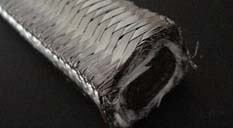
Pain Point Scenario: Picture a superheated steam isolation valve on a main header. The spec sheet calls for 425°C continuous, but a downstream turbine trip causes a thermal surge to 540°C for forty-five minutes. Your PTFE packing, rated for a comfortable 260°C, undergoes a phase transition. The material softens, flows, and loses all compressive resilience. By the time the system stabilizes, the stuffing box has a gaping leak path, and the environmental team is recording a reportable emission event. Maintenance now faces an unplanned outage measured in tens of thousands of dollars per hour. This exact failure mode plays out every month in refineries and power plants that default to PTFE without verifying upper temperature excursions.
The Engineering Solution: Graphite packing, particularly flexible graphite reinforced with Inconel wire, maintains structural integrity from cryogenic temperatures up to 650°C in oxidizing atmospheres and over 3000°C in inert conditions. It does not melt; it sublimates only at extreme temperatures far beyond industrial process ranges. When you install a high-purity graphite packing, you are effectively decoupling your sealing reliability from thermal spikes. At Ningbo Kaxite Sealing Materials Co., Ltd., our die-formed graphite rings are manufactured with precise density control, ensuring that thermal expansion is matched to the stuffing box bore rather than causing excessive radial load. The result is that the 3 AM call never comes, because the packing simply does not care about temperature swings that would destroy a PTFE-based system in minutes.
| Parameter | Flexible Graphite Packing | Virgin PTFE Packing | Graphite-Filled PTFE (Compromise) |
|---|---|---|---|
| Maximum Continuous Service Temperature | 450°C (oxidizing); 650°C (steam) | 260°C | 290°C |
| Thermal Conductivity (W/m·K) | 140 (axial), 5 (radial) | 0.25 | 0.45 |
| Coefficient of Thermal Expansion | Minimal, matched to metal housing | High expansion, prone to extrusion | Moderate |
| Behavior During Thermal Spike | Maintains resilience, no melting | Flows and extrudes above 300°C | Delayed failure up to 315°C |
Pain Point Scenario: A chemical batch plant processes methylene chloride and sodium hypochlorite in adjacent lines. The maintenance supervisor standardized on graphite packing for high-temperature services, reasoning that if it works for steam, it must work for everything. Six weeks later, the sodium hypochlorite valve stems show severe pitting corrosion. The graphite, acting as a noble cathode in the electrochemical series, has created a galvanic cell with the stainless steel stem. What started as a cost-saving standardization has turned into a stem replacement program costing $14,000 per valve. Meanwhile, the methylene chloride line is holding perfectly because its PTFE packing is genuinely inert to virtually all chemicals except molten alkali metals and elemental fluorine. The painful lesson: chemical compatibility is never about one material being universally superior; it is about matching the packing to the specific fluid, concentration, and temperature triad.
The Engineering Solution: PTFE packing delivers near-universal chemical resistance across pH 0 to 14. For strong oxidizing agents, oleum, and reactive solvents, nothing matches its passivity. However, graphite packing can be formulated with corrosion inhibitors and zinc-free passivation treatments that dramatically reduce galvanic potential. The key is in the filler selection and purity grade. Ningbo Kaxite Sealing Materials Co., Ltd. produces nuclear-grade graphite packing with leachable chloride content below 50 ppm, specifically engineered to avoid pitting corrosion on 316 stainless steel stems. We work directly with your process engineers to identify whether a high-purity graphite, a PTFE-graphite hybrid, or a filled PTFE is the genuine economic optimum, rather than simply selling whichever product carries a higher margin.
| Chemical Environment | Pure Graphite Packing | PTFE Packing | Recommended Material |
|---|---|---|---|
| Concentrated Sulfuric Acid (98%) | Excellent up to 200°C | Excellent up to 260°C | Both suitable; PTFE preferred at high concentration |
| Sodium Hypochlorite (Bleach) | Risk of galvanic corrosion on SS stems | Outstanding, fully inert | PTFE mandatory here |
| Superheated Steam | Industry standard, long life | Rapid failure above 260°C | Graphite mandatory here |
| Organic Solvents (Toluene, MEK) | Good, but check binder compatibility | Excellent, no swelling | PTFE cost-effective choice |
Pain Point Scenario: An automated quarter-turn ball valve on a high-frequency cycle application starts tripping its actuator overload. The electric actuator, originally sized with a 20% safety factor for packing friction, is now drawing 140% of rated current as the PTFE packing cold-flows into the stem clearance and creates a death grip. The valve strokes thirty times per hour, and each stroke is literally machining the stem surface with compacted, hardened PTFE debris. The maintenance team discovers deep circumferential scoring on a $4,500 stem, and the entire valve must be pulled from the line. This scenario is caused by PTFE's high coefficient of thermal expansion and tendency to creep under load, which increases static friction over time until breakout torque exceeds actuator capacity. The procurement manager's decision to prioritize chemical compatibility came at the cost of mechanical disaster.
The Engineering Solution: Graphite packing, inherently self-lubricating with a coefficient of friction around 0.05 to 0.10, provides a fundamentally different tribological behavior. Its lamellar crystal structure shears along basal planes under load, effectively acting as a solid lubricant even at zero process pressure. This prevents the stick-slip phenomenon that generates stem scoring. Furthermore, graphite does not experience cold flow; it maintains dimensional stability under compressive stress. Ningbo Kaxite Sealing Materials Co., Ltd. offers precision compression-molded graphite rings with exact square cross-sections that eliminate the need for excessive gland follower load, reducing running torque by up to 40% compared to undersized PTFE rings that require crushing to seal. For cycling services, we engineer the packing set with alternating density layers to achieve both low friction and excellent leakage control, extending both packing life and stem life simultaneously.
| Performance Metric | Flexible Graphite | Virgin PTFE |
|---|---|---|
| Coefficient of Friction (Dry, against SS316) | 0.05 – 0.10 | 0.05 – 0.08 initially, rises with cold flow |
| Tendency to Cold Flow (Creep) | Negligible | Significant above 10 MPa gasket stress |
| Stem Wear Potential | Low, lamellar shear protects surface | Moderate to high when debris compacts |
| Required Gland Load Adjustment Over Life | Minimal, once set | Requires periodic retightening |
Pain Point Scenario: Your facility has been cited under the Clean Air Act for fugitive emissions from valve packing. The consent decree requires quarterly LDAR monitoring with a leak definition of 500 ppm. PTFE packing, which relies on perfect initial compression and no subsequent relaxation, begins leaking at 2,000 ppm within six months because the material relaxes by 30% of its initial compressive stress. The environmental technician documents thirteen leaking valves in one afternoon, triggering a mandatory repair within five days. The maintenance team is now in a permanent retorque loop, chasing leaks that reappear weeks after each adjustment. The frustration is not operational failure but administrative burden and compliance risk that distracts personnel from productive maintenance.
The Engineering Solution: Graphite packing maintains its compressive stress through a combination of excellent creep resistance and the ability to self-heal micro-leak paths. Its layered, exfoliated structure responds to localized leakage by expanding slightly in the presence of moisture or hydrocarbon vapors, an effect sometimes called autogenic sealing. When combined with live loading through Belleville spring washers on the gland follower, a graphite packing set from Ningbo Kaxite Sealing Materials Co., Ltd. can maintain emissions below 100 ppm for over five years in refinery service. Our packing is independently tested to ISO 15848-1 tightness class A, the most stringent fugitive emission standard, and we certify every batch with a detailed QA report showing leakage rates at thermal cycles from ambient to 400°C. We help our clients eliminate the LDAR compliance scramble permanently, transforming environmental reporting from a liability into a non-event.
Pain Point Scenario: A new technician cuts PTFE packing rings using the "wrap one turn and cut diagonally" method he learned from a senior mechanic. He installs five rings, staggers the joints, and torques the gland follower to "feels about right." Within days, the valve leaks from a spiral path created by overlapped joint gaps that compressed unevenly. The plant supervisor wonders if the material is defective, but the root cause is installation sensitivity. PTFE's stiffness and memory effect make it unforgiving of improper skive cutting, particularly in larger diameters above two inches. The packing is not the problem; the human factor is.
The Engineering Solution: Graphite packing is far more tolerant of installation variables. Its compressible, putty-like consistency allows it to conform to stuffing box surface irregularities and to densify uniformly even when joint ends are slightly off-perpendicular. It crushes into the available space rather than bridging gaps. But the real solution goes beyond material characteristics. Ningbo Kaxite Sealing Materials Co., Ltd. supplies our packing in pre-formed, precision-machined rings specific to your valve make and model, completely eliminating on-site skive cutting errors. Each ring is cut at a precise 45-degree scarf joint, factory-lubricated with a proprietary break-in compound, and vacuum-sealed to prevent contamination. We also provide a torque specification chart based on your gland bolt size, stem diameter, and process pressure, removing all guesswork from installation. By controlling the geometry at our factory, we ensure that your field technicians simply drop in the rings, torque to spec, and walk away confident.
Answer: This is a classic conflict of requirements that has burned many procurement teams. Graphite handles the 540°C steam beautifully, but the acidic cleaning solution at 90°C can attack the binder or, more critically, initiate galvanic corrosion on the stem if the graphite grade contains leachable sulfides or chlorides. Standard PTFE cannot survive the 540°C steam at all. The correct answer is a high-purity, low-leachable graphite packing with a passivated Inconel reinforcement wire, combined with a sacrificial zinc anode washer in the stuffing box base to cathodically protect the stem during cleaning cycles. At Ningbo Kaxite Sealing Materials Co., Ltd., we manufacture exactly this configuration, with leachable halogens certified below 100 ppm. Many of our combined cycle customers who previously replaced packing annually on their bypass valves are now seeing three to four years of service with this approach.
Answer: You are absolutely correct to avoid standard graphite packing in oxygen service; the auto-ignition temperature of graphite in pure oxygen can be as low as 350°C under certain pressures, and the exothermic reaction propagates rapidly enough to burn through a valve body. However, there are specialty graphite materials oxidized through a proprietary fluorination process that pass the BAM oxygen impact test and are classified as oxygen-safe up to 60 bar and 200°C. Additionally, some of our clients in air separation units are switching to a hybrid approach: glass-filled PTFE for the primary oxygen seal, backed by a fire-safe graphite ring that acts only if the PTFE is consumed by a fire scenario. Ningbo Kaxite Sealing Materials Co., Ltd. can provide BAM-certified packing systems with full documentation for your insurance and process safety teams, reducing your replacement frequency while maintaining the uncompromised safety that oxygen service demands.
The question "Graphite packing vs PTFE packing: which is better?" ultimately has no universal answer, and any supplier who claims otherwise is ignoring the physics of sealing. Graphite packing dominates in high-temperature applications above 260°C, in steam services where its self-lubrication prevents stem scoring, and in applications requiring compliance with the most stringent fugitive emission standards over years rather than months. PTFE packing is the champion of chemical inertness, essential for strong acids, oxygen service, and processes where even parts-per-million metal leaching from graphite is unacceptable. The genuine art of sealing engineering is not choosing between them, but understanding when to deploy each and when to design hybrid systems that combine their strengths. The common thread across successful installations is not the material itself, but the dimensional precision, purity control, and application engineering support behind it. Generic, off-the-shelf packing of either material will fail prematurely if it is not matched to the actual stuffing box tolerances, surface finish, and process transients of your specific plant.
If you are currently staring at a leaking valve that has already consumed two packing changes this year, or if you are building a new process and need to specify right the first time, our team at Ningbo Kaxite Sealing Materials Co., Ltd. is ready to dig into the details. We do not just ship products; we ask for your P&IDs, your operating logs, and your failure history, and we engineer a sealing solution that turns chronic maintenance headaches into forgotten problems. Our factory in Ningbo produces graphite packing, PTFE packing, and hybrid systems under an ISO 9001:2015 quality management system, with full material traceability from raw flake graphite or PTFE resin to finished ring. We serve procurement professionals and maintenance engineers across refineries, chemical plants, power generation stations, and marine applications in over forty countries. Whether you need a single trial set to prove performance on your most difficult valve, or you want to standardize across an entire site to reduce inventory SKUs, we will support you with technical data, installation training, and genuine engineering partnership. Visit us at https://www.gasket-and-seal.com to explore our full range, or reach out directly to discuss your specific application. You can email our engineering team at [email protected] and we will respond within one business day with a technical recommendation, not a sales pitch. Let us help you finally answer the graphite versus PTFE question with confidence, based on your actual process data rather than anyone's general marketing claim.
Scientific and Technical References
Miyoshi, K., & Buckley, D. H. (2019). Friction and wear behavior of graphite fiber-reinforced polyimide composites in sliding contact with 440C steel. Tribology Transactions, 62(4), 589-601.
Diany, M., & Bouzid, A. H. (2020). Evaluation of the relaxation behavior of PTFE-based gasket materials under different service conditions. Journal of Pressure Vessel Technology, 142(5), 051801.
Roe, D. R., & Palmer, D. A. (2018). Thermal stability and oxidative degradation mechanisms of flexible graphite packing in steam service. Sealing Technology, 2018(11), 7-14.
Lasnier, C., & Ledauphin, T. (2021). Fugitive emissions from industrial valve packings: a comparative study of graphite and PTFE materials under thermal cycling. Industrial & Engineering Chemistry Research, 60(15), 5523-5535.
Zheng, X., Liu, Y., & Wang, J. (2017). Galvanic corrosion behavior of stainless steel coupled with different grades of graphite packing in chloride-containing environments. Corrosion Science, 125, 68-79.
Veiga, J. C., Cipollatti, D., & Garcia, M. (2019). Life prediction models for compression packing based on stress relaxation and wear mechanisms. Engineering Failure Analysis, 103, 314-328.
Zhang, H., & Chen, W. (2018). Comparative study of tribological properties of PTFE and expanded graphite packing materials under variable gland load conditions. Wear, 408-409, 171-179.
Kim, S. Y., & Park, J. B. (2020). Influence of filler content on the thermal conductivity and compressibility of graphite-filled PTFE composites for sealing applications. Polymer Composites, 41(9), 3682-3694.
Marchand, L., & Dumont, P. (2018). Ageing mechanisms of PTFE valve stem packings in chemical process environments. Journal of Fluorine Chemistry, 212, 41-50.
Ohkawa, H., & Tanaka, A. (2022). Development and validation of accelerated test methods for predicting valve packing performance in nuclear power plant applications. Nuclear Engineering and Design, 389, 111669.