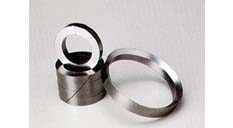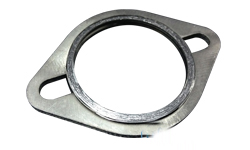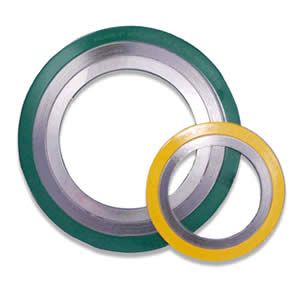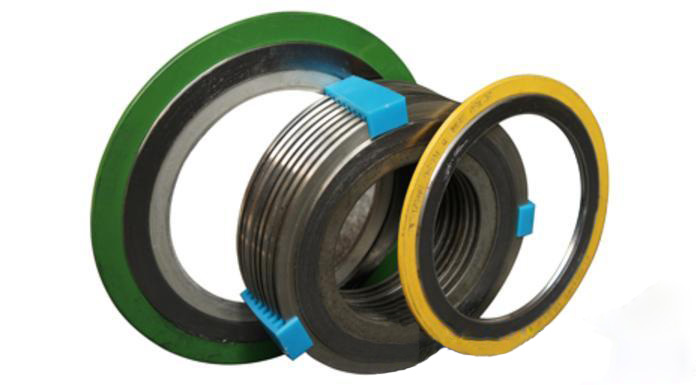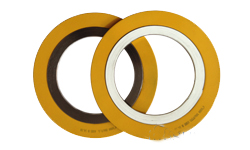
In the world of high-performance industrial sealing, reliability is non-negotiable. The Die-formed Graphite Ring represents a pinnacle of sealing technology, offering unparalleled stability and longevity in the most extreme environments. Unlike traditional braided or spiral-wound gaskets, die-formed rings are manufactured through a high-precision pressing process. This method compresses high-purity graphite foil under significant pressure into a solid, homogeneous ring with a defined cross-section. The result is a sealing component with no inherent weaknesses, no layered structures, and consistent density throughout. Kaxite leverages decades of material science expertise to produce die-formed graphite rings that set the standard for leak-tight integrity in critical applications across power generation, chemical processing, oil & gas, and aerospace industries.
The Kaxite die-forming process transforms flexible graphite into a robust, dimensionally precise sealing element. This unique manufacturing approach yields several critical advantages over alternative sealing methods.
Kaxite die-formed graphite rings are engineered to meet exacting standards. Below are the detailed specifications that define our product line. Custom sizes and profiles beyond the standard ASME/API ranges can be manufactured to meet specific application requirements.
| Parameter | Specification / Range | Standard / Notes |
|---|---|---|
| Base Material | Flexible Graphite Foil (Reinforcement Options Available) | ASTM F607, DIN 28090-2 |
| Density (Typical) | 1.8 - 2.1 g/cm³ | Controlled via die-forming pressure |
| Temperature Range (Inert) | -450°F to 3000°F (-268°C to 1650°C) | Upper limit depends on atmosphere |
| Temperature Range (Oxidizing) | -450°F to 800°F (-268°C to 430°C) | Requires optional oxidation inhibitors |
| Pressure Rating | Full vacuum to 3000 psi (200 bar+) | Dependent on design and flange type |
| pH Range | 0 - 14 (with exceptions for strong oxidizers) | Consult Kaxite for specific media |
| Standard Cross-Sections | Square, Rectangular, Oval (V-Ring) | Custom profiles available |
| Standard Sizes (ID/OD) | From 0.25" (6mm) to 120" (3000mm)+ | ASME B16.20, B16.21, API 6A, DIN |
| Reinforcement Options | 304/316 SS, Inconel, Titanium Inner/Outer Rings | For handling, alignment, and high pressure |
| Surface Finish | As-pressed or calendered smooth | Optimized for sealing surface |
Kaxite offers various grades of flexible graphite to suit specific operational needs:
What is the primary advantage of a die-formed graphite ring over a spiral-wound gasket with graphite filler?
The primary advantage is structural homogeneity and superior creep resistance. A spiral-wound gasket has a layered, mechanical structure (metal windings) that can relax over time. A die-formed ring is a solid, uniformly dense piece of graphite with no internal gaps or mechanical elements to fail, providing more consistent long-term sealing with lower relaxation.
When should I consider using a metal-insert reinforced die-formed ring?
Metal insert reinforcement (typically a thin stainless steel ring on the inner diameter (ID) or outer diameter (OD)) is recommended for several scenarios: 1) For handling fragile large-diameter rings, 2) To provide anti-blowout protection in high-pressure or pressure-cycling services, 3) To aid in precise centering and alignment during installation in raised face flanges, and 4) To add structural stability for valves or pumps with significant dynamic movement.
How do I determine the correct density for my application?
Density is a key performance indicator. Higher density (e.g., 2.0-2.1 g/cm³) offers better creep resistance and is suited for high-pressure, high-temperature services where flange loads are substantial. Lower density (e.g., 1.8-1.9 g/cm³) provides greater conformability and is excellent for sealing slightly irregular or scratched flange surfaces at moderate conditions. Kaxite engineers can recommend the optimal density based on your specific pressure, temperature, and flange finish.
Can die-formed graphite rings be used in steam service?
Yes, they are excellent for steam service. Pure graphite is highly resistant to steam up to its oxidation temperature limit. For superheated steam applications above 800°F (430°C), it is crucial to ensure the operating atmosphere remains reducing or inert, or to specify an oxidation-resistant grade (KA-GF02) from Kaxite to prolong service life.
What are the installation torque requirements for a die-formed graphite ring?
Torque requirements depend on the flange type (e.g., ASME B16.5, API), flange material, bolt size/grade, and the specific ring cross-section. A general principle is that graphite requires less seat stress than many compressed non-asbestos (CNAF) gaskets. It is critical to follow a cross-pattern, multi-pass bolt tightening procedure to achieve even compression. Kaxite provides detailed installation guidelines with torque recommendations based on the ring size and application data.
Are there any chemical services where graphite should not be used?
While graphite is exceptionally chemically inert, it is not recommended for use with strong oxidizing agents such as hot, concentrated nitric acid, chlorates, peroxides, or fluorine. In these services, the oxidizing potential can degrade the graphite structure. Always consult Kaxite's chemical compatibility charts for your specific process media.
How does thermal cycling affect a die-formed graphite ring seal?
Die-formed graphite rings excel in thermal cycling applications due to graphite's high thermal conductivity and low coefficient of thermal expansion. These properties mean the ring heats and cools uniformly with the flange, minimizing differential expansion stresses that can cause leaks. The high creep resistance also prevents the seal from losing load during temperature changes, maintaining a tight seal.
Can I reuse a die-formed graphite ring after it has been compressed?
It is generally not recommended. Once a die-formed ring has been compressed and seated during installation, its internal structure has conformed to the specific micro-profile of the flange faces. Reusing it on a different flange set or even the same one after disassembly risks creating a leak path, as it may not re-conform perfectly. For critical services, Kaxite always recommends replacement with a new ring during re-assembly.
The robustness of the Kaxite die-formed graphite ring makes it the seal of choice for extreme service conditions. Its reliability is proven in: