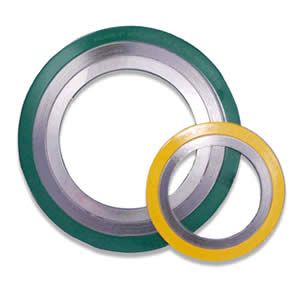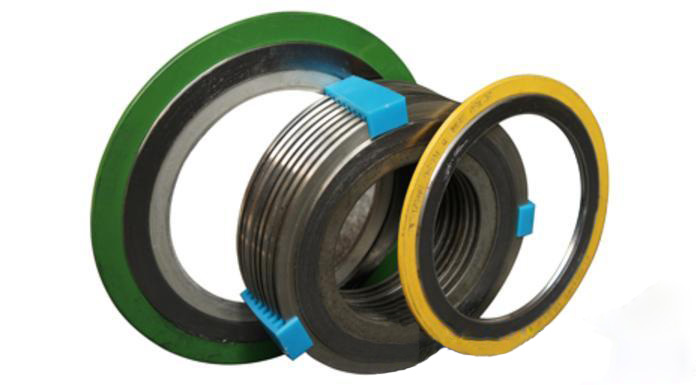

In the demanding world of industrial sealing, where extreme pressures, temperatures, and corrosive media are the norm, standard gaskets often fall short. This is where the engineering excellence of Serrated gaskets comes into play. Also known as serrated metal gaskets or ring-type joints (RTJ), these are precision sealing components designed to create a near-impervious, leak-tight seal in the most challenging environments. At Kaxite, we specialize in manufacturing premium serrated gaskets that meet and exceed the stringent requirements of industries such as oil & gas, petrochemical, power generation, and heavy machinery. Our commitment is to deliver reliability, safety, and durability in every gasket we produce.
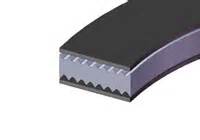
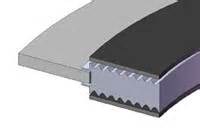
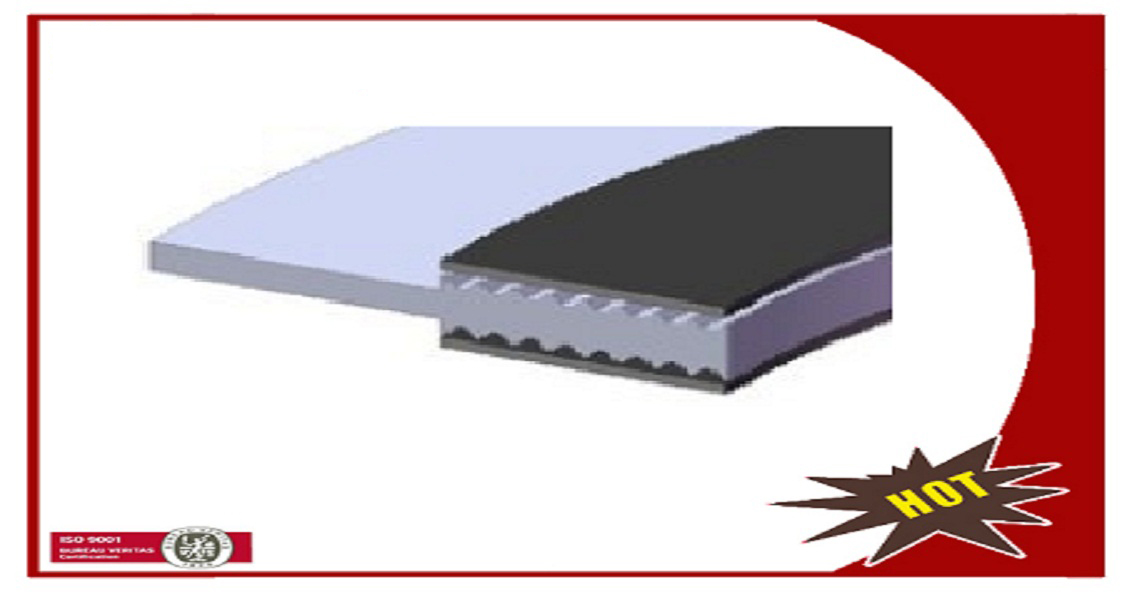
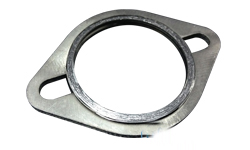
A Serrated gasket is a solid metal ring, typically with a trapezoidal or octagonal cross-section. Its defining feature is the series of concentric, sharp-edged serrations (teeth) machined onto both the top and bottom sealing faces. These gaskets are designed to fit into specially machined grooves in flanges, known as ring grooves. When the flanges are bolted together, the high bolt load forces the serrated teeth to bite and embed into the metal of the flange grooves. This creates multiple concentric rings of metal-to-metal contact, forming an extremely effective pressure-energized seal. As internal system pressure increases, it further forces the gasket outward against the groove walls, enhancing the seal – a phenomenon known as pressure energization.
Our product range is designed to cover virtually all industrial requirements. Below are the key parameters that define our offerings.
We manufacture gaskets from the following materials, each selected for its unique properties.
| Material | Common Grade | Temperature Range | Key Characteristics & Typical Applications |
|---|---|---|---|
| Soft Iron | ASTM A105 | -20°F to 800°F (-29°C to 427°C) | Excellent conformability, general service for oil, gas, steam. The standard choice for many API applications. |
| Low Carbon Steel | ASTM A516 Gr.70 | -20°F to 1000°F (-29°C to 538°C) | Good strength and ductility. Used in refinery and power plant piping. |
| Stainless Steel 304/304L | ASTM A182 F304/F304L | -425°F to 1500°F (-254°C to 816°C) | Excellent corrosion resistance, good for chemical, petrochemical, and food processing industries. |
| Stainless Steel 316/316L | ASTM A182 F316/F316L | -425°F to 1500°F (-254°C to 816°C) | Superior corrosion resistance, especially against chlorides. Ideal for marine and highly corrosive environments. |
| Alloy 20 | ASTM B473 UNS N08020 | -325°F to 1000°F (-198°C to 538°C) | Outstanding resistance to sulfuric acid and other aggressive chemicals. Common in chemical processing. |
| Monel 400 | ASTM B164 UNS N04400 | -325°F to 1000°F (-198°C to 538°C) | High strength and exceptional resistance to seawater, hydrofluoric acid, and alkalis. |
| Inconel 600/625 | ASTM B166 UNS N06600 / ASTM B446 UNS N06625 | -425°F to 2000°F (-254°C to 1093°C) | Remarkable high-temperature strength, oxidation, and corrosion resistance. Used in furnace and aerospace components. |
| Titanium | ASTM B381 Gr. 2 | -425°F to 800°F (-254°C to 427°C) | High strength-to-weight ratio, excellent corrosion resistance in chlorides and oxidizing acids. |
Kaxite gaskets conform to global dimensional standards to ensure perfect compatibility.
| Standard | Size Range (NPS) | Pressure Class | Profile Type | Ring Number (Example) |
|---|---|---|---|---|
| ASME B16.20 / API 6A | 1/2" to 24" and larger | Classes 150, 300, 400, 600, 900, 1500, 2500, 4500, 5000psi, 10K, 15K, 20K | R (Octagonal), RX, BX (for API), Oval | R45 for 3000psi, BX154 for 15,000psi |
| DIN / EN Standards | DN15 to DN600 | PN 64, PN 100, PN 160, PN 250, PN 320, PN 400 | DIN 2696 (Octagonal) | Based on pressure and nominal diameter |
Q: What is the primary difference between an Octagonal and an Oval ring gasket profile?
A: The Octagonal profile (R-type) has flat sides and is used in flanges with a corresponding octagonal groove. It provides a more reliable seal and is easier to install correctly than the Oval profile. Oval ring gaskets are used in oval-shaped grooves and are common in older pipeline systems. The octagonal design offers better sealing performance and is the preferred choice in modern applications per ASME B16.20. Kaxite can supply both types to match your existing flange specifications.
Q: Can Kaxite serrated gaskets be used in sour service (H2S) environments?
A: Absolutely. For sour service applications as defined by NACE MR0175/ISO 15156, material selection is critical. Kaxite offers gaskets made from materials with proven resistance to Sulfide Stress Cracking (SSC), such as specific grades of stainless steel (e.g., 316L), Inconel 625, and other specially treated alloys. It is essential to specify the sour service requirement when ordering so our technical team can recommend the optimal, compliant material.
Q: How do I determine the correct ring number or gasket size for my flanges?
A: The ring number (e.g., R45, R50, BX154) is a standardized code that defines the gasket's dimensions and pressure rating, tied to the flange's nominal size, pressure class, and groove design. The most reliable method is to refer to the original equipment manufacturer's (OEM) documentation or the flange standard (ASME B16.5 for flanges, B16.20 for gaskets). You can also measure the existing groove in the flange – critical dimensions are the groove's width, depth, and pitch diameter. Kaxite's technical support can assist you in identifying the correct part based on your flange details.
Q: What is the proper procedure for installing a serrated gasket?
A: Correct installation is key to performance. First, thoroughly clean the flange grooves of any old gasket material, dirt, or corrosion using a brass or plastic scraper—avoid steel tools that can damage the groove. Inspect the grooves for nicks or wear. Lightly lubricate the gasket with a thin film of anti-seize compound suitable for the service temperature. Carefully place the gasket into the groove, ensuring it seats fully and is not twisted. Align the flanges and gradually tighten the bolts in a star-pattern sequence to the specified torque value to ensure even compression and proper biting of the serrations.
Q: Are serrated gaskets reusable?
A: Kaxite serrated gaskets are designed for potential reuse, but this depends heavily on the service conditions and inspection. Upon disassembly, inspect the gasket carefully. If the serrations are only slightly polished and not flattened, crushed, or corroded, and the ring shows no permanent deformation or cracks, it may be reused. However, for critical services, high-pressure cycles, or after exposure to extreme temperatures, replacing the gasket with a new Kaxite product is always the safest and most recommended practice to guarantee seal integrity.
Q: How should I store Kaxite serrated gaskets to maintain their quality?
A: Store gaskets in a clean, dry, and temperature-controlled environment. They should be kept in their original protective packaging until ready for use. Organize them by size and material to prevent mix-ups. Avoid stacking heavy items on top of them to prevent deformation. For corrosion-prone materials like carbon steel, consider using vapor-corrosion inhibitor (VCI) bags for long-term storage.
Q: What is the purpose of the "pressure energization" feature?
A: Pressure energization is a self-sealing characteristic. The internal system pressure acts on the inner diameter of the gasket, pushing it radially outward against the confined walls of the flange groove. This action increases the contact pressure between the gasket serrations and the groove, thereby enhancing the seal as the internal pressure rises. This makes serrated gaskets exceptionally reliable for high-pressure applications, as the seal actually improves during operation.
Q: My application involves both high temperature and thermal cycling. Are serrated gaskets suitable?
A: Yes, they are an excellent choice. The metal-to-metal seal is inherently resistant to temperature extremes. The key is selecting a material whose coefficient of thermal expansion is compatible with the flange material to maintain seal load during temperature changes. Materials like Inconel and stainless steel perform very well under thermal cycling. Kaxite engineers can help select a gasket material that minimizes differential expansion issues for your specific flange material and operating temperature range.
Q: Can you supply serrated gaskets with special coatings or platings?
A: Yes, Kaxite offers various surface treatments to enhance performance. Common coatings include silver plating, which provides excellent lubricity for easier installation and better sealing in high-temperature steam service, and PTFE (Teflon) coating for improved corrosion resistance and chemical inertness in specific chemical applications. These coatings can also aid in disassembly and reuse. Discuss your application needs with us to determine if a coating is beneficial.