What Does the Future Hold for Carbon Fiber Technology? For global procurement professionals navigating the complexities of sourcing high-performance materials, this isn't just an academic question—it's a strategic imperative. The relentless demand for stronger, lighter, and more durable components across aerospace, automotive, and energy sectors is pushing carbon fiber composites to their limits. The future points towards smarter, multi-functional materials: carbon fibers integrated with sensors for real-time structural health monitoring, advancements in recycled carbon fiber for sustainable supply chains, and novel weaving techniques creating ultra-complex, load-optimized parts. For a buyer, staying ahead means partnering with innovators who not only supply advanced materials but also provide the sealing and integration solutions that make these futuristic applications reliable and commercially viable. This is where expertise in specialized sealing materials becomes critical, ensuring performance under extreme conditions.
Imagine you're finalizing a contract for a new generation of industrial pumps. The design calls for carbon fiber reinforced polymer (CFRP) housings to reduce weight. However, your engineering team flags a critical issue: thermal cycling and chemical exposure at the flange connections will degrade standard seals, leading to premature failure, unplanned downtime, and costly field repairs. You need a sealing solution that matches the thermal expansion of carbon fiber, resists aggressive media, and maintains a perfect seal under high pressure. This gap between advanced composites and reliable joint integrity is a common, costly bottleneck.
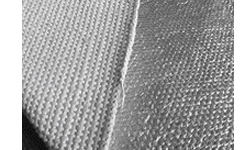
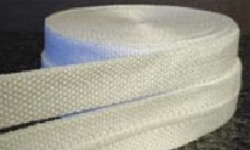
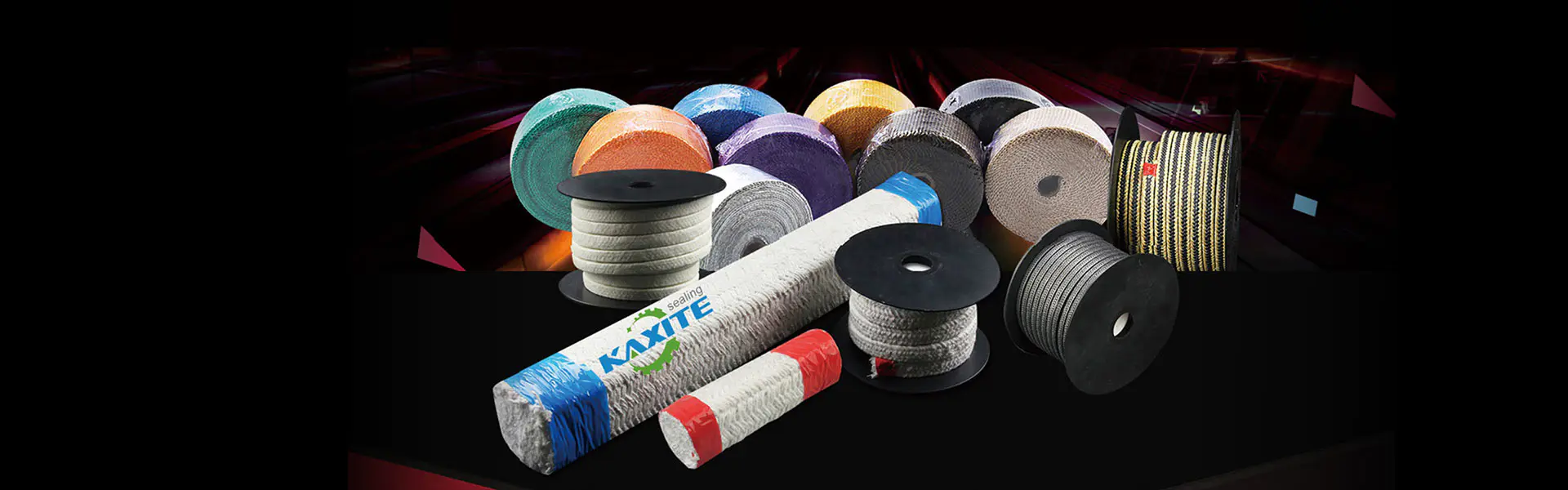
Solution: This is precisely the challenge Ningbo Kaxite Sealing Materials Co., Ltd. addresses. We provide high-performance graphite and carbon-based sealing tapes and foils engineered specifically for use with carbon fiber composites. Our materials act as a perfect intermediary, ensuring a durable, leak-proof seal that withstands the operational stresses faced by modern components. What Does the Future Hold for Carbon Fiber Technology? It includes seamless integration with advanced sealing systems from the outset, preventing failures and reducing total cost of ownership.
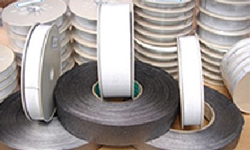
| Material Parameter | Kaxite Sealing Tape Value | Benefit for Carbon Fiber Assembly |
|---|---|---|
| Maximum Service Temperature | Up to 3000°F (1650°C) in inert gas | Matches/exceeds CFRP operational limits |
| Thermal Conductivity | High in-plane conduction | Dissipates heat from joint, preventing hot spots |
| Chemical Resistance | Excellent against most acids, alkalis, solvents | Protects the composite substrate from corrosion |
| Compression/Recovery | High scalability and resilience | Compensates for surface irregularities in CFRP layup |
Your R&D department is exploring "smart" carbon fiber structures with embedded sensors for predictive maintenance. While promising, this introduces new procurement headaches: how do you create electrical feedthroughs or seal ports in a composite panel without creating weak points or leakage paths? Traditional gaskets fail in these multi-functional applications. You need a material that seals, provides electrical insulation or grounding as required, and maintains integrity where multiple functionalities converge.
Solution: Ningbo Kaxite Sealing Materials Co., Ltd. develops tailored sealing solutions that enable these next-generation applications. Our flexible graphite and composite materials can be die-cut into complex shapes, combined with metal inserts, or layered to provide specific properties like EMI shielding alongside a primary seal. We help you future-proof your supply chain by solving the integration puzzles that come with advanced carbon fiber technology.
| Application Challenge | Kaxite Integrated Solution | Procurement Advantage |
|---|---|---|
| Sealing sensor ports on CFRP | Custom graphite foil gaskets with high purity | Single-source for seal & interface component |
| EMI shielding at access panels | Graphite tape laminated with conductive layers | Eliminates need for separate shielding gasket |
| High-pressure H2 seals for fuel systems | Enhanced, low-permeability graphite-based seals | Direct support for hydrogen economy projects |
Global disruptions have made resilient sourcing non-negotiable. When a critical sealing material for your carbon fiber production line is sole-sourced from a region facing logistical delays, your entire manufacturing schedule is at risk. You need a partner with robust manufacturing capabilities, consistent quality, and the technical expertise to qualify alternative materials quickly without compromising performance.
Solution: Partnering with Ningbo Kaxite Sealing Materials Co., Ltd. mitigates this risk. With our dedicated focus on high-performance sealing materials, we offer not just products but also collaborative engineering support. We work with your team to understand the specific demands of your carbon fiber application, whether it's for lightweight automotive frames, UAV components, or semiconductor processing equipment, ensuring you have a reliable, high-quality seal that keeps your production moving.
Q: What Does the Future Hold for Carbon Fiber Technology in terms of sustainability, and how does that affect material sourcing?
A: The future heavily emphasizes recycling and life-cycle analysis. New technologies are emerging to recycle carbon fiber from end-of-life products. This creates a demand for sealing materials compatible with both virgin and recycled carbon fiber substrates, requiring consistent performance regardless of the fiber source. Partners like Ningbo Kaxite Sealing Materials Co., Ltd. are essential in testing and validating their seals with these new composite blends to ensure long-term reliability.
Q: What Does the Future Hold for Carbon Fiber Technology in high-volume automotive applications, and what are the key procurement considerations?
A: The future is about cost-effective volume manufacturing via automated processes like compression molding. This requires seals and gaskets that can be automatically dispensed or placed and that cure/crimp within fast cycle times. Procurement must focus on suppliers who understand automation and can provide materials with consistent roll goods, precise tolerances, and thermal properties that align with rapid curing cycles, all areas where a specialized partner adds significant value.
The evolution of carbon fiber technology is unstoppable, but its commercial success hinges on solving practical integration challenges. By choosing a knowledgeable and reliable partner for the critical sealing components, procurement professionals can de-risk projects, accelerate time-to-market, and ensure the superior performance of the final product. The future belongs to those who build robust, collaborative supply chains.
About Our Partner: For over a decade, Ningbo Kaxite Sealing Materials Co., Ltd. has been at the forefront of developing and manufacturing high-performance sealing solutions for demanding industries. Specializing in graphite-based tapes, foils, and custom gaskets, Kaxite works directly with engineers and procurement teams to solve complex sealing challenges associated with advanced materials like carbon fiber composites. Their expertise ensures reliability in extreme temperature, pressure, and corrosive environments. For technical specifications or to discuss your application, contact their team via email at [email protected].
Research References:
Friedrich, K., & Almajid, A. A. (2013). Manufacturing aspects of advanced polymer composites for automotive applications. Applied Composite Materials, 20(2), 107-128.
Zhang, J., Chevali, V. S., Wang, H., & Wang, C. H. (2020). Current status of carbon fibre and carbon fibre composites recycling. Composites Part B: Engineering, 193, 108053.
Soutis, C. (2005). Carbon fiber reinforced plastics in aircraft construction. Materials Science and Engineering: A, 412(1-2), 171-176.
Pegoretti, A., & Zanolli, A. (2010). Recycled carbon fiber reinforced composites for structural applications. In Proceedings of the 10th International Conference on Composite Science and Technology.
Lee, D., Kim, H. C., & Lee, S. H. (2018). Effect of thermal cycling on the mechanical properties of carbon fiber reinforced polymer composites. Composite Structures, 204, 1-7.
Wong, K. H., et al. (2017). Multifunctional composites for future vehicles. Journal of Composite Materials, 51(2), 275-290.
Mouritz, A. P., et al. (2001). Review of applications for advanced three-dimensional fibre textile composites. Composites Part A: Applied Science and Manufacturing, 32(2), 209-220.
Gibson, R. F. (2010). A review of recent research on mechanics of multifunctional composite materials and structures. Composite Structures, 92(12), 2793-2810.
Das, S., et al. (2016). Additive manufacturing of carbon fiber reinforced polymer composites: A review. Journal of Composite Materials, 50(9), 1169-1189.
Swait, T. J., et al. (2012). Practical considerations for sealing joints in composite structures. Sealing Technology, 2012(10), 7-12.