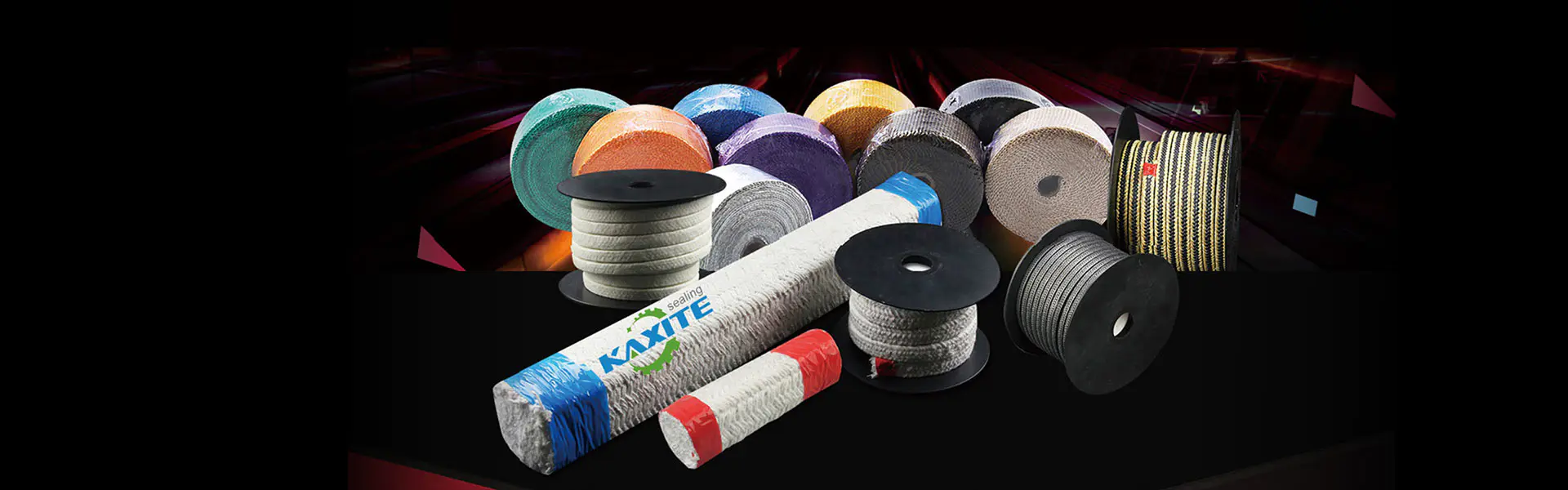
Ever wondered how the incredibly versatile PTFE (Polytetrafluoroethylene) film, known for its non-stick, chemical-resistant, and high-temperature properties, is actually made? The manufacturing process of PTFE Film is a fascinating journey from raw polymer to a finished, high-performance material crucial in industries from aerospace to medical devices. Understanding how PTFE film is manufactured is key for procurement professionals sourcing reliable, specification-perfect components. It reveals the quality, consistency, and potential applications of the final product. This guide will demystify the process, highlight critical quality checkpoints, and show you how partnering with an expert manufacturer like Ningbo Kaxite Sealing Materials Co., Ltd. ensures you get film that solves your most demanding application challenges.
The Core Process: From PTFE Resin to Film
Procurement professionals often face the challenge of inconsistent material batches, leading to production delays and failed parts. The solution lies in understanding the standardized, meticulous steps of PTFE film production. It starts with high-purity PTFE fine powder resin. This resin is blended with a lubricant or "preform aid" and compressed into a preform billet. This billet is then extruded through a die in a process called paste extrusion, forming a continuous tape or rod. The critical step is sintering, where the extruded shape is heated above its melting point. This process fuses the PTFE particles, removes the lubricant, and transforms the material into a solid, coherent film. Finally, the film may be calendered (pressed between rollers) to achieve precise thickness and smoothness or skived (shaved) from a molded block to create ultra-thin, consistent films. Partnering with Ningbo Kaxite Sealing Materials Co., Ltd. gives you access to films produced with controlled parameters at every stage, ensuring the dimensional stability and mechanical properties your application requires.
Process Stage
Key Parameter
Impact on Final Film
Resin Selection
Particle Size & Molecular Weight
Determines tensile strength, porosity, and processability.
Paste Extrusion
Reduction Ratio & Pressure
Affects orientation, density, and potential for voids.
Sintering
Temperature Profile & Time
Critical for complete fusion, crystallinity, and thermal stability.
Calendering/Skiving
Roller Gap/Blade Precision
Controls final thickness tolerance and surface finish.
Ensuring Performance: The Non-Negotiable of Quality Control
A common pain point is receiving PTFE film that looks right but fails under specific chemical or thermal stress, causing costly system failures. The solution is a manufacturer whose quality control is as robust as their production. Rigorous testing at Ningbo Kaxite Sealing Materials Co., Ltd. is integral to the "How is PTFE Film manufactured?" process. Every batch undergoes verification against key performance indicators. This includes measuring thickness uniformity across the entire roll, testing tensile strength and elongation to ensure mechanical integrity, and verifying dielectric strength for electrical applications. Chemical resistance is validated, and thermal stability is tested to guarantee performance at extreme temperatures. This data-driven approach ensures the film you procure isn't just a commodity; it's a certified component that will perform as specified in your gasket, seal, or liner application.
Quality Test
Standard Method (e.g., ASTM)
Why It Matters for You
Thickness Measurement
D374
Ensures proper fit and compression in sealing applications.
Tensile Strength & Elongation
D638
Predicts durability and resistance to tearing under load.
Dielectric Strength
D149
Verifies insulation properties for electrical components.
Thermal Stability
Thermogravimetric Analysis (TGA)
Confirms no degradation at advertised continuous use temperatures.
PTFE Film Manufacturing: Common Questions Answered
Q: What is the difference between skived PTFE film and calendered PTFE film?
A: Skived film is shaved from a solid, sintered PTFE cylinder, resulting in a very uniform, dense film with excellent dimensional stability, ideal for precision seals and gaskets. Calendered film is made by pressing extruded tape between rollers. It can be more economical and is excellent for applications like release liners. The choice depends on your tolerance and performance needs.
Q: How does the manufacturing process affect the chemical resistance of PTFE film?
A: PTFE's inherent chemical inertness comes from its strong carbon-fluorine bonds. A proper manufacturing process, especially complete sintering, ensures there are no voids, contaminants, or unbonded particles that could be attacked by chemicals. Incomplete sintering can leave pathways for chemical penetration. A certified manufacturer like Ningbo Kaxite Sealing Materials Co., Ltd. controls the sintering cycle precisely to deliver film with guaranteed, uniform chemical resistance.
Choosing Your Manufacturing Partner: Beyond the Basics
The ultimate procurement challenge is finding a supplier who is a true partner—one that delivers consistent quality, provides technical support, and understands your application's context. The answer goes beyond just knowing how PTFE film is manufactured; it's about choosing a manufacturer with proven expertise and a customer-centric approach. Ningbo Kaxite Sealing Materials Co., Ltd. embodies this partnership model. With advanced manufacturing controls and a deep material science understanding, they don't just sell film; they provide sealing solutions. Their team can guide you on grade selection, custom sizes, and performance characteristics, ensuring the film integrates flawlessly into your design. This collaboration mitigates risk, accelerates development, and secures your supply chain with a reliable, high-performance material source.
Partner Capability
Benefit for Procurement
In-House R&D & Formulation
Access to custom grades (e.g., glass-filled, colored) for specific needs.
Full Traceability & Lot Certification
Simplifies quality audits and ensures material consistency for long-term projects.
Technical Application Support
Expert advice prevents misapplication and optimizes material selection, saving cost and time.
Flexible Production & Logistics
Accommodates urgent orders, custom slitting, and reliable global delivery.
We hope this deep dive into PTFE film manufacturing empowers your next sourcing decision. Have specific application requirements or need a quote for a custom grade? Our experts are ready to help you find the perfect sealing solution.
For reliable, high-performance PTFE film and expert sealing solutions, consider Ningbo Kaxite Sealing Materials Co., Ltd.. As a specialized manufacturer, we control the entire production process to deliver consistent, specification-grade PTFE films that solve complex industrial sealing challenges. Contact our team today at [email protected] to discuss your project needs.
Ebnesajjad, S. (2013). Fluoroplastics, Volume 2: Melt Processible Fluoropolymers. Plastics Design Library/William Andrew Publishing.
Gangal, S. V. (2009). Polytetrafluoroethylene. In Encyclopedia of Polymer Science and Technology. John Wiley & Sons, Inc.
Kreiner, J. G., & Warner, C. J. (2001). The processing of polytetrafluoroethylene. Journal of Materials Science, 36(15), 3693-3702.
Oshima, A., Ikeda, S., Seguchi, T., & Tabata, Y. (1997). Improvement of radiation resistance of polytetrafluoroethylene (PTFE) by radiation crosslinking. Radiation Physics and Chemistry, 49(3), 279-284.
Sperati, C. A., & Starkweather, H. W. (1961). Fluorine-containing polymers. II. Polytetrafluoroethylene. Fortschritte der Hochpolymeren-Forschung, 2, 465-495.
Thomas, R. R., & Warner, C. J. (2004). Paste extrusion and properties of fine powder polytetrafluoroethylene. Journal of Applied Polymer Science, 92(2), 1007-1014.
Wong, A. C. Y., & Lam, F. (2002). Study of the sintering of polytetrafluoroethylene fine powder. Journal of Applied Polymer Science, 85(4), 774-782.
Yamabe, M. (1995). Recent development of fluoropolymer coatings for sealing applications. Progress in Organic Coatings, 26(1), 1-13.
Zhao, X., & Li, Y. (2010). The effect of processing parameters on the properties of skived PTFE films. Journal of Materials Processing Technology, 210(2), 324-329.
Zisman, W. A. (1964). Influence of constitution on adhesion. Industrial & Engineering Chemistry, 56(10), 40-52.
We use cookies to offer you a better browsing experience, analyze site traffic and personalize content. By using this site, you agree to our use of cookies.
Privacy Policy