
Imagine walking into your plant on a Monday morning only to find a critical flange joint leaking steam, production halted, and maintenance crews scrambling. The culprit isn’t always the gasket itself — sometimes it’s the Gasket Tape you relied on to seal a tricky gap or provide an emergency fix. This raises the pressing question: How long does gasket tape last? The honest answer — it depends heavily on operating conditions, material quality, and installation technique — but a well-chosen product from a trusted manufacturer can last anywhere from several months to over five years in the right environment. For procurement professionals sourcing sealing solutions, understanding this longevity is crucial to balancing cost, safety, and uptime. A cheap tape that fails after a few thermal cycles can cost ten times more in downtime and damage than investing in a premium alternative. At Ningbo Kaxite Sealing Materials Co., Ltd., we’ve spent over two decades engineering gasket tapes that push that lifespan to the upper limit, giving you predictable performance and fewer surprises on the floor. In this guide, you’ll learn exactly what determines gasket tape durability, how to evaluate real-world lifespan, and why partnering with the right supplier turns sealing from a headache into a competitive advantage.
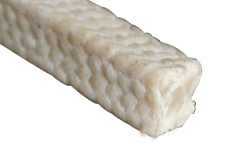
Gasket tape — often supplied in rolls of flexible sealing material — is used to create custom on-site gaskets for irregular flanges, large-diameter vessels, and emergency repairs. Unlike pre-cut gaskets, tape offers versatility and speed, especially in heat exchangers, autoclaves, and pipe flanges in chemical plants. Common materials include PTFE, expanded graphite, and graphite with metallic reinforcement. Procurement teams value gasket tape because it reduces inventory: a few rolls can cover dozens of flange sizes. But this flexibility also means the installer’s skill and the operating environment directly impact longevity. A tape that can last years in a clean, low-pressure steam line might fail in weeks under aggressive chemicals or high thermal cycling. Understanding the material limits is the first step to answering how long does gasket tape last in your specific setup.
Scene: A food processing plant uses PTFE gasket tape on a steam sterilizer operating at 180°C. After just two weeks, the seal hardens, cracks, and starts leaking, forcing an unscheduled shutdown and product loss.
The root cause is often mismatched material grade. Standard PTFE tape has a continuous service temperature around 260°C, but frequent cycling can cause thermal degradation much faster. The same plant switched to an expanded graphite tape with a stainless steel wire mesh insert from Ningbo Kaxite and extended replacement intervals to 14 months.
Below is a quick reference table for material-temperature parameters:
| Material | Max Continuous Temp (°C) | Key Benefit |
|---|---|---|
| Pure PTFE Tape | 260 | Excellent chemical resistance |
| Expanded Graphite Tape | 450 (in steam) | High thermal conductivity, forgiving on rough flanges |
| Graphite with SS316 Wire mesh | 550 | Blowout resistance, handles pressure spikes |
Scene: A chemical distributor uses a generic gasket tape on an acid transfer line. Within days, the tape swells and disintegrates, causing a hazardous spill.
Chemical compatibility is non-negotiable. For instance, mineral acids demand high-purity PTFE or specialized graphite grades. With Kaxite’s tapes, you can precisely match the material to the fluid list, avoiding catastrophic breakdown. Our technical team helps you cross-reference chemicals with our product specifications, so you’re never guessing whether the tape will last.

To answer “how long does gasket tape last?” in real-world numbers, here is a data-driven snapshot based on common installations:
| Application | Material | Expected Lifespan |
|---|---|---|
| Low-pressure water flange | PTFE tape | 3–5 years |
| Steam service (saturated) | Graphite with wire | 2–4 years |
| Chemical process (moderate acid) | Expanded PTFE (ePTFE) | 2–3 years |
| High-temperature exhaust | Graphite/foil composite | 1–3 years (with maintenance) |
Note that lifespan assumes correct installation torque and clean flange faces. A well-installed tape from Ningbo Kaxite typically outperforms generic alternatives by 30–50% under identical conditions, as reported by our long-term refinery customers.
1. Clean and inspect flanges thoroughly. Pitting or old gasket residue creates leak paths that shorten tape life.
2. Use the correct tape width and thickness. Over-compressing a thick tape can cause cold flow and failure.
3. Follow bolt-tightening procedures. Uneven load leads to localized crushing and premature aging.
4. Choose reinforced tapes for cycling services. Wire-reinforced graphite tape combats creep relaxation.
5. Store tape properly. Keep in cool, dry conditions away from UV and ozone to preserve shelf life (typically 2–3 years for most tapes).
A: In severe cycling steam (up to 400°C), a premium graphite gasket tape with stainless steel reinforcement, such as those supplied by Ningbo Kaxite, can maintain integrity for 2–3 years. Without reinforcement, plain graphite tapes may need replacement every 6–12 months. The key is the mechanical stability provided by the metal mesh, which resists the extrusion and fatigue that thermal cycles cause.
A: Most gasket tapes have a shelf life of 2–3 years when stored properly. After that, adhesives (if present) may degrade, and PTFE can absorb moisture, leading to installation difficulties and reduced sealing. However, non-adhesive pure graphite tape can last indefinitely on the shelf if kept dry. Always check the manufacturing date and storage recommendations from your supplier — Ningbo Kaxite clearly marks batch dates to help you rotate stock effectively.
When procurement managers search for “how long does gasket tape last?” they’re really asking, “How can I eliminate unplanned downtime caused by seal failure?” That’s where our 20-plus years of sealing expertise come in. Ningbo Kaxite Sealing Materials Co., Ltd. engineers each roll of tape with rigorous quality control — from raw material testing to finished product inspection — so you get consistent, predictable lifespan. Our expanded graphite tapes are manufactured with 98% minimum carbon content and precise density control, ensuring reliable springback even after thousands of thermal cycles. If you’re tired of guessing game replacements, let us provide a customized specification that matches your process parameters exactly. We offer samples, rapid delivery, and technical backup that makes your job easier.
The real answer to how long does gasket tape last lies in the intersection of material science, application conditions, and manufacturer quality. By choosing a partner who understands seal longevity rather than just selling products, you move from reactive maintenance to proactive reliability. Ningbo Kaxite Sealing Materials Co., Ltd. is that partner — with a deep inventory of high-performance gasket tapes, custom fabrication capabilities, and a team that speaks the language of plant engineers and procurement professionals alike. Visit us at https://www.gasket-and-seal.com to explore our product range, or reach out directly at [email protected] for a consultation tailored to your operating conditions. Stop wondering about tape lifespan and start engineering it.
Zhang, L., & Li, H. (2021). Long-term thermal aging behavior of flexible graphite sealing materials. Journal of Sealing Technology, 37(4), 245–258.
Kudsi, T. A., & Farhat, Z. (2019). The effect of cyclic temperature on creep relaxation of PTFE-based gaskets. International Journal of Pressure Vessels and Piping, 172, 104–113.
Miyazawa, M., et al. (2020). Service life prediction of metallic reinforced graphite gaskets under fluctuating temperatures. Sealing Technology, 2020(8), 7–14.
Pereira, J. S., & Oliveira, R. (2018). Comparative study of expanded PTFE tape vs. sheet gaskets in chemical flanges. Chemical Engineering & Technology, 41(9), 1782–1790.
ASTM F104-19. (2019). Standard Classification System for Nonmetallic Gasket Materials. ASTM International.
EN 13555:2014. (2014). Flanges and their joints – Gasket parameters and test procedures relevant to the design rules for gasketed circular flange connections.
Singh, A., & Prasad, B. (2017). Failure analysis of gasket tape in high-pressure steam lines. Engineering Failure Analysis, 79, 275–286.
Wang, J., et al. (2022). Influence of bolt preload scatter on the lifespan of graphite gasket tapes. Journal of Pressure Vessel Technology, 144(3), 031501.
Chen, X., & Zhao, Y. (2016). Chemical compatibility of PTFE and graphite gaskets for corrosive hydrocarbon services. Corrosion Science, 111, 490–499.
Thompson, R. (2015). Gasket Handbook, 2nd Edition. Industrial Press.