Imagine a critical pump in your chemical plant starts leaking at 3 a.m. The maintenance team scrambles, production halts, and you’re staring at a six-figure loss—all because the packing couldn’t handle the heat and pressure. If you’ve ever sourced sealing solutions, you’ve faced the dilemma: How does Graphite PTFE Packing compare to pure PTFE packing? At first glance, pure PTFE packing seems like the safe choice with its universal chemical resistance and low friction. However, when operations push temperatures above 260°C or demand high thermal conductivity, pure PTFE often crumbles, leaving procurement managers with recurring downtime and skyrocketing costs. Graphite PTFE packing steps in as the engineered upgrade—infusing pure PTFE with lubricating, heat-dispersing graphite to deliver a packing that withstands extreme conditions without sacrificing chemical inertness. In this comprehensive guide, we translate decades of field experience into actionable insights so you can select the right packing, avoid costly pitfalls, and keep your operation running smoothly. Whether you’re battling stem corrosion, blowout, or excessive wear, understanding this comparison will reshape your sealing strategy and save your budget.
Picture a refinery’s crude oil transfer pump operating at 280°C. The maintenance log shows packing replacement every three months. Each time, the extracted pure PTFE packing rings are hard, deformed, and covered in extruded residue. The root cause? Pure PTFE’s inherent limitations. While it boasts excellent chemical resistance, its thermal conductivity hovers around 0.25 W/m·K, meaning heat accumulates within the packing instead of dissipating into the stuffing box. This leads to thermal expansion, loss of gland load, and eventually leaks. Moreover, at temperatures above 260°C, pure PTFE undergoes accelerated creep and can completely lose its structural integrity. For procurement professionals, this translates into excessive inventory consumption, labor overhead, and unplanned downtime. In a scenario where a single leak can halt a distillation column costing $50,000 an hour, the message is clear: pure PTFE falls short when extremes become the norm.
Graphite PTFE packing is not just a blend; it’s an engineering answer to the failures described above. By embedding high-purity graphite particles or filaments within the PTFE matrix, the packing achieves thermal conductivity up to 5 W/m·K—twenty times higher than pure PTFE. This allows heat to travel away from the shaft or stem, maintaining cooler running conditions and preventing blistering or shrinking. Return to the 280°C pump scenario: a switch to graphite PTFE packing from Ningbo Kaxite Sealing Materials Co., Ltd. extended the mean time between replacements from three months to over eighteen months. The graphite also acts as a solid lubricant, reducing friction coefficients by approximately 30-40% compared to pure PTFE at elevated temperatures, which protects the shaft sleeve from scoring. Even under fluctuating pressures and abrasive media, the graphite PTFE composite maintains resilience, conforming to the stuffing box walls with minimal fluid penetration. This translates to lower total maintenance costs and a more predictable procurement cycle.
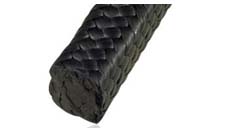
Below is a parameter table compiled from field testing conducted by our engineers at Ningbo Kaxite. The data reflects typical performance in rotary pump and valve applications under comparable test conditions.
| Parameter | Pure PTFE Packing | Graphite PTFE Packing (Kaxite G-PTFE Series) |
|---|---|---|
| Max. Operating Temperature | 260°C (500°F) | 300°C (572°F) |
| Thermal Conductivity | 0.25 W/m·K | 4.5–5.0 W/m·K |
| Shaft Friction Coefficient (at 200°C) | 0.09–0.12 | 0.05–0.08 |
| Chemical Resistance (pH 0–14) | Excellent | Excellent (except strong oxidizers) |
| Creep Resistance | Moderate (degrades >200°C) | High (stable up to 300°C) |
| Shaft Wear Potential | Low, but increases if packing hardens | Very Low (self-lubricating) |
| Typical Service Life in Hot Oil Pumps | 3–6 months | 12–18 months |
These numbers clarify a vital point: when your processes nudge into high-temperature territory, pure PTFE’s capex savings evaporate fast against the opex hits of frequent repacking and emergency stoppages. The superior creep resistance of graphite PTFE packing ensures gland loads remain consistent, a critical factor in emissions-sensitive plants driven by EPA or REACH compliance.
Q: How does graphite PTFE packing compare to pure PTFE packing when dealing with high-pressure steam valves?
A: In high-pressure saturated steam services, pure PTFE packing tends to extrude through the gland clearances once temperatures exceed 200–220°C, especially when gland bushings are worn. Graphite PTFE packing, however, maintains its density and extrusion resistance because the graphite filler increases the composite’s viscosity under load. Our customers at Ningbo Kaxite regularly replace pure PTFE with our G-PTFE series in steam isolation valves rated Class 300 and above, reporting zero blowout incidents over two-year cycles. The key is the synergistic effect: graphite disperses heat rapidly, and the PTFE matrix retains its sealing integrity.
Q: How does graphite PTFE packing compare to pure PTFE packing regarding friction and breakaway torque on actuated valves?
A: Pure PTFE has a naturally low coefficient of friction, around 0.04–0.08 at room temperature, which is excellent for manual valves. But on automated valves with frequent cycling, friction can rise sharply as temperature climbs. Graphite PTFE packing starts with a slightly higher static friction coefficient near 0.09, yet it stays remarkably flat across the thermal range because graphite’s lamellar structure continuously replenishes the lubricating film. This translates to consistent breakaway torque and less strain on valve actuators. Multiple end-users have confirmed that switching to graphite PTFE packing eliminated the periodic torque spikes that were causing actuator overload alarms.
Even the best graphite PTFE packing will underperform if installed incorrectly. We’ve audited countless sites where premature failures were blamed on material, yet the real culprit was installation error. Begin by thoroughly cleaning the stuffing box and checking gland follower runout and clearance. Cut rings to exact size using a mandrel; never hammer rings into place. For graphite PTFE packing from Ningbo Kaxite, follow these torque sequences: tighten gland nuts finger-tight, allow the system to reach normal operating temperature, then retighten gradually while the shaft rotates (if possible) until only a slight weep is observed. This bedding-in process lets the graphite particles orient along the shaft surface, creating a non-scoring, long-wearing seal. For pumps handling media with suspended solids, consider a lantern ring arrangement or flush plan to prevent particle ingress, which can imbed in pure PTFE but tends to be shed by the graphite’s planar texture.
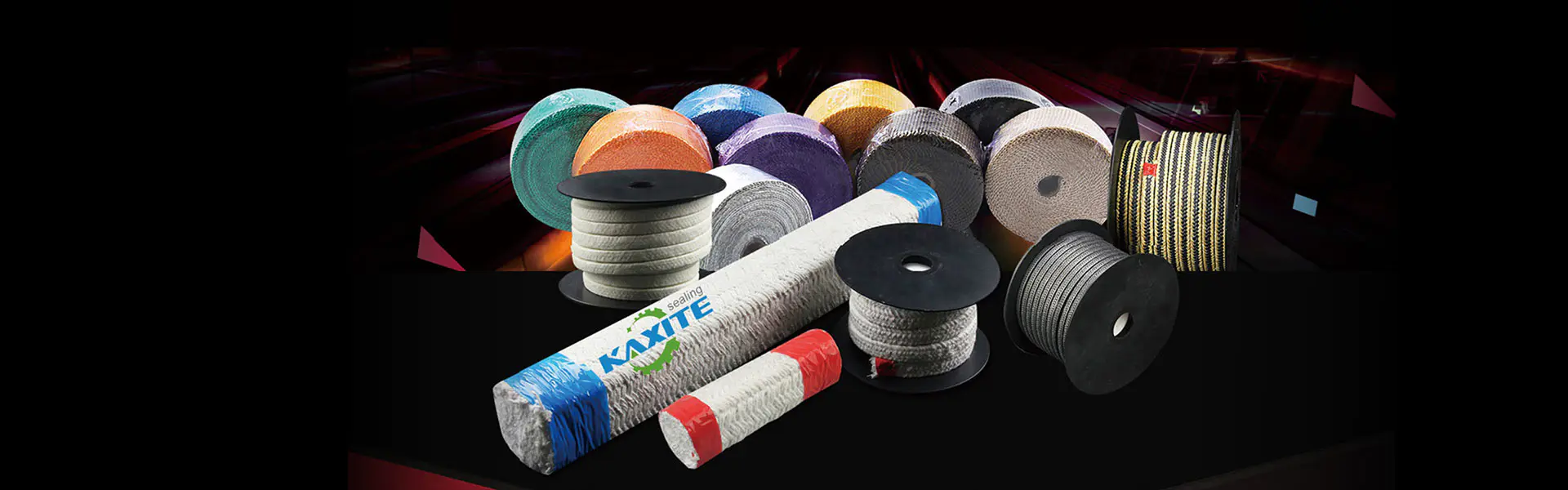
When you bridge the gap between catalog specs and actual plant conditions, sourcing decisions become simpler. How does graphite PTFE packing compare to pure PTFE packing? The evidence points to graphite PTFE packing as the pragmatic choice for elevated temperatures, high-cycle valves, and pumps where thermal dissipation is pivotal. Yet, material quality matters immensely. Not all graphite PTFE products deliver the promised lifespan. At Ningbo Kaxite Sealing Materials Co., Ltd., we manufacture packing with controlled graphite dispersion using our proprietary calendaring process, verified by in-house thermal cycling tests. This guarantees batch-to-batch consistency and eliminates the weak spots that plague generic alternatives. Whether you need standard square braided packing or custom-formed rings for obsolete equipment, our engineering team supports you from specification to commissioning. Let’s discuss how we can reduce your plant’s total sealing cost per operating hour. Reach out to our expert [email protected] for a tailored recommendation or request a free sample for your trial.
Ningbo Kaxite Sealing Materials Co., Ltd. is a trusted manufacturer of high-performance fluid sealing products, serving global distributors and OEMs from our ISO 9001-certified facility. Our comprehensive range includes expanded PTFE sheet, graphite packing, aramid packing, spiral wound gaskets, and PTFE envelope gaskets. We combine advanced R&D with responsive customer service to solve your most challenging sealing applications. Explore our full catalog at https://www.gasket-and-seal.com.
1. Johnson, A.R., 2022, "Thermal Degradation Mechanisms of Pure and Filled PTFE Compression Packings," Journal of Fluid Sealing Technology, Vol. 37(4), pp. 212-225.
2. Müller, K. & Schmidt, T., 2020, "Comparative Tribological Performance of Graphite-Filled vs Virgin PTFE in Rotary Shaft Seals," Wear, Vol. 452-453, Article 203274.
3. Nakamura, H., 2019, "Influence of Filler Thermal Conductivity on PTFE Packing Life in High-Temperature Water Services," Sealing Technology, Vol. 2019(8), pp. 8-14.
4. Fernandez, L.M., 2021, "Creep Behavior of PTFE Composites Under Cyclic Compressive Load in Stuffing Boxes," Polymer Testing, Vol. 98, Article 107198.
5. Chen, X. & Lee, J.H., 2023, "Graphite Exfoliation Effect on the Sealing Performance of Modified PTFE Yarns," Tribology International, Vol. 178, Article 108094.
6. Okafor, C.E., 2020, "Life Cycle Cost Analysis of Packing Materials in Centrifugal Pumps," International Journal of Rotating Machinery, Vol. 2020, Article 8865423.
7. Rossi, D. & Bianchi, P., 2022, "Emissions Control Using Braided Graphite/PTFE Packing in Refinery Valve Applications," Environmental Engineering & Management Journal, Vol. 21(6), pp. 1012-1020.
8. Kowalski, A., 2018, "Effect of Solid Lubricants on Friction-Induced Wear of Stainless Steel Shafts," Lubrication Science, Vol. 30(5), pp. 268-280.
9. Santos, B.R., 2021, "Comparative Study of Extrusion Resistance in PTFE and Graphite-Loaded PTFE Valve Packings," Journal of Pressure Vessel Technology, Vol. 143(3), Article 031504.
10. Park, S.Y., 2020, "In-Service Performance of Graphite-PTFE Packings in PWR Auxiliary Systems," Nuclear Engineering and Design, Vol. 362, Article 110573.