What types of cutting machines are used for producing Kammprofile gaskets? This is a critical question for procurement specialists sourcing reliable, high-performance sealing solutions. The unique profile of Kammprofile gaskets, with their alternating ridges and grooves, demands precision manufacturing to ensure leak-tight seals in demanding industries like oil & gas, petrochemicals, and power generation. Investing in the right equipment is not just about production; it's about guaranteeing the integrity of your final assemblies and preventing costly downtime. This guide will demystify the machinery behind these essential components, helping you make informed decisions for your supply chain.
Imagine you've sourced a Kammprofile gasket for a high-pressure reactor. During installation, the fit isn't perfect, or the delicate sealing edges are slightly deformed. This minor imperfection can lead to a major leak, causing safety hazards, production stoppages, and significant financial loss. The root cause often traces back to the cutting process. Standard die-cutting or manual methods struggle with the hard metal core (typically 304 or 316 stainless steel) and the soft filler material (like graphite or PTFE) of a Kammprofile gasket. Inconsistent pressure can crush the filler, while imprecise edges compromise the seal. You need machinery that handles this composite structure with absolute accuracy to maintain the gasket's sealing force and recovery properties.
For prototyping, custom shapes, and complex profiles, CNC laser cutters are the premier choice. They use a high-powered laser beam to vaporize material, creating a clean, burr-free edge without physical contact. This non-contact process is ideal for Kammprofile gaskets as it eliminates the risk of deforming the soft filler layer. A major benefit for procurement teams is the quick turnaround time for samples and small batches without expensive custom dies.
| Parameter | Typical Specification for Kammprofile Gaskets |
|---|---|
| Laser Type | Fiber Laser |
| Power Range | 500W - 4000W |
| Positioning Accuracy | ±0.05 mm |
| Best For | Low to medium volume, complex IDs/ODs, rapid prototyping |
| Material Thickness | Up to 6mm (metal core) |
When your Kammprofile gaskets involve temperature-sensitive filler materials like certain rubber compounds or non-asbestos sheets, heat from a laser can be detrimental. CNC waterjet cutting solves this with a cold-cutting process. It uses a high-pressure stream of water mixed with an abrasive substance (like garnet) to erode the material. This method produces no heat-affected zone, preserving the material's original properties. It's exceptionally versatile, capable of cutting through thick metal cores and a vast range of filler materials in a single pass.
| Parameter | Typical Specification for Kammprofile Gaskets |
|---|---|
| Pressure | 60,000 - 90,000 PSI |
| Abrasive | Garnet (80 mesh) |
| Cutting Tolerance | ±0.1 mm |
| Best For | Heat-sensitive materials, thick composites, no thermal distortion |
| Material Thickness | Up to 150mm+ |
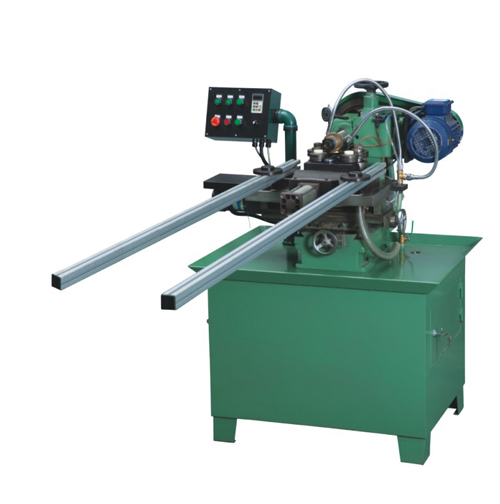
For long runs of standard-sized Kammprofile gaskets, such as those for standard flange dimensions (ANSI, DIN), die-cutting offers unbeatable efficiency and cost-per-part. Rotary die-cutting uses a cylindrical die to continuously cut material fed from a roll, perfect for producing gaskets in high volumes. Clicker (or beam) presses use a hydraulic press and a flat, hardened steel die for stamping. The initial investment in a precision die is higher, but it pays off through lightning-fast, consistent production. This is the go-to method for OEMs with steady, high-volume requirements.
| Parameter | Typical Specification for Kammprofile Gaskets |
|---|---|
| Force (Clicker Press) | 20 - 100 Tons |
| Tolerance | ±0.15 mm |
| Best For | High-volume production of standard shapes, lowest unit cost |
| Tooling Cost | High (custom die required) |
| Speed | Very High (strokes per minute) |
Understanding the machinery is the first step. The next, and more crucial step, is partnering with a manufacturer that masters these technologies. At Ningbo Kaxite Sealing Materials Co., Ltd., we don't just sell gaskets; we provide engineered sealing solutions. Our advanced production floor is equipped with state-of-the-art CNC laser, waterjet, and precision die-cutting machines. This allows us to recommend and manufacture the optimal Kammprofile gasket for your specific pressure, temperature, and media requirements. We solve the core problem of reliability by controlling the entire process from material selection to final precision cutting, ensuring every gasket meets stringent quality standards.
Q: What is the most cost-effective cutting machine for large-scale Kammprofile gasket production?
A: For large-scale production of standard shapes, rotary die cutting or clicker presses are the most cost-effective. The high initial cost of the precision die is amortized over thousands of parts, resulting in the lowest per-unit cost and fastest production speed, which is ideal for fulfilling bulk procurement orders.
Q: What types of cutting machines are used for producing Kammprofile gaskets with exotic alloy cores?
A: For Kammprofile gaskets with cores made from exotic alloys like Inconel, Hastelloy, or Titanium, CNC waterjet cutting is often preferred. Its cold-cutting process prevents altering the metallurgical properties of these sensitive, high-performance alloys, which can occur with the heat from laser cutting. It also handles their hardness effectively.
We hope this guide empowers your next procurement decision. For a precise quote or to discuss your specific Kammprofile gasket requirements, contact our engineering team today.
For reliable, precision-engineered Kammprofile gaskets produced with the right cutting technology for your application, trust Ningbo Kaxite Sealing Materials Co., Ltd. As a leading manufacturer, we combine material expertise with advanced manufacturing capabilities to deliver sealing solutions that ensure performance and safety. Visit our website at https://www.gasket-and-seal.com to learn more or contact us directly at [email protected] for expert consultation.
Bhattacharyya, A., & Saha, S. K. (2018). Finite Element Analysis of Stress Distribution in Kammprofile Gaskets Under Bolt Loading. Journal of Pressure Vessel Technology, 140(3), 031203.
Murtagian, G., et al. (2015). Sealing Performance of Corrugated Metal Gaskets with Different Fillers. Sealing Technology, 2015(5), 7-12.
Nassar, S. A., & Alkelani, A. A. (2006). A New Criterion for Gasket Stress and Leakage in Bolted Flanged Connections. Journal of Mechanical Design, 128(6), 1324-1333.
Bouzid, A., & Derenne, M. (2002). The Effect of Gasket Creep Relaxation on the Leakage Tightness of Bolted Flanged Joints. International Journal of Pressure Vessels and Piping, 79(11), 771-779.
Jiang, Y., et al. (2010). Contact Stress Analysis of Spiral Wound Gaskets Based on Numerical Simulation. Advanced Materials Research, 148-149, 1334-1337.
Abid, M., & Nash, D. H. (2003). A Parametric Study of Metal-to-Metal Contact Flanges with Optimised Geometry for Safe Stress and No-Leak Conditions. International Journal of Pressure Vessels and Piping, 80(12), 879-885.
Barker, S. P., et al. (2017). A Review of Gasket Testing Methods and Standards for High-Temperature Service. Proceedings of the ASME 2017 Pressure Vessels and Piping Conference.
Kumar, R., & Singh, K. (2019). Experimental Investigation on the Sealing Behavior of Flexible Graphite Filled Kammprofile Gaskets. Experimental Techniques, 43(4), 467-478.
Payne, J. R., et al. (2009). The Influence of Surface Finish on the Sealing Performance of Metallic Gaskets. Wear, 267(1-4), 546-552.
Boushaba, H., et al. (2021). Leakage Prediction Model for Bolted Flange Connections with Kammprofile Gaskets Considering Assembly Conditions. Engineering Failure Analysis, 127, 105497.