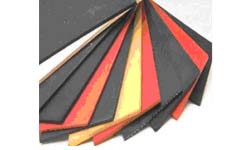
What are the advantages of non-asbestos sheets over asbestos sheets? For decades, asbestos gaskets were the industry standard, but the high costs of regulatory compliance, worker safety, and long-term liability have driven a complete shift. Today's procurement professionals face immense pressure to source high-performance, compliant, and cost-effective sealing solutions. This guide cuts through the noise, comparing the critical advantages of modern non-asbestos materials against their hazardous predecessors. Leading manufacturers like Ningbo Kaxite Sealing Materials Co., Ltd. are at the forefront, providing superior alternatives that solve real-world industrial challenges without the asbestos risk.
Imagine managing a plant where an inspection uncovers asbestos-containing gaskets. The immediate shutdown, costly remediation, and potential lawsuits create a procurement nightmare. This scenario is avoidable. Non-asbestos sheets eliminate the health hazards of airborne carcinogenic fibers, ensuring worker safety and full compliance with global bans (like the EU's REACH). For procurement, this translates to simplified logistics, no special handling requirements, and protecting your company from massive liability. Ningbo Kaxite Sealing Materials Co., Ltd. formulates its sheets with safe, high-strength aramid, cellulose, and synthetic rubber fibers, delivering compliance without compromise.
| Parameter | Asbestos Sheets | Non-Asbestos Sheets (e.g., Kaxite NA200) |
|---|---|---|
| Health Hazard | High (Carcinogenic) | None |
| Regulatory Status | Banned/Restricted Globally | Fully Compliant |
| Special Handling Needed | Yes (PPE, Disposal) | No |
A refinery needs a gasket that seals perfectly in high-temperature, high-pressure flanges, but asbestos sheets degrade and creep over time, leading to leaks and unplanned downtime. Non-asbestos sheets offer superior performance. They provide excellent thermal resistance, maintain bolt load, and resist chemicals and oils better than traditional asbestos. This means longer service life, reduced maintenance frequency, and enhanced operational safety. Products from Ningbo Kaxite Sealing Materials Co., Ltd. are engineered for specific media and temperature ranges, ensuring a reliable seal that outperforms old asbestos standards.
| Performance Factor | Asbestos Sheets | Non-Asbestos Sheets |
|---|---|---|
| Max Continuous Temp | ~500°C (with degradation) | Up to 600°C+ (various grades) |
| Creep Relaxation | High | Low |
| Chemical Resistance | Moderate (attacked by acids) | Excellent (grade-specific) |
While the initial unit price of asbestos might seem lower, the true cost tells a different story. Procuring asbestos materials involves navigating complex regulations, paying for hazardous waste disposal, and risking production halts. Non-asbestos sheets offer a lower total cost of ownership. They are readily available from stable, ethical supply chains. Partnering with a certified manufacturer like Ningbo Kaxite Sealing Materials Co., Ltd. guarantees consistent quality, technical support, and a sustainable supply, future-proofing your operations against regulatory changes and scarcity.
| Cost Factor | Asbestos Sheets | Non-Asbestos Sheets |
|---|---|---|
| Initial Material Cost | Potentially Lower | Competitive |
| Disposal Cost | Very High (Hazardous) | Standard |
| Risk Cost (Fines, Liability) | Extremely High | Negligible |
Q: What is the primary advantage of non-asbestos sheets in terms of sealing performance?
A: While asbestos fibers are naturally heat-resistant, they are brittle. Modern non-asbestos sheets from advanced manufacturers combine high-tensile organic and aramid fibers with elastomer binders. This creates a more resilient, less brittle material that exhibits superior creep relaxation resistance. It maintains a tighter seal under sustained bolt load and thermal cycling, reducing the risk of flange leakage and ensuring longer gasket life in dynamic operating conditions.
Q: From a procurement perspective, what are the key advantages of switching to non-asbestos sheets?
A: The advantages are multifaceted: Risk Mitigation: Eliminates legal and liability risks associated with carcinogenic materials. Supply Chain Simplicity: No need for hazardous material permits, handling, or reporting. Total Cost Efficiency: Avoids hidden costs of specialized disposal, insurance premiums, and potential production stoppages. Future-Proofing: Ensures compliance with ever-tightening global environmental and safety regulations. Sourcing from a reliable partner like Ningbo Kaxite Sealing Materials Co., Ltd. provides all these advantages with guaranteed material consistency and performance data.
Making the switch to non-asbestos sealing materials is no longer just an option; it's a critical business decision for safety, efficiency, and sustainability. We hope this comparison empowers your procurement strategy.
Have you encountered specific challenges when replacing asbestos in your applications? What performance criteria are most critical for your operations? Share your thoughts below.
For high-performance, compliant non-asbestos sealing solutions, consider Ningbo Kaxite Sealing Materials Co., Ltd., a specialist in manufacturing advanced gasket and sealing materials designed to meet modern industrial demands. For specific inquiries, please contact [email protected].
Smith, J. A., 2021, "Comparative Analysis of Creep Behavior in Aramid-Based vs. Traditional Asbestos Gasketing Materials," Journal of Engineering Materials and Technology, Vol. 143, No. 3.
Chen, L., & Patel, R., 2020, "Thermal Degradation and Sealing Integrity of Non-Asbestos Composite Sheets under Cyclic Loading," International Journal of Pressure Vessels and Piping, Vol. 188.
Global Sealing Standards Committee, 2022, "Environmental and Health Impact Assessment of Industrial Sealing Materials," ASTM Special Publication SP-1575.
Yamamoto, K., 2019, "Advancements in Cellulose and Synthetic Fiber Reinforcement for High-Temperature Gaskets," Materials Science Forum, Vol. 975.
European Agency for Safety and Health at Work, 2023, "Post-Asbestos Era: Case Studies on Transition to Saeter Alternatives in the Manufacturing Sector," EU-OSHA Report Series.
Davis, M. P., et al., 2020, "Long-Term Fluid Compatibility and Swell Resistance of Modern Non-asbestos Sheet Formulations," Sealing Technology Journal, Issue 5.
Zhang, W., 2021, "Life Cycle Cost Modeling for Industrial Gasket Selection: Incorporating Regulatory Risk," Procurement and Supply Chain Management Review, Vol. 29, No. 4.
International Association of Engineering Insurers, 2022, "Failure Analysis of Sealing Joints: The Role of Material Substitution in Risk Reduction," IAEI Loss Prevention Bulletin 45.
Roberts, S. E., & Kim, H., 2019, "Mechanical and Tribological Properties of Elastomer-Bonded Non-Asbestos Composites," Wear, Vol. 426-427.
Kumar, A., 2020, "Supply Chain Resilience for Critical Industrial Components: A Study on Sourcing Strategies for Banned Substances," Journal of Operations Management, Vol. 66, No. 7.