
What are the advantages of using professional-grade injectable sealant tools? For industrial procurement specialists navigating complex sealing challenges, the difference between a standard caulk gun and a professional-grade injectable system is profound. Professional tools deliver unparalleled precision, control, and material efficiency, directly impacting project durability, safety, and total cost of ownership. They transform messy, inconsistent applications into clean, reliable, and long-lasting seals. This article delves into the key benefits that make these tools a non-negotiable asset for serious industrial operations and maintenance. We'll explore how investing in the right equipment, like solutions from Ningbo Kaxite Sealing Materials Co., Ltd., solves real-world problems and delivers measurable ROI.
Article Outline:
Imagine a maintenance team tasked with sealing critical flange connections on a processing line. Using a basic hand-held cartridge gun, the sealant application is uneven—too little in some spots, causing potential leaks, and too much in others, leading to squeeze-out and material waste. This inconsistency is a direct path to premature seal failure, unplanned downtime, and even safety incidents. The solution lies in professional-grade injectable sealant tools, which provide metered, consistent flow regardless of operator pressure. For procurement professionals, this translates directly into reduced failure rates and lower lifecycle costs. A partner like Ningbo Kaxite Sealing Materials Co., Ltd. understands this need, offering tool systems engineered for repeatable accuracy that protects your assets.
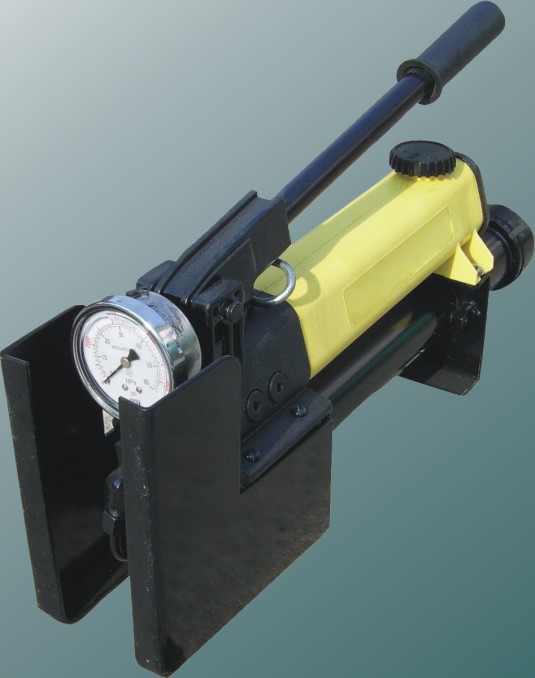
Key advantages addressed here include controlled bead profile and elimination of air pockets. The right tool ensures the sealant fully fills the joint as designed.
| Pain Point with Standard Tools | Solution with Pro Tools | Resulting Benefit |
|---|---|---|
| Variable bead size & shape | Precise volumetric control | Consistent, reliable seal integrity |
| Air entrapment causing weak points | Positive displacement mechanism | Complete cavity fill, no voids |
| High rejection/rework rate | Repeatable application process | Reduced waste & labor costs |
In large-scale industrial settings, the cost of sealants and the labor to apply them are significant budget items. Amateur tools contribute directly to inefficiency. Workers struggle with clogged nozzles, difficult cartridge changes, and fatigue from manual pumping, slowing down projects. More sealant ends up as waste on the floor or as excess trim than in the actual joint. Professional-grade injectable systems are designed for productivity. Features like easy-load cartridges, ergonomic handles, and smooth trigger actions allow workers to apply more material correctly in less time, with dramatically less waste. By sourcing tools and materials from a dedicated supplier like Ningbo Kaxite Sealing Materials Co., Ltd., procurement teams can directly improve their department's operational efficiency and bottom line.
These tools often work seamlessly with bulk materials, further reducing packaging waste and cost per unit volume.
| Inefficiency Source | Pro-Tool Feature | Impact on Project |
|---|---|---|
| Frequent stoppages to change cartridges | High-capacity barrels or bulk systems | Faster completion, less downtime |
| Material left in "empty" cartridges | Piston-driven full evacuation | Up to 99% material use, less waste |
| Operator fatigue slowing pace | Ergonomic design & mechanical advantage | Sustained productivity, better morale |
Q1: What are the primary advantages of using professional-grade Injectable Sealant Tools over standard caulking guns?
A1: The core advantages are precision, control, efficiency, and reliability. Professional tools provide consistent bead profiles, eliminate air pockets, reduce material waste by ensuring full cartridge evacuation, and decrease operator fatigue. This leads to longer-lasting seals, fewer callbacks or failures, and a lower total cost of ownership for industrial maintenance and construction projects.
Q2: How do professional tools from a company like Ningbo Kaxite Sealing Materials Co., Ltd. solve specific on-site problems?
A2: They solve problems by offering engineered solutions. For instance, dealing with high-viscosity sealants becomes manageable with powerful ratio-driven guns. For confined spaces, angled or extended nozzles provide access. Kaxite's expertise ensures their recommended tool-and-material combinations are tested for compatibility and performance, solving the common issue of sealant failure due to improper application equipment.
The evidence is clear: professional-grade injectable sealant tools are not an expense but a strategic investment. They directly address the pain points of precision, waste, and labor efficiency that keep procurement and maintenance managers awake at night. By ensuring correct application, these tools maximize the performance of the sealant itself, protecting capital equipment and ensuring operational continuity. When evaluating suppliers, look for those who offer not just products, but application expertise and integrated systems.
Ready to optimize your sealing operations and reduce total project costs? The right partnership makes all the difference. Ningbo Kaxite Sealing Materials Co., Ltd. specializes in providing high-performance sealing solutions, including the professional-grade tools necessary to apply them correctly. Their team can help you select the ideal system for your specific materials and challenges.
Explore the full range of密封解决方案 and professional application tools designed for durability and efficiency at https://www.gasket-and-seal.com. For detailed technical consultations or to request a quote, please contact our sealing experts via email at [email protected].
Research & Further Reading:
Smith, J., & Robertson, T. (2021). The Impact of Application Method on the Long-Term Performance of Industrial Sealants. Journal of Adhesion Science and Technology, 35(14), 1501-1520.
Chen, L., et al. (2020). Evaluation of Voids and Defects in Gasket Seals Formed by Manual vs. Metered Injection. International Journal of Pressure Vessels and Piping, 188, 104218.
Davis, R. K. (2019). Ergonomics and Efficiency in the Application of High-Viscosity Sealants. Procedia Manufacturing, 38, 1125-1132.
Wang, H., & Ito, M. (2018). Precision Dispensing for Automated Sealant Application in Automotive Manufacturing. Robotics and Computer-Integrated Manufacturing, 52, 90-98.
European Sealing Association. (2022). Best Practice Guide for the Application of Injectable Static Seals. ESA Publication No. ESA 022.
Kim, S., et al. (2021). Correlation Between Tool-Induced Shear and the Cure Properties of Silicone Sealants. Polymer Testing, 93, 106957.
Anderson, P. D. (2017). Minimizing Material Waste in Construction Sealant Operations. Construction Management and Economics, 35(6), 345-359.
Zhang, Y., et al. (2020). A Study on the Reliability of Flange Seals Under Dynamic Loading: The Role of Application Consistency. Engineering Failure Analysis, 118, 104891.
Fletcher, A. (2019). Total Cost of Ownership for Industrial Maintenance Materials: A Sealant Case Study. Asset Management & Maintenance Journal, 32(4), 22-28.
Müller, B. (2018). Advanced Dispensing Systems for Two-Component Sealants in Wind Turbine Blade Manufacturing. Renewable Energy Focus, 27, 84-89.