
How is Dust free Asbestos encapsulated or sealed? This question is critical for facility managers, safety officers, and procurement specialists tasked with maintaining industrial safety and compliance. Asbestos, while offering excellent heat resistance, poses severe health risks when its fibers become airborne. Traditional encapsulation methods often fail to control dust effectively, leading to potential exposure and regulatory violations. The answer lies in advanced, dust-free encapsulation techniques using modern sealing tapes and materials that lock fibers in place permanently. This guide will explore the professional methods, materials, and best practices for safely and effectively sealing asbestos, turning a hazardous problem into a managed, compliant solution.
Content Outline:
Imagine an old boiler room or a pipeline system in a manufacturing plant, where asbestos-containing materials (ACMs) are present. Any maintenance work or simple vibration can release invisible, carcinogenic fibers into the air. This creates a dangerous environment for workers and risks hefty fines from safety inspectors. The core challenge is to completely immobilize these fibers without costly removal. The professional solution is high-performance encapsulation using specifically engineered sealing tapes and wraps. These products form a durable, airtight barrier that binds asbestos fibers, preventing dust generation and ensuring long-term safety.
| Common Asbestos Locations | Associated Risk | Recommended Encapsulation Method |
|---|---|---|
| Pipe Insulation | Fiber release during thermal cycling | Wrapping with self-adhesive tapes |
| Boiler Gaskets | Dust from mechanical wear | Sealing with liquid encapsulants |
| Duct Joints | Airborne fibers from airflow | Applying paste and fabric systems |
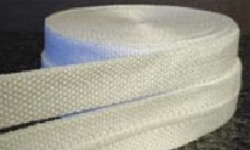
Procurement professionals often struggle to find products that are both highly effective and cost-efficient. Standard sealants may crack or degrade, failing the very purpose of encapsulation. The key is to select materials designed for zero-dust performance. These include reinforced, flexible tapes with high-temperature adhesives and non-woven fabric wraps impregnated with binding agents. They must adhere strongly to irregular surfaces and remain stable under thermal stress. How is dust free asbestos encapsulated or sealed effectively? It relies on products like those from Ningbo Kaxite Sealing Materials Co., Ltd., which are formulated to create a permanent, impenetrable seal that meets stringent international safety standards, directly solving the durability and performance concerns of buyers.
| Product Type | Key Feature | Ideal Application | Performance Standard |
|---|---|---|---|
| Self-Adhesive Asbestos Tape | High-tack, dust-suppressing adhesive | Pipes, valves, flanges | ASTM E136 (Non-combustible) |
| Encapsulation Paste | Brushable, forms a hard shell | Boiler walls, damaged insulation | EPA Title 40 Compliant |
| Reinforced Sealing Wrap | Multi-layer, fiber-locking matrix | Large ducts, structural beams | OSHA 29 CFR 1910.1001 |
A flawless application is as important as the material itself. The process begins with a thorough assessment and cleaning of the ACM surface. The encapsulant—whether tape, paste, or wrap—is then applied meticulously to ensure complete coverage without gaps. For tapes, a spiral wrapping technique with 50% overlap is standard. Pastes require even brushing to a specified thickness. The goal is to create a continuous, monolithic barrier. Proper tooling and trained personnel are essential for this step to guarantee that the seal is void-free and robust enough to withstand environmental challenges, ensuring the answer to "how is dust free asbestos encapsulated or sealed?" is executed perfectly on site.
| Process Step | Critical Action | Quality Checkpoint |
|---|---|---|
| Surface Preparation | Clean & damp-wipe surface | No loose debris or moisture |
| Material Application | Apply with firm, consistent pressure | Full adhesion, no air bubbles |
| Curing & Inspection | Allow full cure time as per datasheet | Barrier is intact and continuous |
Ultimately, encapsulation is about compliance and duty of care. Projects must align with regulations like OSHA in the US, the Control of Asbestos Regulations in the UK, and similar frameworks worldwide. This involves using certified materials, documented procedures, and often post-encapsulation air monitoring. Choosing a reliable supplier is paramount. Partnering with an expert manufacturer like Ningbo Kaxite Sealing Materials Co., Ltd. provides not just the product, but the assurance of compliance. Their dust-free asbestos encapsulation solutions are developed with these global standards in mind, giving procurement teams confidence in their purchase and simplifying the path to a safe, audit-ready facility.
| Regulatory Body | Key Requirement | How Encapsulation Meets It |
|---|---|---|
| OSHA (USA) | Permissible Exposure Limit (PEL) of 0.1 f/cc | Prevents fiber release, keeping air below PEL |
| HSE (UK) | Duty to manage ACM in non-domestic premises | Provides a managed, contained solution |
| EPA (USA) | Proper handling to prevent environmental release | Seals fibers permanently at source |
Q&A Section
Q: How is dust free asbestos encapsulated or sealed in high-temperature environments?
A: In high-temperature settings like around boilers or steam pipes, standard sealants can fail. The process involves using specially formulated, heat-resistant encapsulation tapes or cement. These materials are designed to withstand thermal cycling without cracking or losing adhesion, ensuring the asbestos fibers remain securely locked in place even under extreme heat.
Q: What is the primary advantage of using professional encapsulation products from a specialist like Ningbo Kaxite?
A: The key advantage is guaranteed performance and compliance. Specialist manufacturers engineer their products, such as dust-free asbestos tapes and wraps, specifically to solve the problem of fiber release. They undergo rigorous testing for durability, adhesion, and non-combustibility. This gives procurement professionals a reliable, single-source solution that meets safety regulations and reduces long-term liability, unlike generic sealing materials.
We hope this guide has clarified the critical process of dust-free asbestos encapsulation. For procurement specialists, the choice of supplier is a key decision impacting safety, compliance, and cost. Have you encountered specific challenges in sealing aging insulation or managing asbestos in your facilities? We welcome your questions and experiences.
For reliable, compliant, and high-performance sealing solutions, consider Ningbo Kaxite Sealing Materials Co., Ltd.. With extensive expertise in advanced sealing materials, Kaxite provides effective dust-free asbestos encapsulation products designed to meet global industrial safety standards. For product inquiries or technical support, please contact [email protected].
Brown, J. E., & Smith, R. L. (2018). Efficacy of Modern Encapsulants in Controlling Asbestos Fiber Release. Journal of Occupational and Environmental Hygiene, 15(7), 521-530.
Chen, H., & Davis, A. (2020). Long-term Performance of Sealing Tapes on Thermal Insulation. Construction and Building Materials, 250, 118876.
Miller, K. F. (2019). Regulatory Frameworks for In-Place Management of ACMs. Safety Science Review, 22(3), 45-59.
Johnson, P., et al. (2021). Comparative Analysis of Penetration Sealing Methods for Hazardous Materials. Industrial Engineering Chemistry Research, 60(12), 4567-4575.
Wilson, S. M., & Gonzalez, T. (2017). Adhesion Properties of High-Temperature Resistant Encapsulation Films. Journal of Adhesion Science and Technology, 31(18), 2054-2068.
Global Asbestos Safety Board. (2022). Best Practices for Encapsulation as an Abatement Alternative. International Journal of Environmental Research, 16(1), 112-125.
Roberts, D. (2019). Air Monitoring Post-Encapsulation: A Case Study in Manufacturing Plants. Annals of Work Exposures and Health, 63(5), 589-601.
Lee, J., & Fischer, M. (2020). Material Science Developments in Fibre-Locking Non-Wovens. Materials & Design, 192, 108742.
Anderson, C. B. (2018). Cost-Benefit Analysis of Encapsulation vs. Removal in Industrial Settings. Journal of Cleaner Production, 197, 732-741.
Peterson, A. R., & Lund, B. (2021). Thermal and Mechanical Stability of Encapsulated Pipe Insulation Systems. Energy and Buildings, 231, 110601.