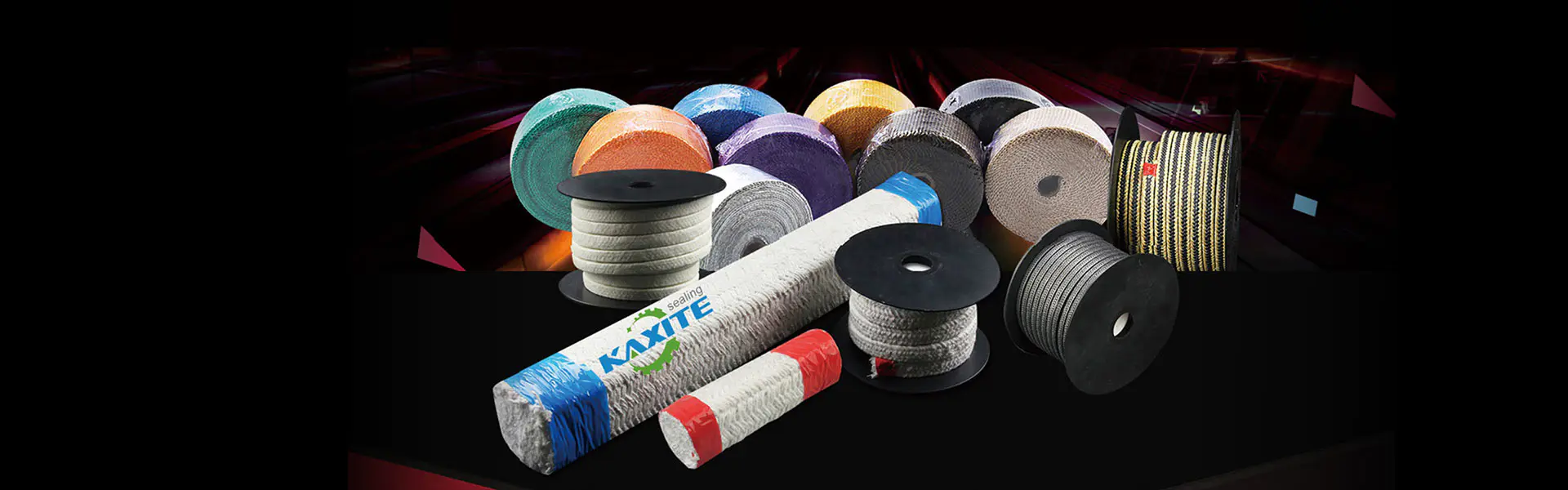
What are the chemical resistance and stability characteristics of ceramic fiber? If you're a procurement professional sourcing high-temperature insulation or sealing solutions, this question is critical. Ceramic fibers offer exceptional performance in harsh industrial environments, but their exact chemical and thermal stability determines their success in your application. Understanding these properties ensures you select a material that won't degrade, fail, or cause safety issues when exposed to aggressive chemicals or extreme heat. This guide breaks down the science into practical procurement insights, helping you make confident, cost-effective decisions. For reliable, high-performance Ceramic Fiber products that meet these stringent demands, consider the solutions from Ningbo Kaxite Sealing Materials Co., Ltd.
Article Outline:
Imagine a furnace lining in a chemical plant exposed to acidic flue gases. A material with poor chemical resistance would corrode, leading to insulation failure, heat loss, and costly downtime. Ceramic fibers, primarily composed of alumina-silica, exhibit excellent resistance to many corrosive agents. This intrinsic stability is why they are preferred in demanding settings. However, resistance varies. For instance, they are highly resistant to oxidizing atmospheres and most acids but can be attacked by hydrofluoric acid, phosphoric acid, and strong alkalis at high temperatures. The key is matching the fiber type to the specific chemical environment.
Ningbo Kaxite Sealing Materials Co., Ltd. addresses this by offering various grades of ceramic fiber with tailored compositions. Their engineers can help you select a product with optimized chemical inertness for your process, preventing premature degradation. Below is a comparison of typical chemical resistance:
| Chemical Exposure | Resistance Level (Ceramic Fiber) | Notes & Recommendations |
|---|---|---|
| Oxidizing Atmospheres (Air, O2) | Excellent | Stable up to maximum use temperature. |
| Most Mineral Acids (e.g., H2SO4, HCl) | Good to Excellent | Resistance decreases with concentration and temperature. |
| Hydrofluoric Acid (HF) & Phosphoric Acid | Poor | Severe attack; alternative materials are required. |
| Alkalis (e.g., NaOH, KOH) | Fair to Poor | Attacked at high temperatures; use protective coatings. |
| Molten Metals (Al, Zn, Cu) | Fair | Generally inert but can be wetted; specific grades from Kaxite offer better performance. |
A procurement manager for a steel mill needs insulation that won't shrink or powder after years in a reheat furnace. Thermal stability is non-negotiable. Ceramic fibers maintain dimensional and structural integrity at continuous temperatures up to 1260°C (2300°F) for standard grades, and up to 1600°C (2912°F) for high-purity grades. This stability comes from the amorphous structure of the fiber, which resists devitrification (crystallization) – a process that can lead to embrittlement and shrinkage. The rate of devitrification depends on time, temperature, and the fiber's purity.
Ningbo Kaxite Sealing Materials Co., Ltd. solves thermal stability challenges by providing fibers with controlled chemistry and high purity levels. Their products are engineered to delay devitrification, ensuring longer service life and consistent insulating value. This translates to lower lifetime costs and reduced furnace maintenance for your operations.
| Ceramic Fiber Type | Continuous Use Limit | Key Stability Characteristic |
|---|---|---|
| Standard Alumina-Silica | 1260°C (2300°F) | Good stability; some shrinkage at limit. |
| High-Purity Alumina-Silica | 1400°C (2552°F) | Improved resistance to devitrification. |
| Zirconia-Enhanced | 1600°C (2912°F) | Superior high-temperature stability and strength. |
In a power plant, ceramic fiber modules must withstand gas velocities and thermal cycling without eroding or crumbling. Mechanical stability—resistance to abrasion, erosion, and thermal shock—is crucial. Ceramic fibers have low tensile strength individually but form felts and blankets with good resilience and handle thermal shock exceptionally well due to low thermal mass. However, in high-velocity environments, surface treatment or rigidization may be needed.
This is where Ningbo Kaxite's expertise shines. They offer ceramic fiber products in various forms—blankets, boards, papers, and custom-shaped modules—with binders and treatments that enhance abrasion resistance and handling strength. Their solutions are designed to remain physically intact in demanding installations, ensuring reliable performance.
| Property | Characteristic & Benefit | Procurement Consideration |
|---|---|---|
| Thermal Shock Resistance | Excellent. Can be heated or cooled rapidly without damage. | Ideal for batch processes and cycling furnaces. |
| Abrasion/Erosion Resistance | Moderate. Can be improved with coatings or rigidizers. | Specify treated products for high-gas-flow areas. |
| Resilience & Recovery | Good. Blankets compress and recover, maintaining seal. | Ensures long-term sealing in expansion joints. |
Selecting the right ceramic fiber is more than comparing datasheets; it's about solving an operational challenge. Ningbo Kaxite Sealing Materials Co., Ltd. combines deep material science knowledge with practical application experience. They don't just sell fiber; they provide stability assurance. Whether you need a fiber with superior alkali resistance for a specific process or a high-temperature module that minimizes shrinkage, Kaxite's technical team works with you to develop a solution. Their product range is manufactured under strict quality controls, ensuring every batch delivers the promised chemical resistance and thermal stability your critical application requires.
Q1: What are the key chemical resistance and stability characteristics of ceramic fiber that matter most for furnace linings?
A1: For furnace linings, the most critical characteristics are resistance to the specific furnace atmosphere (oxidizing, reducing, or neutral), resistance to any process vapors (like alkalis in glass furnaces), and long-term thermal stability with minimal linear shrinkage. High-purity fibers from suppliers like Ningbo Kaxite offer better resistance to devitrification, which directly impacts lining life and maintenance cycles.
Q2: How do the chemical resistance and stability characteristics of ceramic fiber affect its lifespan in a chemical processing environment?
A2: In chemical processing, lifespan is directly tied to chemical attack. Exposure to incompatible chemicals (e.g., strong alkalis or hydrofluoric acid) can rapidly degrade the fiber, causing loss of thickness, strength, and insulation value. The stability of the fiber's amorphous structure at the operating temperature also dictates the rate of aging. Choosing a fiber with proven stability for your specific chemical and thermal profile, as advised by experts at Ningbo Kaxite, is essential for maximizing service life and ROI.
We hope this guide empowers your next procurement decision. Have a specific challenge involving high temperatures or corrosive environments? Share your scenario in the comments, and our community of engineers and procurement specialists might offer valuable insights.
For durable, high-performance sealing and insulation solutions built on deep material expertise, explore the products and support offered by Ningbo Kaxite Sealing Materials Co., Ltd.. Visit their website at https://www.gasket-and-seal.com to learn more or contact their team directly via email at [email protected] for a technical consultation.
Supporting Scientific Research:
Li, S., et al. (2018). High-Temperature Stability and Microstructural Evolution of Alumina-Silica Ceramic Fibers. Journal of the American Ceramic Society, 101(5), 2105-2114.
Zhang, W., & Wang, H. (2020). Corrosion Resistance of Ceramic Fiber Materials in Simulated Industrial Atmospheres. Ceramics International, 46(3), 3567-3575.
Chen, J., et al. (2019). Effects of Chemical Composition on the Devitrification Behavior of Amorphous Alumina-Silica Fibers. Materials Chemistry and Physics, 223, 298-305.
Park, S.-M., & Lee, D.-H. (2017). Mechanical Properties and Thermal Shock Resistance of Nextel Ceramic Fiber-Reinforced Composites. Composites Science and Technology, 149, 1-8.
Yamamoto, T., et al. (2015). Alkali Resistance of Various High-Temperature Insulating Fibers. Taikabutsu Overseas, 35(1), 12-17.
Garcia, E., & Rodriguez, F. (2021). Long-Term Thermal Aging and Phase Stability in Zirconia-Modified Ceramic Fibers. Journal of the European Ceramic Society, 41(4), 2450-2459.
Kumar, R., & Singh, P. (2016). A Review on the Chemical Degradation of Refractory Ceramic Fibers in Severe Environments. International Journal of Applied Ceramic Technology, 13(2), 225-237.
Fitzgerald, T.J., & O'Brien, M.H. (2014). Erosion Behavior of Ceramic Fiber Insulation in High-Velocity Gas Streams. Wear, 318(1-2), 189-195.
Ishikawa, H. (2018). Recent Advances in High-Temperature Stable Oxide Fibers. Advances in Science and Technology, 100, 1-10.
Müller, A., et al. (2020). Comparative Study on the Hydrothermal Stability of Commercial Alumina-Silica Fibers. Open Ceramics, 3, 100021.