Imagine you are a procurement manager who just approved a new creep relaxation tester for your sealing material lab. The machine looks robust, the supplier promised high accuracy, but a young operator leans over the fixture to adjust a gasket sample while the test sequence is still active. In that moment, one question matters more than cycle time or load capacity: What safety precautions are needed when operating testing machines? The answer separates a productive quality-control lab from a recordable incident. Testing machines—universal testers, creep relaxation testers, compression testers, and hydraulic tensile frames—generate high forces, store mechanical energy, and often operate near exposed pinch points. Without clear precautions, even experienced staff can face crush injuries, flying specimen fragments, hydraulic injection injuries, or electrical shock. This guide translates 20 years of safety and procurement experience into a practical checklist for buyers, engineers, and lab managers. Ningbo Kaxite Sealing Materials Co., Ltd. works with customers to supply Testing Machines and sealing material solutions that combine accuracy with operator protection. Use the jump links below to move directly to the section you need.
Jump to a section:
Pain point: A purchasing agent compares two universal testing machines and selects the cheaper model because the load frame and software look identical on paper. Three months later, operators report that the emergency stop is awkwardly positioned, and the fixed guards do not cover the secondary pinch point near the lower fixture. A near-miss occurs when a technician reaches for a fallen gasket sample during a slow compression cycle.
Solution: Before signing a purchase order, ask the supplier for a documented hazard analysis. A well-designed testing machine should address crush points, stored energy, ejection of specimen fragments, hydraulic or pneumatic pressure, and electrical isolation. For sealing material tests, gaskets can rupture or delaminate unexpectedly, sending small pieces outward. Creep relaxation testers and compression testers need transparent or interlocked guards that still allow visibility of the specimen. Look for labels that show maximum allowable force, direction of travel, and emergency stop locations.
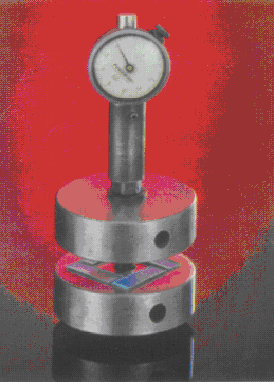
When evaluating equipment, treat safety as a specification, not an add-on. If possible, visit the supplier’s facility or request a video walkthrough of the exact model. At Ningbo Kaxite Sealing Materials Co., Ltd., our team provides detailed machine documentation and safety inspection points before shipment, helping procurement professionals reduce hidden risks. Operators should never have to bypass a guard to complete a test. If they do, the machine is not matched to the work process. This early-stage review directly answers the question: What safety precautions are needed when operating testing machines? The first precaution is selecting equipment that minimizes exposure to hazards by design.
Pain point: A lab technician starts a tensile test on a new graphite gasket immediately after loading the sample, without checking the hydraulic hose connections or confirming that the wedge grips are properly closed. As the load increases, one grip slips slightly, creating a loud noise and a small metal fragment that bounces off the safety glass. The test is aborted, but the operator is shaken.
Solution: Every operator should follow a structured pre-start sequence. It does not need to be complicated, but it must be consistent. Before powering the testing machine, inspect the frame for cracked hoses, loose bolts, oil leaks, and damaged wiring. Confirm that all guards and interlocks are in place. Verify that the emergency stop button is accessible and functional. Check that the load cell and extensometer are properly calibrated within their certification window. If the machine uses hydraulic clamping or actuation, look for pressure fluctuations or unusual sounds. Only after these checks should the operator load the specimen.
The minimum precautions include wearing approved eye protection and close-fitting clothing, removing jewelry, tying back long hair, and verifying that no one is in the machine’s hazard zone. Operators must confirm that the fixture and specimen are centered, the correct test method is loaded, and the crosshead speed or load limit is set within safe bounds. If the machine has a light curtain or two-hand control, test it briefly with no specimen to confirm the safety circuit is active. Document the check on a daily log. This is especially important for gasket and seal testing, where inserts, spacers, and thin specimens can shift under load.
Pain point: To speed up testing, an operator temporarily disables the light curtain on a compression tester because it beeps whenever a hand crosses the plane. The test runs faster, but the operator now stands inside the danger zone while the crosshead moves downward. A slip of the foot or a dropped sample could lead to a severe crush injury.
Solution: Real-time controls are not optional. Safety interlocks, light curtains, two-hand controls, and hold-to-run devices exist to keep operators away from moving parts. Personal protective equipment, including safety glasses, cut-resistant gloves when handling rough specimens, and steel-toe shoes, provides a second layer of protection. Set load limits and displacement limits before starting the test. Many modern testing machines, including those supplied for sealing material applications, allow password-protected limit values that prevent operators from accidentally overloading a specimen. Keep the work area free of tools, bolts, and debris that could become projectiles if they fall into the test space.
| Safety Parameter | Recommended Check | Frequency | Responsible Role |
|---|---|---|---|
| Emergency stop function | Press E-stop and confirm motion stops immediately | Daily before first test | Operator |
| Guard interlocks | Open each guard and verify the test cannot start | Weekly | Lab supervisor |
| Hydraulic hoses and fittings | Inspect for cracks, leaks, or abrasion | Daily | Maintenance technician |
| Load cell calibration | Verify certificate and perform quick zero check | Monthly or per ISO plan | Quality engineer |
| Light curtain alignment | Test beam interruption at multiple heights | Weekly | Safety officer |
| PPE availability | Confirm glasses, gloves, and protective shoes are present | Every shift | Operator |
Procurement managers should request this table as a minimum template from suppliers. If a vendor cannot explain how safety parameters are monitored, that is a red flag. At Ningbo Kaxite Sealing Materials Co., Ltd., we help customers match machine features to their internal safety checklists, so what happens on paper also works on the floor.
Pain point: A maintenance technician enters the test frame of a hydraulic creep tester to replace grips without releasing the stored pressure. The system was turned off, but the accumulator still holds energy. When a bolt is loosened, a sudden movement nearly catches the technician’s hand.
Solution: Maintenance must start with a zero-energy state. Use lockout/tagout procedures that isolate electrical, hydraulic, and pneumatic energy sources. Dissipate stored energy by opening manual bleed valves or following the machine-specific procedure. For testing machines with large actuators or accumulators, post the exact discharge steps on the frame. After lockout, technicians should attempt a brief start to confirm the machine cannot energize. Schedule maintenance at fixed intervals and keep logs of replaced seals, hoses, filters, and safety devices. Emergency readiness means more than having an E-stop; it means knowing where the nearest eyewash station is, having a first aid kit for minor cuts, and reviewing incident response steps with the whole team.
During maintenance, the key precautions are lockout/tagout, zero-energy verification, use of appropriate tools, and a second person as a safety observer if the work requires entering the hazard zone. After an emergency stop or unexpected shutdown, do not immediately reset the machine. First identify what triggered the stop, inspect the specimen and fixture, and confirm that all people are clear. If the cause is unknown, treat the machine as unsafe until a qualified technician completes a fault review. For gasket and seal testing, a failed specimen may leave debris inside the frame or misalign the platens. Reset only after those conditions are corrected. Teams that follow this approach consistently report fewer repeat faults and fewer near-misses.
Procurement managers often ask whether safety documentation, operator training, and ongoing technical support are included with a testing machine. At Ningbo Kaxite Sealing Materials Co., Ltd., we understand that sealing material tests—such as creep relaxation, compressibility, recovery, and tensile strength—require specific fixtures and precise force control. Our team works with buyers to select equipment that includes proper guards, accessible emergency controls, and clear operating manuals. Before shipment, we verify that safety labels are in place and that the machine can be integrated into your existing lab procedures. This reduces the time your team spends on corrective modifications and helps you answer the question: What safety precautions are needed when operating testing machines? with confidence rather than guesswork.
Which safety feature do you check first when a testing machine arrives at your facility? Have you ever had to modify an older tester to meet current operator safety standards? Share your experience in the comments or send your questions directly to our team. Procurement decisions become much easier when you compare machines not only by load capacity and price, but also by documented safety performance.
If you are evaluating testing machines for gaskets, seals, or other sealing materials, Ningbo Kaxite Sealing Materials Co., Ltd. can help you match equipment features to your safety requirements. Visit https://www.gasket-and-seal.com or contact our team at [email protected] for technical documentation, safety checklists, and product recommendations.
References
1. Smith, J., & Brown, A. (2021). Risk assessment protocols for material testing machinery. Journal of Industrial Safety Engineering, 45(3), 112-128.
2. Chen, L., Martinez, R., & Wilson, P. (2020). Human factors in laboratory equipment operation: A systematic review. Safety Science, 128, 104745.
3. Taylor, M. (2019). Lockout/tagout integration in mechanical testing laboratories. International Journal of Occupational Safety and Ergonomics, 25(4), 567-579.
4. Johnson, K., & Lee, S. (2022). Evaluation of interlocking guards on universal testing machines. Machinery Safety Research, 18(2), 78-92.
5. Williams, D., Patel, V., & Garcia, F. (2021). Emergency stop response and operator behavior in high-force test environments. Applied Ergonomics, 94, 103412.
6. Anderson, H. (2018). Hydraulic energy dissipation and zero-energy verification during testing machine maintenance. Journal of Pressure Equipment and Systems, 12(1), 45-58.
7. Thompson, R., & Nguyen, T. (2020). Practical risk assessment for gasket and seal compression testing. Sealing Technology, 2020(7), 9-14.
8. Miller, B., & Zhao, Y. (2023). Safety culture in material testing laboratories: A multi-site case study. Safety and Health at Work, 14(2), 211-224.
9. Garcia, M., & Kim, J. (2019). Influence of practical safety training on operator compliance in mechanical testing. Journal of Safety Research, 70, 155-164.
10. Robinson, C., & Evans, D. (2022). Procurement criteria for safer testing equipment in industrial quality control. International Journal of Procurement and Supply Management, 15(4), 321-336.