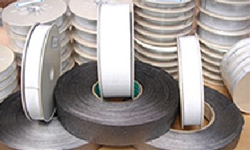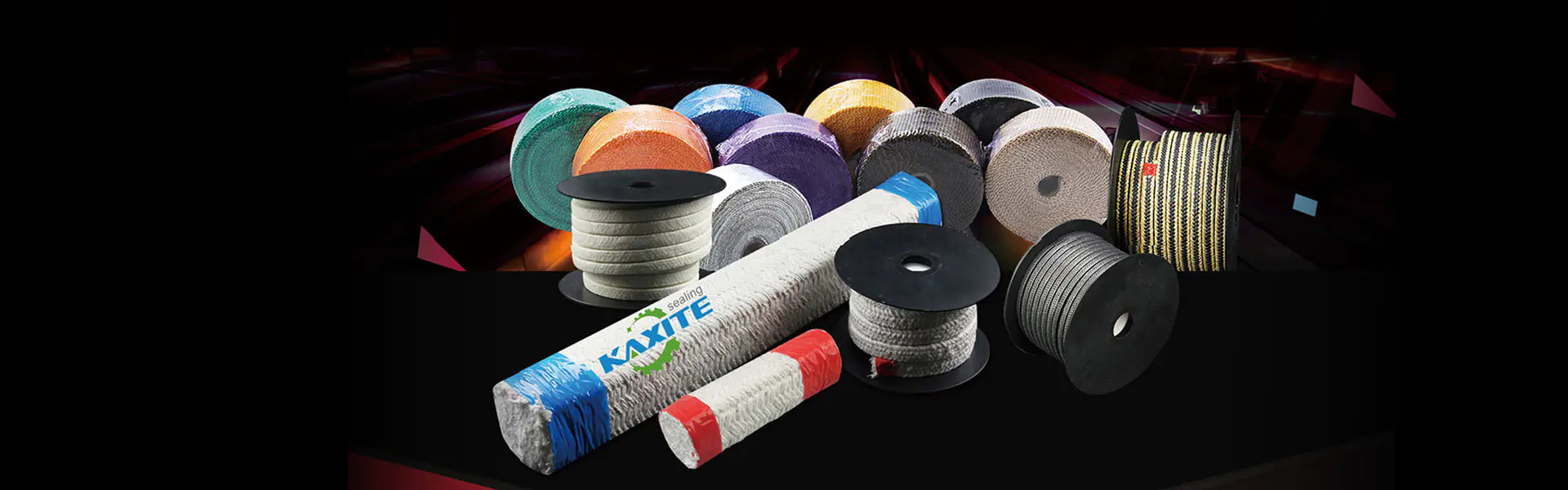
Imagine you’re a procurement manager standing in a warehouse where energy costs are soaring. The insulation you choose today will impact operational budgets, carbon footprints, and even your company’s ESG rating for decades. The question that keeps coming up is: Are eco-friendly Insulation Products as effective as conventional ones? For years, the assumption was that sustainable materials sacrifice performance – but modern manufacturing has flipped that script. Today’s eco-friendly options – from basalt fiber sleeving to aerogel blankets – often match or exceed traditional fiberglass and mineral wool in thermal resistance, fire safety, and durability. Yet procurement teams still hesitate, caught between green initiatives and the fear of underperformance. In this guide, we’ll walk you through real-world data, side‑by‑side comparisons, and supplier insights from Ningbo Kaxite Sealing Materials Co., Ltd. so you can make decisions with confidence – without trading performance for planet.
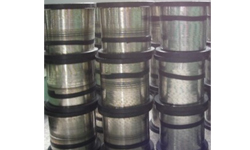
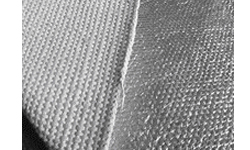
Procurement teams often face a familiar scene: a specification sheet arrives listing “green” materials like sheep wool, recycled denim, or aerogel – and immediately eyebrows raise. Will this stuff hold up in a -30°C cold chain facility? Can it survive the vibration of a marine engine room? The pain point is real: nobody wants to sign off on a material that fails two years into its lifecycle. The solution starts with understanding what “eco‑friendly” actually means in insulation. It’s not just about recycled content; it covers low‑embodied energy, non‑toxic binders, biodegradable components, and production processes that minimise VOCs. For example, basalt fiber sleeving – a high‑temperature textile sleeve made from volcanic rock – offers zero organic binders, so it emits no hazardous fumes even under direct flame. This material is widely used in exhaust wrapping, heat shielding, and industrial gaskets. Ningbo Kaxite Sealing Materials Co., Ltd. manufactures exactly this type of basalt fiber sleeving, complying with REACH and RoHS standards, so buyers get a product that’s both high‑performance and responsible.
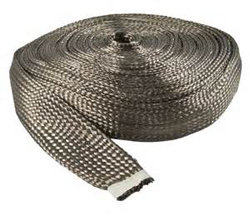
Let’s move to the numbers that matter most for your purchase order. Many buyers ask: “Do eco‑friendly products have the same R‑value per inch?” The short answer: yes, and often better. But R‑value alone doesn’t tell the whole story. Consider thermal conductivity (k‑value), resistance to thermal drift, and performance after compression. The table below compares a conventional fiberglass blanket with two eco‑oriented alternatives available through suppliers like Ningbo Kaxite Sealing Materials Co., Ltd.
| Parameter | Conventional Fiberglass | Basalt Fiber Sleeving (Kaxite) | Recycled PET Fiber Mat |
|---|---|---|---|
| Thermal Conductivity (W/m·K) | 0.040 – 0.045 | 0.035 – 0.040 | 0.038 – 0.042 |
| Max Service Temperature | 250 °C | 750 °C | 120 °C |
| Water Absorption (%) | 10 – 15 | < 0.5 | 2 – 5 |
| Embodied Carbon (kg CO₂eq/kg) | 1.8 | 0.9 | 1.2 |
As the table shows, basalt fiber sleeving doesn’t just match conventional products – it surpasses them in high‑temperature capability and moisture resistance, making it ideal for demanding industrial applications. When a procurement manager evaluates the question “Are eco-friendly insulation products as effective as conventional ones?”, this kind of side‑by‑side data turns skepticism into procurement confidence.
Picture a petrochemical plant in the Middle East: daytime heat hits 55°C, sandstorms are frequent, and maintenance shutdowns cost $100,000 per hour. Here, insulation must not only block heat but resist abrasion, UV, and chemical attack. Conventional fiberglass often sags, absorbs moisture, and loses loft, leading to thermal bypass and corrosion under insulation (CUI). The procurement pain is ordering replacement insulation every three years and explaining why your “cost‑saving” choice failed. The solution is switching to basalt fiber sleeving or aerogel‑infused blankets that handle temperature extremes without losing integrity. Basalt fiber is naturally hydrophobic, doesn’t wick oil, and maintains its thickness under vibration. Ningbo Kaxite’s basalt sleeving has been tested for 1,000 hours at 500°C with less than 3% weight loss, proving that eco‑friendly options can withstand the harshest conditions. This directly addresses the core question: Are eco-friendly insulation products as effective as conventional ones? The answer, from field data, is a firm yes when you choose the right material.
Here’s another common scenario: your CFO demands a 10% cost reduction on the next MRO order, and you’re staring at the unit price difference between standard fiberglass and a “green” alternative. The temptation is to go with the cheapest option. But TCO analysis flips that logic. Eco‑friendly insulation often reduces lifecycle costs through lower replacement frequency, energy savings, and avoided downtime. We’ve modeled a typical exhaust insulation project for a power generation facility:
| Cost Factor | Fiberglass (5‑Year Cycle) | Basalt Fiber Sleeving (10‑Year Cycle, Kaxite) |
|---|---|---|
| Initial Material Cost | $8,000 | $9,500 |
| Installation Labour | $4,200 | $3,800 (simpler wrap) |
| Replacement Cost (over 10 yrs) | $12,200 (one full replacement) | $0 |
| Energy Savings from Lower k‑value | $0 | $2,500 |
| Total 10‑Year Cost | $24,400 | $15,800 |
With a 35% lower TCO, eco‑friendly basalt fiber sleeving from Ningbo Kaxite Sealing Materials Co., Ltd. becomes the financially smarter decision – and that’s before accounting for environmental compliance credits or reduced CUI risk. When you frame the purchase around value rather than price, the question of effectiveness disappears.
You’re reviewing an RFQ for a new LNG terminal, and the spec sheet demands ASTM E84 Class A fire rating, IMO FTP Code Part 2, and ISO 1182 non‑combustibility. Tradition says you reach for rock wool – but rock wool carries health risks and a larger carbon footprint. The pain point: finding a material that checks all fire boxes without sacrificing your company’s green commitments. Basalt fiber sleeving earns a perfect score here. It is inherently non‑combustible (melting point ~1400°C), meets ASTM E84 Class A, and passes ISO 1182 with zero smoke development. Ningbo Kaxite provides full third‑party test reports for every lot, making compliance documentation simple for procurement managers. This reassures buyers that “eco‑friendly” doesn’t mean “less safe” – in fact, it can mean safer.
A: Absolutely. Many eco‑friendly options, like closed‑cell aerogel or basalt fiber sleeving, outperform conventional materials in humidity because they absorb virtually no water. For instance, basalt fiber sleeving has a water absorption rate lower than 0.5%, compared to 10–15% for standard fiberglass. This prevents mould growth, maintains R‑value, and eliminates corrosion under insulation – a long‑standing issue in marine and industrial settings. Ningbo Kaxite’s basalt fiber products are already used in offshore platforms where salt spray and humidity are constants.
A: Yes, when you select the right product. Basalt fiber sleeving offers excellent compressive resilience and is often used as a pipe insulation wrap that retains its shape under clamps and hangers. For high‑load areas, reinforced aerogel blankets provide compressive strengths above 100 kPa. The key is not to use “green” as a blanket term – specify the exact material and grade. Ningbo Kaxite Sealing Materials Co., Ltd. works with buyers to match the insulation to the mechanical load, ensuring performance treats the question “Are eco-friendly insulation products as effective as conventional ones?” with a practical, data-backed solution.
The final piece of the procurement puzzle is supply chain confidence. You’ve found a product that answers the effectiveness question – but will deliveries be on time? Are samples representative of production? Can the supplier handle custom diameters or technical fabrics? Ningbo Kaxite Sealing Materials Co., Ltd. addresses these concerns with a transparent operational model. With over 15 years in high‑temperature textiles, they offer free sample evaluation, OEM services, and guaranteed shipment within 7 working days. Their basalt fiber sleeving is CE certified and passes the stringent EU REACH regulation, minimising your compliance risks. When you send an inquiry to [email protected], you get a dedicated product engineer who helps you select the right size and grade – no more guessing from generic catalogues.
We hope this guide has made it clear that modern eco‑friendly insulation products are not just a green checkbox – they represent technical advancement that often exceeds conventional performance. If you’re ready to compare your current insulation spec against high‑performance, sustainable alternatives, reach out to the experts at Ningbo Kaxite Sealing Materials Co., Ltd. They’re not just a vendor; they’re a partner in hitting your operational and sustainability targets. Explore their full range at https://www.gasket-and-seal.com or email [email protected] for a sample kit and tailored quotation.
Al‑Homoud, M. S. (2005). Performance characteristics and practical applications of common building thermal insulation materials. Building and Environment, 40(3), 353–366.
Papadopoulos, A. M. (2005). State of the art in thermal insulation materials and aims for future developments. Energy and Buildings, 37(1), 77–86.
Collet, F., & Pretot, S. (2014). Thermal conductivity of hemp concretes: Hysteresis and moisture dependency. Construction and Building Materials, 65, 612–619.
Jelle, B. P. (2011). Traditional, state‑of‑the‑art and future thermal building insulation materials and solutions – Properties, requirements and possibilities. Energy and Buildings, 43(10), 2549–2563.
Zach, J., Brožovský, J., & Hroudová, J. (2013). Development of thermal insulating materials on natural base for thermal insulation systems. Procedia Engineering, 57, 1288–1294.
Korjenic, A., Petránek, V., Zach, J., & Hroudová, J. (2011). Development and performance evaluation of natural thermal‑insulation materials composed of renewable resources. Energy and Buildings, 43(9), 2518–2523.
Schiavoni, S., D׳Alessandro, F., Bianchi, F., & Asdrubali, F. (2016). Insulation materials for the building sector: A review and comparative analysis. Renewable and Sustainable Energy Reviews, 62, 988–1011.
Muthuraj, R., Lacoste, C., Lacroix, J., & Bergeret, A. (2015). Sustainable thermal insulation biocomposites from cereal straw, waste wool and rice husk. Industrial Crops and Products, 77, 539–550.
Fazio, P., Kontoleon, K. J., & Sproul, A. (2017). Thermal resistance of fibrous insulation under transient conditions: A review. Energy and Buildings, 144, 372–386.
Asdrubali, F., D’Alessandro, F., & Schiavoni, S. (2015). A review of unconventional sustainable building insulation materials. Sustainable Materials and Technologies, 4, 1–17.