In production planning for industrial textiles, gaskets, packings, and high-performance yarn goods, one question keeps surfacing during technical reviews: What is the difference between braiding and weaving machines? Both systems interlace yarns, but the mechanical principle, strand path, product geometry, and process economics are not the same. A purchasing decision made without understanding these differences can lead to seals that leak under thermal cycling, braided sleeves that deform under pressure, and equipment that does not reach expected output. Many engineers and buyers only realize the true cost after the machine is installed or after a supplier audit reveals limited capability. Composite material converters, fluid sealing manufacturers, and maintenance teams all face this challenge when they scale up or switch suppliers. This guide translates the technical differences into practical, procurement-friendly language, with real scenarios and comparison parameters you can use in RFQs. Ningbo Kaxite Sealing Materials Co., Ltd. has helped numerous clients align machine selection with sealing application demands, reducing risk, waste, and lead time.
Table of Contents
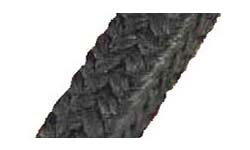
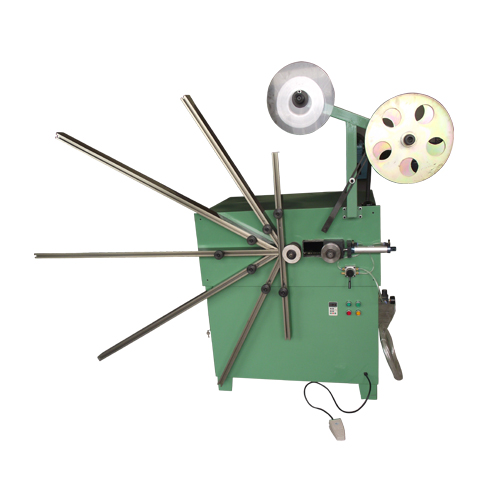
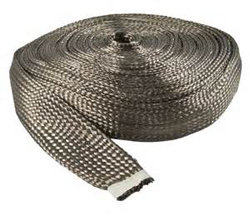
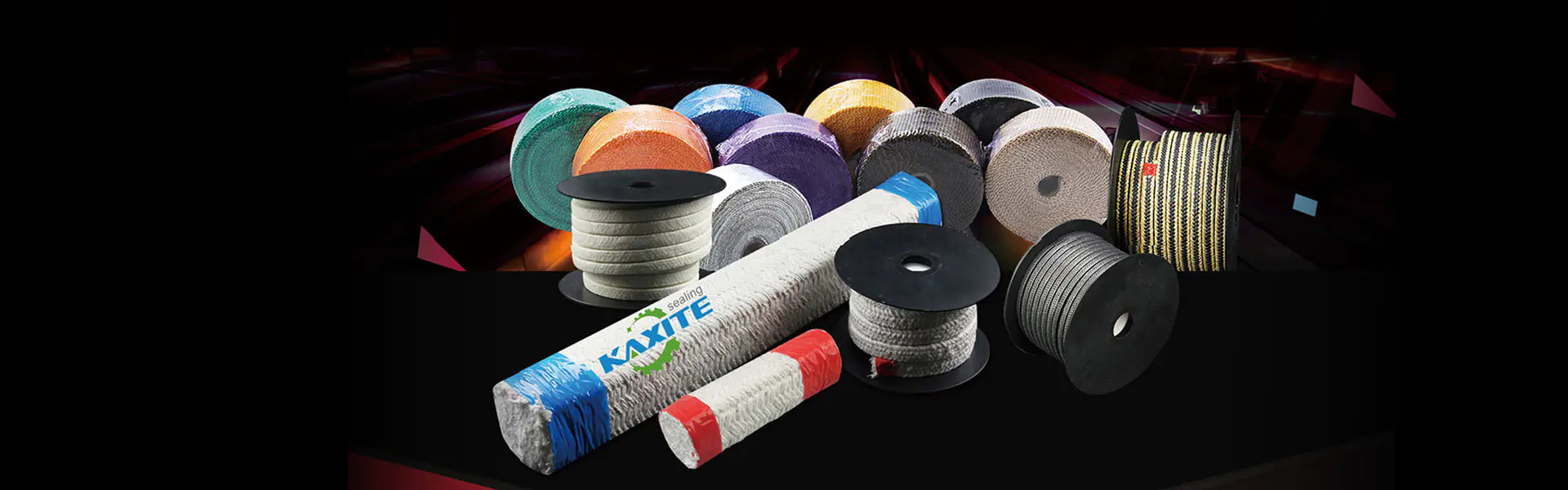
A braiding machine rotates multiple carriers around a central axis so that yarns or filaments intertwine in a diagonal or helical pattern. The result is a tubular or flat structure with high hoop strength, flexibility, and controlled elongation. Braided products excel in dynamic applications because the yarn angle can be adjusted to balance stiffness and recovery. In sealing, braided packing rings made from graphite, PTFE, aramid, or fiberglass rely on this structure to maintain resilience under compression and temperature changes. A typical braiding machine can use 8, 16, 24, 48, or more carriers depending on the required diameter and wall thickness.
| Parameter | Braiding Machine Output |
|---|---|
| Yarn orientation | Diagonal/helical, interlaced |
| Typical product shape | Tubular, sleeve, rope, flat narrow tape |
| Elongation and recovery | High elasticity and hoop strength |
| Common sealing use | Valve packing, pump packing, gasket tapes, expansion joints |
A weaving machine interlaces two sets of yarns—warp and weft—at right angles. This produces flat, dimensionally stable fabrics, tapes, or cloth. Weaving is highly productive for wide webs and can produce dense surfaces with high tensile strength. However, woven structures may have less conformability in circular or twisted sealing profiles unless additional processing is used. Many gasket reinforcement fabrics and compression packing jackets are woven because the flat surface supports uniform thickness and high burst resistance. Procurement teams often find that woven constructions deliver better width consistency but require additional forming steps for round seals.
| Parameter | Weaving Machine Output |
|---|---|
| Yarn orientation | Warp/weft at 90° |
| Typical product shape | Flat fabric, tape, wide web |
| Elongation and recovery | Lower elongation, high dimensional stability |
| Common sealing use | Reinforcement cloth, gasket sheets, packing jackets |
Procurement engineers often compare two supplier quotes with similar-looking specifications. One supplier offers a braiding machine with 48 carriers, another offers a weaving loom with 2,000 mm working width. Without a clear comparison, the evaluation becomes subjective and risky. The table below simplifies the technical trade-offs so you can avoid mismatched machine investments.
| Parameter | Braiding Machine | Weaving Machine |
|---|---|---|
| Yarn path | Diagonal/helical | Warp/weft at 90° |
| Product shape | Tubular, sleeve, rope, flat narrow | Flat fabric, tape, wide web |
| Elongation | Higher elasticity and hoop strength | Lower elongation, high dimensional stability |
| Production speed | Moderate for small diameters | High for wide flat fabrics |
| Changeover | Good for custom diameters | Rapid for standard widths |
| Common sealing use | Packing, gasket tapes, sleeves | Reinforcement cloth, gasket sheets, packing jackets |
Picture a plant engineer ordering graphite packing for a high-temperature valve. The supplier uses woven tape, but the valve stem requires continuous radial expansion. The woven structure may not recover after compression, causing leak paths and unplanned shutdowns. Solution: use braided packing produced on braiding machines, or specify a braid-over-core construction. Ningbo Kaxite Sealing Materials Co., Ltd. helps clients define whether braided or woven construction fits their pressure class, media, and flange type before procurement is finalized.
The same logic applies to gasket sheets and spiral wound gaskets. Woven reinforcement fabric may be ideal for wide, flat gasket cores because it maintains uniform thickness and resists tearing. But if your application involves frequent compression cycling, braided forms often return to shape more reliably. Reviewing these operational conditions before ordering machinery prevents expensive rework and field failures.
A purchasing team evaluating equipment quotes may see similar-looking specifications but different output. Ask about strand count, carrier number, take-up speed, and maximum product diameter. For braiding machines, confirm the number of carriers and whether the machine can handle the required yarn count range. For weaving machines, check working width, weft insertion rate, and warp beam capacity. The following table highlights a practical selection matrix for sealing material manufacturers.
| Selection Factor | Braiding Machine | Weaving Machine | Why It Matters |
|---|---|---|---|
| Target product geometry | Round, tubular, hollow | Flat, wide, sheet | Defines machine type |
| Required elasticity | High recovery | Dimensional stability | Affects sealing performance |
| Output per shift | Moderate | High for flat webs | Affects unit cost |
| Material types | PTFE, graphite, aramid, fiberglass | Fiberglass, carbon, synthetic yarns | Determines feed system |
| Maintenance complexity | Medium | Medium-high | Impacts OEE |
Solution: involve a sealing material specialist before signing the PO. Ningbo Kaxite Sealing Materials Co., Ltd. reviews your product drawings, pressure and temperature requirements, and current scrap rates to recommend the right construction. This prevents overspending on equipment that cannot meet seal performance targets.
Q1: What is the difference between braiding and weaving machines in terms of end-product performance?
Braiding creates diagonal yarn paths, which give tubular products better hoop strength, flexibility, and recovery. Weaving creates right-angle interlacement, which gives flat materials higher dimensional stability and tensile strength. For sealing applications, braided packings often handle dynamic movement better, while woven fabrics work well as gasket reinforcement and compression packing jackets.
Q2: How do I know if I need a braiding machine or a weaving machine for my gasket line?
Start with product shape and required mechanical behavior. If you need continuous round packings, braided sleeves, or high-recovery seals, choose braiding. If you need flat reinforcement cloth, tape, or gasket sheet materials, weaving is usually the better fit. Ningbo Kaxite Sealing Materials Co., Ltd. can help evaluate your product drawings and material targets before you invest.
If you are comparing braiding and weaving machines for gasket, packing, or sealing production, the team at Ningbo Kaxite Sealing Materials Co., Ltd. can help you translate machine specs into reliable product performance. We supply high-quality sealing materials and work closely with manufacturers to match braided or woven constructions to your pressure, temperature, and chemical requirements. Contact our technical team at [email protected] or visit https://www.gasket-and-seal.com to discuss your next project. We are ready to help you avoid costly equipment mistakes and improve output quality.
Ko, F. K. (1989). Braiding. Engineered Materials Handbook: Composites, 1, 519–528.
Brunnschweiler, D. (1953). The Structure and Tensile Properties of Braids. Journal of the Textile Institute, 44(9), P666–P686.
Zhang, Q., & Binienda, W. K. (2014). Analysis of Triaxial Braided Composites. Composite Structures, 107, 598–606.
Potluri, P., Rawal, A., Rivaldi, M., & Porat, I. (2003). Geometrical modelling and control of a triaxial braiding machine for producing 3D preforms. Composites Part A: Applied Science and Manufacturing, 34(6), 481–492.
Lomov, S. V., Ivanov, D. S., Verpoest, I., Zako, M., Kurashiki, T., Nakai, H., & Hirosawa, S. (2007). Meso-FE modelling of textile composites: Road map, data flow and algorithms. Composites Science and Technology, 67(9), 1870–1891.
Adanur, S., & Liao, T. (1998). 3D simulation of plain weave fabrics. Journal of the Textile Institute, 89(2), 355–366.
Phoenix, S. L., & Porwal, P. K. (2003). A new membrane model for the ballistic impact response and V50 performance of multi-ply fibrous systems. International Journal of Solids and Structures, 40(22), 6723–6765.
Bogdanovich, A. E., & Mungalov, D. (2002). Recent advancements in manufacturing 3-D braided preforms. Journal of Composite Materials, 36(4), 403–429.
Li, W., Hammad, M., & El-Shiekh, A. (1990). Structural analysis of 3-D braided preforms. Journal of the Textile Institute, 81(4), 515–537.
Naik, N. K., & Sirisha, M. (2004). Ballistic impact behaviour of woven fabric composites. International Journal of Impact Engineering, 30(2), 171–191.
-