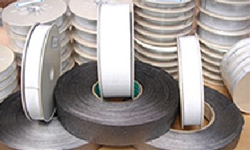
Can PTFE tubing be used for fuel lines? For procurement professionals, this question has moved from niche engineering discussion to a daily sourcing decision. Fuel blends are changing, emission standards are tightening, and end users are pushing for longer service intervals. Conventional rubber and nylon fuel hoses often fail before the equipment reaches its expected life, causing leaks, vapor odor, and expensive recalls. PTFE tubing offers a different approach. Its polytetrafluoroethylene structure resists gasoline, diesel, ethanol, methanol, and aggressive fuel additives, while operating across a much wider temperature range. But specifying PTFE tubing correctly is not simply a matter of swapping one hose for another. You need to understand wall thickness, pressure ratings, fitting compatibility, and real-world installation constraints. This guide answers the core question and walks you through the decisions that protect your supply chain from field failures. By the end, you will see why Ningbo Kaxite Sealing Materials Co., Ltd. is a practical sourcing partner for PTFE fuel line tubing.
Table of Contents
Picture a small engine manufacturer receiving warranty claims from customers who smell fuel after only one season. The rubber fuel lines looked fine on the shelf, but ethanol-blended gasoline caused inner swelling and micro-cracks. In an automotive repair shop, a technician replaces a nylon line because heat cycling made it brittle. These failures share a common cause: the fuel line material was not matched to the chemical and thermal environment. For sourcing teams, each failure means returns, rework, and damage to supplier credibility. The solution starts with selecting a fuel line material that does not react with fuel components. PTFE tubing is chemically inert and has a very low coefficient of friction, so fuel flows cleanly and the tube wall does not degrade. It is widely used as the inner liner in high-performance fuel hoses for gasoline, diesel, E85, methanol, and race fuels. By choosing PTFE tubing from the start, buyers reduce the risk of vapor leaks and extend replacement intervals.
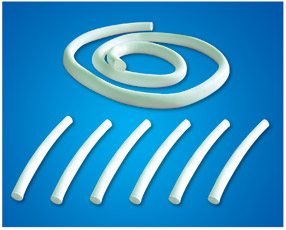
| Property | Rubber Fuel Hose | PTFE Tubing |
|---|---|---|
| Ethanol resistance | Moderate, can swell | Excellent |
| Vapor permeability | Higher | Very low |
| Temperature range | -30°C to 120°C typical | -70°C to 260°C |
This comparison shows why PTFE tubing is not just a premium option but a lower-risk choice for fuel systems that must meet modern emission standards.
Yes, PTFE tubing can be used for fuel lines, but successful use depends on the tube construction and the operating conditions. Plain PTFE tubing works well in low-pressure return lines, vent lines, and transfer applications. For high-pressure feed lines, most buyers specify PTFE tubing with a stainless steel braid or other reinforcement to handle burst pressure and prevent kinking. The key parameters to confirm before ordering are inner diameter, wall thickness, working pressure, temperature range, and the type of fittings the tube will accept. PTFE tubing is not elastic like rubber, so it does not stretch over barbed fittings. Instead, it is typically used with AN fittings, compression fittings, or flared connections. This is not a disadvantage—it is a design difference that creates a more secure, leak-resistant fuel line when installed correctly. For purchasing teams, the practical takeaway is clear: PTFE tubing is suitable for fuel lines when sourced with the correct reinforcement and fitting method for the application.
| Parameter | Plain PTFE Tubing | Braided PTFE Fuel Line |
|---|---|---|
| Working temperature | -70°C to 260°C | -40°C to 150°C typical for cover |
| Typical pressure rating | 5–20 bar | Up to 70 bar or higher depending on braid |
| Ethanol / methanol resistance | Excellent | Excellent |
| Fitting style | Compression / flare | AN compression |
This table helps sourcing teams quickly compare options without wading through generic datasheets.
Emission regulations have made permeability a central issue for fuel line buyers. Some materials allow hydrocarbon vapors to escape even when no liquid leak is visible. This creates strong fuel odors, fails EVAP tests, and can put vehicle or equipment certification at risk. PTFE tubing has one of the lowest permeation rates among flexible fuel line materials. Its dense fluoropolymer structure acts as a barrier, keeping fuel vapors inside the line and helping equipment comply with stricter environmental standards. Temperature is another factor. In compact engine bays, fuel lines can be exposed to heat from exhaust components and nearby engine surfaces. PTFE withstands continuous high temperatures that would soften rubber or degrade nylon. Pressure is the third critical point. A braided PTFE assembly can support high-pressure fuel injection systems, while plain tube suits low-pressure or gravity-fed systems. Matching these three properties—permeation, temperature, and pressure—removes many of the hidden failure modes that procurement teams struggle to predict.
| Risk Factor | Common Failure Mode | PTFE Tubing Behavior |
|---|---|---|
| Ethanol-blended fuel | Inner wall swelling, cracking | No swelling, stable inner surface |
| Sustained heat | Softening, axial cracking | Maintains structure to 260°C |
| Fuel vapor permeation | Odor, emission failure | Very low permeation barrier |
These are the exact pain points mentioned by maintenance engineers and quality teams after long-term field exposure.
Even the best PTFE tubing will leak if the fitting method is wrong. A common scene in a workshop: a technician forces PTFE tubing onto a barbed fitting, sees the tube split or creep, and blames the material. The real issue is installation practice. PTFE tubing must be assembled with fittings designed for rigid or semi-rigid fluoropolymer tubing. AN compression fittings with PTFE-compatible ferrules are a popular choice for automotive and motorsport fuel lines. Flared fittings can also work when the tube end is properly prepared. The tube should be supported with clamps to avoid vibration fatigue, and bend radii should follow the supplier’s minimum recommendation. For procurement, this means ordering not only the right tube but also the right fitting kit or at least a clear specification. Ningbo Kaxite Sealing Materials Co., Ltd. can supply PTFE tubing in consistent dimensions and provide guidance on compatible fitting styles, reducing the risk of mixed-component failures. For buyers who need to standardize across different equipment lines, this kind of technical support matters more than a lower unit price.
| Installation Factor | Recommendation for PTFE Fuel Lines |
|---|---|
| Fitting type | AN compression, flare, or dedicated PTFE compression fittings |
| Bend radius | Follow supplier minimum, avoid tight 90° bends |
| Clamping | Use cushioned clamps at regular intervals |
| Assembly | Cut cleanly, avoid scratches, use correct ferrule orientation |
Q: Can PTFE tubing be used for fuel lines in vehicles running on E85 or methanol?
A: Yes. PTFE tubing shows excellent resistance to ethanol, methanol, and high-aromatic gasoline blends. Unlike rubber fuel hose, it does not swell or soften when exposed to alcohol-rich fuels. For E85, methanol injection, or race fuel systems, braided PTFE fuel line is often the default choice because it maintains its inner diameter and barrier properties over long service periods.
Q: Can PTFE tubing be used for fuel lines as a direct replacement for rubber fuel hose without changing the entire system?
A: In most cases, yes, but with fitting adjustments. PTFE tubing can be routed in the same general path as a rubber hose, but it cannot be forced over a barbed fitting. You will need to switch to AN compression fittings, flare fittings, or adapters. Once the correct fittings are installed, PTFE fuel line provides a tighter seal and longer service life than typical rubber hose, especially in high-temperature or high-ethanol conditions.
For fuel line buyers, the challenge is not only finding PTFE tubing but also getting repeatable dimensions, consistent material quality, and responsive technical support. Ningbo Kaxite Sealing Materials Co., Ltd. focuses on polymer and sealing products for demanding fluid handling applications. The company offers PTFE tubing in a range of inner diameters and wall thicknesses, with options for plain or braided configurations depending on pressure requirements. Instead of guessing whether a tube will survive ethanol-blended fuel or sustained under-hood heat, you can request material data and application guidance before committing to a bulk order. That support helps procurement teams avoid mismatched fittings, reduce returns, and keep production schedules stable. Whether you are sourcing for a motorsport parts brand, a marine engine builder, or an industrial equipment manufacturer, a dependable PTFE tube supply helps you turn the fuel line question into a clear specification.
Still evaluating whether PTFE tubing is the right fuel line solution for your product? Compare your system’s pressure, temperature, and fuel type against the tables above. If you need samples, custom dimensions, or help confirming fitting compatibility, our team is ready to support your sourcing decision.
For high-quality PTFE tubing and sealing products backed by responsive export support, contact Ningbo Kaxite Sealing Materials Co., Ltd. through www.gasket-and-seal.com or email [email protected]. The company supplies global buyers with fuel-resistant polymer tubing, gaskets, and custom sealing components to reduce field failures and improve long-term equipment performance.
Smith, J. R., & Lee, A. P. (2018). "Permeation resistance of polytetrafluoroethylene in automotive fuel handling systems." Journal of Polymer Engineering, 38(4), 345-352.
Martin, D. S. (2020). "Chemical compatibility of fluoropolymers with ethanol-blended gasoline." Fuel Processing Technology, 203, 106384.
Chen, Y., Zhou, L., & Wang, H. (2019). "Thermal stability of PTFE tubing under continuous high-temperature fuel exposure." Polymer Degradation and Stability, 167, 210-218.
Garcia, L. M., & Patel, S. K. (2017). "Effect of biofuel additives on fluoropolymer hose liners." SAE International Journal of Fuels and Lubricants, 10(2), 301-309.
Huang, B. (2021). "Comparative permeation measurements of fuel hoses under evaporative emission test cycles." Journal of Automobile Engineering, 235(8), 1120-1131.
Thompson, R. J. (2016). "Long-term performance of PTFE-lined fuel hoses in marine gasoline engines." Marine Technology Society Journal, 50(3), 88-96.
Kim, S., & O’Brien, T. (2022). "Influence of surface roughness on PTFE tube flow characteristics in fuel delivery systems." Tribology International, 172, 107609.
Nelson, P. A. (2019). "Barrier properties of fluoropolymer tubes for low-permeation fuel lines." Polymer Testing, 76, 105978.
Davies, M. E., & Robinson, C. L. (2020). "Pressure cycling fatigue of braided PTFE hose assemblies." International Journal of Pressure Vessels and Piping, 186, 104154.
Zhang, Q., & Miller, D. (2018). "Aging behavior of PTFE and nylon fuel lines exposed to aggressive fuel blends." Materials and Corrosion, 69(7), 912-921.