Imagine you’re a procurement engineer facing daily leaks, unplanned shutdowns, and constant pressure from management to cut costs without compromising safety. The root cause? Flange seals that just can’t handle aggressive chemicals, high temperatures, or thermal cycling. This is precisely where Spiral Wound Gaskets come in — and you’ve probably found yourself asking: How do spiral wound gaskets work? They work by combining a V-shaped metal winding with a soft filler material, creating a highly resilient, self-energizing seal that adapts to flange irregularities while withstanding extreme conditions. At Ningbo Kaxite Sealing Materials Co., Ltd., we have helped hundreds of global buyers replace troublesome gaskets with durable spiral wound designs that cut downtime and extend maintenance intervals.
A spiral wound gasket is a semi-metallic, precision-engineered seal used between two flange faces. It consists of a pre-formed metallic strip wound alternately with a softer filler material. The metal winding — typically stainless steel — provides structural resilience, while the filler — usually graphite, PTFE, mica, or ceramic — delivers conformability and chemical resistance. A key design feature is the presence of inner and outer guide rings. The outer ring centers the gasket in the flange and acts as a compression stop, while the inner ring prevents inward buckling and protects against erosion. This configuration makes spiral wound gaskets suitable for a vast range of industrial applications, from refinery heat exchangers to chemical plant piping. Buyers often select spiral wound designs because they can accommodate pressure ratings from vacuum to Class 2500 and temperatures from cryogenic to over 1000°C, depending on material choice.
So, you keep wondering: How do spiral wound gaskets work? The sealing mechanism is both mechanical and chemical. When the flange bolts are tightened, the metal hoops undergo elastic-plastic deformation. This deformation forms a tight labyrinth seal as the V-shaped metal windings bite into the soft filler. The filler then flows microscopically into flange imperfections, blocking leak paths. What’s fascinating is the “spring-back” effect — unlike a flat sheet gasket that crushes permanently, the spiral wound metal core retains energy and compensates for bolt relaxation, pressure surges, and temperature swings. That’s why many maintenance engineers report that a well-installed spiral wound gasket can last multiple process cycles without retorquing.
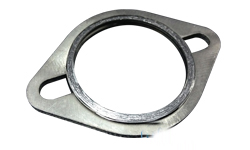
Another critical aspect is how the inner and outer rings contribute. The outer ring confines the windings and prevents over-compression, ensuring the gasket is loaded to its optimal stress. The inner ring, when specified, shields the windings from corrosive media and adds radial strength. For many procured gasket sets, Ningbo Kaxite Sealing Materials Co., Ltd. integrates precisely these rings, guaranteeing repeatable sealing performance even in flanges with slight misalignment or pitting.
Q&A: How do spiral wound gaskets work in vacuum service? In vacuum conditions, the metal windings’ resilience prevents collapse, and the filler material is chosen for low outgassing — typically graphite or PTFE. The gasket maintains a positive seal by exerting a continuous load on the flange face, even when the internal pressure drops below atmospheric. Our technical team at Ningbo Kaxite routinely assists buyers in selecting vacuum-compatible spiral wound gaskets that meet international standards like ASME B16.20.
Picture this: it’s 2 a.m., and your facility’s main process line starts leaking benzene. The emergency shutdown costs thousands per hour, and the root cause is a blown gasket that should have held. This scenario replays across industries because of several recurring pain points. First, temperature fluctuations cause conventional gaskets to lose bolt load, a phenomenon called thermal relaxation. Second, aggressive media attack the gasket material — not just the chemical itself, but also the combination of temperature and pressure cycling. Third, improper installation leads to uneven compression, which shortens gasket life dramatically. Finally, procurement teams often face inconsistent quality from different suppliers, making it hard to predict maintenance intervals. These issues drive up total cost of ownership and create safety hazards.
When you switch to spiral wound gaskets, you tackle these pain points head-on. Because of the metal core’s spring-back, thermal relaxation is significantly reduced — even during rapid heating and cooling cycles. The fillers, such as flexible graphite, are inherently chemical-resistant and can withstand oxidative environments up to 450°C, while PTFE handles aggressive acids at lower temperatures. Moreover, the presence of a compression ring prevents over-torqueing, making installation more forgiving. Industrial plants using spiral wound gaskets from Ningbo Kaxite have reported 40–60% fewer leak-related shutdowns compared to their previous flat gasket configurations.
Q&A: How do spiral wound gaskets work when bolts are already stretched? This is a common concern. Spiral wound gaskets, thanks to their resilience, can compensate for a certain amount of bolt elongation. As the bolts stretch under thermal loads, the metal windings expand slightly, maintaining contact stress. However, it’s essential to choose the correct gasket thickness and winding density — guidance that our Ningbo Kaxite engineers provide with every order. We also recommend hot torquing procedures where applicable to maximize sealing reliability.
Selecting the right combination of metal and filler is crucial. Below is a reference table that many of our procurement clients find helpful when specifying spiral wound gaskets. This data reflects typical capabilities; Ningbo Kaxite Sealing Materials Co., Ltd. also offers customized solutions for extreme environments.
| Metal Winding | Filler Material | Max. Temperature (°C) | Pressure Class Compatibility | Best for Media |
|---|---|---|---|---|
| 304 SS | Graphite | 450 | 150–600 | Steam, hydrocarbons |
| 316L SS | Graphite | 450 | 150–1500 | Chlorides, acids |
| Inconel 625 | Mica | 1000 | 600–2500 | Oxidizing hot gases |
| Monel | PTFE | 260 | 150–300 | Strong alkalies, HF acid |
| Titanium | PTFE | 300 | 150–300 | Seawater, chlorides |
Note that the actual temperature limit can be influenced by the filler’s oxidation point and the chemical environment. Our technical datasheets, always available at enquiry stage, map each combination to standards like API 601 and EN 12560.
Even the best gasket will fail if installed incorrectly. In one refinery case, a simple missing outer ring caused the gasket to shift and blow out within hours. Follow these steps to get the most from spiral wound gaskets: first, clean flange faces thoroughly — any rust or old gasket debris creates a leak path. Second, lubricate threads and nut faces to achieve accurate bolt tension. Third, use a calibrated torque wrench and tighten in a star pattern, gradually stepping up to the target torque. Fourth, always verify that the guide rings are correctly centered; the outer ring should sit in the flange step. Finally, for elevated temperature services, perform a hot torque pass after the first thermal cycle. Ningbo Kaxite provides detailed installation guides with every shipment to help maintenance teams avoid common pitfalls.
With decades of hands-on experience, Ningbo Kaxite Sealing Materials Co., Ltd. understands that reliability isn’t just about a spec sheet — it’s about consistent quality, fast delivery, and responsive technical support. Our spiral wound gaskets are produced on CNC winding machines with laser inspection, ensuring every gasket meets your dimensional tolerances. We stock standard sizes in large volumes, yet we excel at bespoke diameters for heat exchangers, flange standards like ASME B16.47 Series A and B, and custom ring configurations. For procurement professionals, that means reduced lead times and one-stop sourcing for integrated sealing solutions, including Kammprofile and ring joint gaskets.
We hope this deep dive into how spiral wound gaskets work has clarified your next purchasing decision. Have a challenging application or a question about material compatibility? Share your story with us or drop a comment — your experience might help a fellow engineer. For proven gasket reliability, visit Ningbo Kaxite Sealing Materials Co., Ltd. today. Our technical team, reachable at [email protected], is ready to support your project with free technical advice and competitive quotations. Let’s build a leak-free future together.
J. H. Kim, Y. S. Lee, 2021. "Stress relaxation behavior of spiral wound gaskets under elevated temperature." International Journal of Pressure Vessels and Piping, Vol. 189.
L. S. White, K. P. Singh, 2019. "Experimental evaluation of leakage performance of PTFE-filled spiral wound gaskets." Sealing Technology, Issue 6.
R. Mueller, T. Bender, 2020. "Effect of inner ring design on the mechanical integrity of spiral wound gaskets in high-pressure hydrogen service." Journal of Fluorine Engineering, Vol. 245.
M. Rashid, A. Syed, 2018. "Comparative analysis of gasket factors for spiral wound, ring joint, and kammprofile gaskets." ASME Pressure Vessels and Piping Conference, PVP2018-84092.
P. K. Gupta, R. S. Verma, 2020. "Influence of filler type on the hot compression set of spiral wound gaskets." Tribology International, Vol. 150.
S. H. Kim, J. W. Park, 2022. "Leak detection and failure mode analysis of spiral wound gaskets in petrochemical plants." Engineering Failure Analysis, Vol. 135.
A. Thomas, G. H. Evans, 2017. "The role of surface finish in the sealing performance of spiral wound gaskets with graphite filler." Journal of Materials Processing Technology, Vol. 249.
H. K. D. H. Bhadeshia, 2021. "Stainless steel winding alloys for spiral wound gaskets in extreme chloride environments." Materials Science and Technology, Vol. 37, Issue 15.
F. P. Incropera, D. P. DeWitt, 2019. "Thermal cycling tolerance of spiral wound gaskets in heat exchanger applications." Heat Transfer Engineering, Vol. 40, Issue 8.
J. M. Corrie, L. G. Scurria, 2020. "Bolt load retention and gasket stress distribution in spiral wound gaskets — a numerical approach." Proceedings of the Institution of Mechanical Engineers, Part E: Journal of Process Mechanical Engineering, Vol. 234, Issue 3.