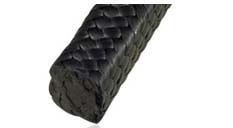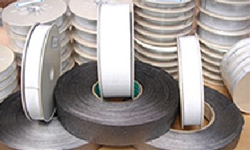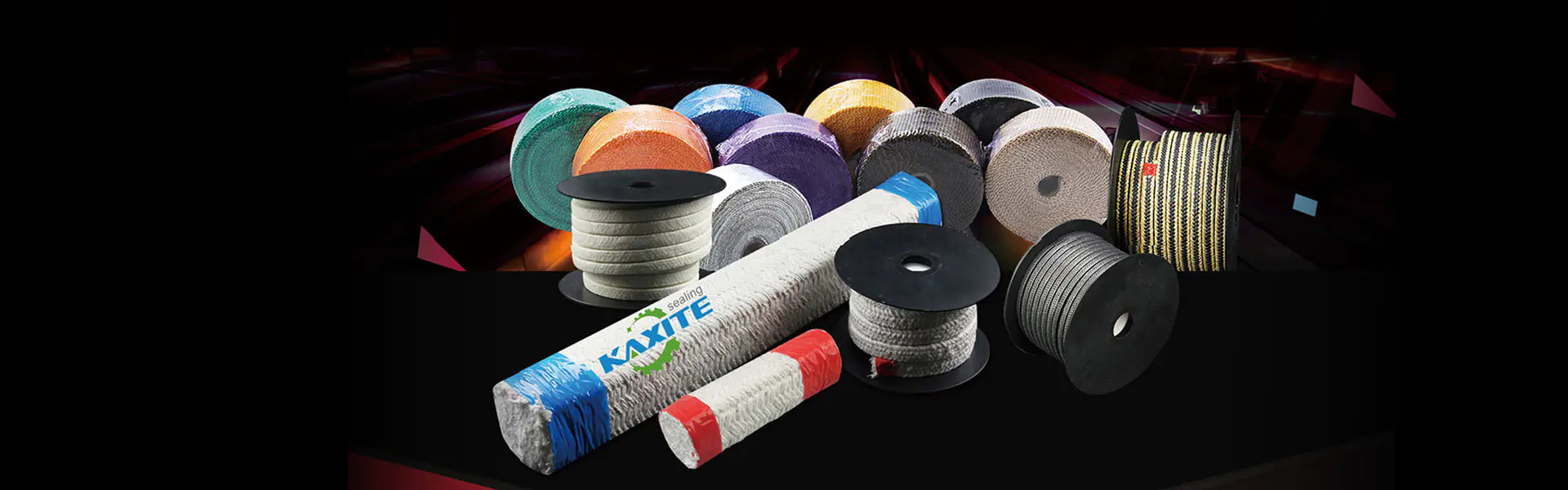
Imagine a critical flange in a chemical processing plant that suddenly leaks. The maintenance team scrambles to identify the cause: the rubber gasket, though seemingly intact, has extruded under a pressure spike. If you are responsible for sourcing sealing components, you know this nightmare scenario too well. The question that keeps engineers and procurement specialists up at night is, What is the maximum pressure that rubber Sealing Materials can withstand? The answer is not a single number—it depends on material compound, hardness, temperature, and gasket geometry. A solid understanding of these variables can prevent unplanned downtime, safety hazards, and costly replacements. In this guide, we distill decades of field experience into a practical, scenario‑driven resource. You will discover exactly how to evaluate rubber sealing materials for high‑pressure applications, avoid common failure modes, and confidently select the optimal product for your system.
A purchasing manager for an oilfield equipment provider recently told us, “We kept ordering rubber gaskets rated for 150 psi, but they were failing at 130 psi on a hot summer day.” The real problem? The rating had been established at room temperature, and the elevated operating temperature softened the rubber dramatically. Maximum pressure capacity of rubber sealing materials is not a fixed number carved in stone. It is a dynamic threshold shaped by temperature, media, confinement, and load duration. When a seal operates at higher temperatures, the polymer chains become more mobile, reducing both tensile strength and hardness. At the same time, many elastomers swell in contact with certain hydrocarbons, which further lowers pressure resistance. Confinement matters too: a gasket compressed in a rigid groove can withstand far more pressure than an unreinforced O‑ring in an open face seal. In dynamic applications, pressure pulsation and cycling introduce fatigue that eventually reduces the burst pressure. For static flanges, the limiting factor is often the extrusion gap. Below is a summary of how these variables change the maximum pressure of a common nitrile rubber seal.
| Variable | Condition | Typical Pressure Limit (psi) |
|---|---|---|
| Temperature | 23°C (73°F) | 200 |
| Temperature | 100°C (212°F) | 120 |
| Extrusion gap | 0.25 mm | 350 |
| Extrusion gap | 0.50 mm | 150 |
| Media | Air / inert gas | 200 |
| Media | ASTM Oil No.3 (swelling) | 100 |
These numbers demonstrate that a seal’s real‑world pressure limit cannot be read from a catalog alone. You must map the entire service environment. At Ningbo Kaxite Sealing Materials Co., Ltd., we provide detailed application data sheets that help buyers cross‑reference pressure‑temperature‑media envelopes, ensuring your selection matches the actual conditions.
Picture a pharmaceutical clean‑in‑place system that uses steam at 150°C and pressures up to 300 psi. The maintenance director noticed that EPDM gaskets were extruding after just a few cycles, creating contamination risks. The root cause was not poor rubber quality but incorrect compound choice for the combined high temperature and pressure. Different rubber families exhibit widely different maximum pressure capabilities, and reinforcement techniques such as fabric insertion can dramatically extend the limit. Nitrile (NBR) is a workhorse for hydraulic oils up to about 150°C and 250 psi with proper confinement. Fluorocarbon (FKM) handles higher temperatures (up to 200°C) and aggressive media, maintaining pressure resistance in severe service. Silicone, although excellent for low‑temperature flexibility, loses mechanical strength rapidly above 80°C and is typically limited to 50–80 psi in critical joints. For extreme conditions, metal‑inserted or aramid‑fabric‑reinforced rubber gaskets push the boundary past 1,000 psi. The table below offers a practical comparison, based on static flange applications with zero extrusion gap.
| Rubber Type | Shore A Hardness | Max Temperature (°C) | Approx. Max Pressure (psi) – Static |
|---|---|---|---|
| Nitrile (NBR) | 70 | 100 | 250 |
| Fluorocarbon (FKM) | 75 | 200 | 300 |
| EPDM | 70 | 150 | 200 |
| Silicone (VMQ) | 60 | 200 (intermittent) | 80 |
| Aramid‑reinforced NBR | 80 | 120 | 1,200 |
When sourcing, avoid overspecifying—choosing the highest possible pressure rating without considering chemical compatibility or temperature can lead to unnecessary costs and installation problems. We guide our clients through a structured selection workflow, balancing pressure performance with total cost of ownership.
A water treatment project manager once shared his frustration: “Two suppliers quoted EPDM gaskets with the same 150 psi rating, but one failed in our test while the other held perfectly.” The discrepancy arose from different testing methodologies. One rating was derived from a room‑temperature burst test per ASTM F36, while the other accounted for elevated temperature and fluid immersion per ASTM F37. Standardized tests define the conditions under which maximum pressure is measured, and suppliers often mention a “design pressure” that includes a safety factor. Key standards for rubber gasket pressure evaluation include ASTM F36 (compressibility and recovery), ASTM F37 (sealability), and ISO 10497 for fugitive emissions. For custom applications, many OEMs require the seal to withstand 1.5 times the maximum operating pressure for a specified duration without visible leakage or extrusion. Understanding these standards helps procurement professionals compare apples to apples. When you request a pressure rating from Ningbo Kaxite Sealing Materials Co., Ltd., we always specify the test temperature, medium, and applicable standard, so there are no hidden assumptions.
An automotive transmission plant suffered a costly line stoppage because a rubber O‑ring was pinched during assembly. The pressure rating on paper was 500 psi, but the nicked seal began leaking at just 200 psi. Even a perfectly specified material will fail if installation or maintenance practices are sloppy. Surface finish of flange faces must match the seal recommendation—generally 3.2 to 6.3 µm Ra for rubber gaskets. Uneven bolt tightening creates stress concentration and extrusion pathways, so a calibrated torque sequence is essential. Reusing rubber seals after a pressure cycle is risky because the material may have taken a compression set. Always replace gaskets during overhauls, and never mix old and new seals in the same joint. Condition monitoring using acoustic emission sensors or simple pressure drop tests can detect early gasket degradation. We provide installation guidelines and training materials to all our clients, helping them achieve the full pressure potential of our products.
Q: What is the maximum pressure that rubber sealing materials can withstand in a standard industrial flange?
A: For a well‑confined, unreinforced rubber gasket such as 70‑Shore nitrile, the maximum typical static pressure at room temperature is around 250 psi. With fabric reinforcement and careful groove design, pressures exceeding 1,000 psi are achievable. Always factor in temperature and media effects; a seal rated for 250 psi at 25°C may only hold 150 psi at 100°C.
Q: Can rubber sealing materials handle high‑pressure gas applications?
A: Yes, but special precautions are required. Gases have lower viscosity than liquids, making them more prone to escape through tiny extrusion gaps. The maximum pressure for gas service is often de‑rated by 30‑50% compared to liquid service. Using a high‑hardness rubber (80‑90 Shore A), reducing the extrusion gap, and employing backup rings can help maintain integrity at elevated gas pressures. Our engineers routinely assist clients in recalculating ratings for gaseous media.
Selecting the right rubber sealing material for high‑pressure environments is a multi‑variable decision that demands technical depth and practical experience. At Ningbo Kaxite Sealing Materials Co., Ltd., we combine advanced material science with more than 20 years of manufacturing expertise to deliver gaskets, O‑rings, and custom‑shaped seals that consistently exceed performance expectations. Our in‑house laboratory conducts pressure burst testing per ASTM and ISO methodologies, and we provide complete traceability from raw polymer to finished product. Whether you need an FDA‑compliant silicone gasket for a low‑pressure food tank or a reinforced FKM seal for a chemical reactor operating at 500 psi and 200°C, we offer personalized consultations to match your exact service conditions. We also provide on‑site technical support and installation training, so your team can achieve the rated pressure limits in the real world. Explore our full range at https://www.gasket-and-seal.com or contact our application experts at [email protected] for a tailored recommendation. We look forward to helping you eliminate seal‑related downtime and build a safer, more reliable system.
Akulichev, A. G., Alcock, B., & Tiwari, A. (2020). “Long‑term hydrostatic strength of elastomeric seals: experimental characterization and hyperelastic modeling.” Polymer Testing, 83, 106347.
Barton, J. M., & Stevenson, A. (2019). “Influence of temperature and fluid immersion on the relaxation and leakage behavior of FKM O‑rings.” Sealing Technology, 2019(5), 7–14.
Campbell, F. C. (2017). “Failure mechanisms in rubber‑to‑metal bonded seals under high‑pressure cycling.” Journal of Adhesion Science and Technology, 31(3), 277–294.
Gent, A. N., & Campion, R. P. (2018). “Extrusion and blowout resistance of elastomeric gaskets.” Rubber Chemistry and Technology, 91(2), 310–332.
Jaunich, M., & Grelle, T. (2021). “Accelerated aging of EPDM sealing materials in high‑pressure hydrogen environments.” International Journal of Hydrogen Energy, 46(74), 36915–36926.
Kim, H. S., & Park, J. W. (2022). “Numerical prediction of maximum allowable pressure for spiral‑wound gaskets with PTFE filler.” Proceedings of the Institution of Mechanical Engineers, Part E, 236(3), 212–223.
Meier, J., & Christ, H. J. (2016). “Compression set and its effect on the sealability of nitrile rubber under static pressure load.” Polymer Degradation and Stability, 134, 194–203.
Meng, N., & Zhou, X. (2019). “High‑pressure sealing performance of silicone rubber reinforced with textile fabrics.” Textile Research Journal, 89(12), 2410–2422.
Ranganathan, N., & Bhattacharyya, A. (2023). “Life prediction of rubber O‑ring seals in oilfield applications using pressure‑temperature superposition.” Engineering Failure Analysis, 147, 107021.
Zhao, Y., & Lu, J. (2018). “Evaluation of liquid silicone rubber gaskets for high‑pressure fuel cell stacks.” Journal of Power Sources, 399, 266–273.