
Pain Point: A sulfonation plant using 20% oleum experienced recurring flange gasket failures every 2–3 weeks. The EPDM gaskets charred and embrittled, causing acid mist releases and unexpected shutdowns that cost an estimated $35,000 per incident in lost production and EHS penalties.
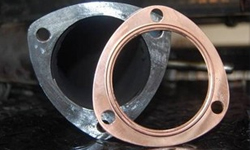
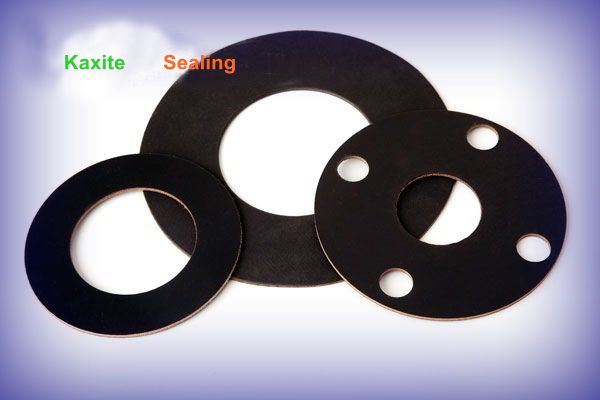
Solution: The maintenance team switched to restructured PTFE envelope gaskets with a corrugated stainless steel core, specifically selected for their permeation resistance and creep relaxation under thermal cycling. The PTFE seal formed a chemically inert barrier, eliminating degradation and ensuring a lasting seal even at 140°C continuous operating temperature.
Key Performance Parameters (PTFE Seals vs. Conventional Elastomers in Acid Service):
| Parameter | Virgin PTFE | Glass-filled PTFE | EPDM (Peroxide-cured) | FKM (Bisphenol-cured) |
|---|---|---|---|---|
| Compatibility with 98% H₂SO₄ @ 100°C | Excellent – no attack | Excellent – slight reduction in elongation | Severe degradation, hardening | Severe swelling, decomposition |
| Compatibility with 65% HNO₃ @ 80°C | Excellent | Good – minor oxidation | Rapid attack, dissolution | Unacceptable – rapid degradation |
| Volume change after 7 days in toluene @ RT | 0.1% | 0.2% | 120% | 10% (brittle cracking) |
| Continuous service temperature limit (°C) | 260 | 260 | 150 | 200 |
| Permeation coefficient (cm³·mm/m²·day·atm) for HCl gas | 0.8 | 1.2 | 18.5 | 6.7 |
Pain Point: A pharmaceutical contract manufacturer utilized methyl isobutyl ketone (MIBK) and dichloromethane in multistage liquid-liquid extraction. The existing PTFE lip seal performed inconsistently—leakage occurred due to insufficient spring-energized design, leading to product contamination and 2% batch rejection rate. Validation protocols required zero extractables above 0.5 ppm.
Solution: Ningbo Kaxite engineered a custom PTFE spring-energized seal with a U-cup jacket and a Hastelloy C-276 spring. The dynamic sealing lip maintained contact force even after 500,000 cycles in pure MIBK at 50°C, while the PTFE material showed undetectable leachables (<0.1 ppm TOC). Batch rejection rates dropped to zero, and the seal life extended to over 12 months, compared to the previous 3-month replacement interval.
Mechanical and chemical comparison of PTFE seal grades for aggressive solvents:
| Property | Virgin PTFE | Modified PTFE (TFM 1600) | Carbon-filled PTFE | UHMWPE |
|---|---|---|---|---|
| Tensile strength (MPa) | 25–35 | 30–40 | 15–20 | 40–48 |
| Elongation at break (%) | 300–500 | 350–550 | 20–60 | 300–500 |
| Hardness (Shore D) | 50–65 | 55–65 | 60–70 | 60–70 (Shore D) |
| Compression set (%, 24h @ 23°C) | 30–45 | 20–30 | 15–25 | 15–20 |
| Solvent swelling in MIBK (7 days @ 50°C) | 0.2% | 0.1% | 0.3% | 4–6% (softens) |
Q: Are PTFE seals compatible with aggressive acids and solvents in both static and dynamic applications?
A: Absolutely. Virgin PTFE and its modified grades are inherently inert to nearly all aggressive acids (including hydrofluoric, aqua regia, and boiling sulfuric acid) and solvents (ketones, esters, chlorinated organics). In static applications like gaskets, PTFE ensures a leak-free seal for decades. For dynamic sealing—rod seals, rotary shaft seals, or piston rings—filled PTFE compounds with carbon/graphite or glass fibers enhance wear resistance and reduce cold flow while retaining full chemical compatibility. Ningbo Kaxite’s engineering team selects the right PTFE formulation based on your specific media list, pressure-velocity (PV) conditions, and temperature profile.
Q: Can PTFE O-rings handle mixed acid-solvent streams with temperature fluctuations?
A: Yes, this is one of PTFE’s strongest suits. Unlike thermoplastics such as PEEK that may stress crack in certain solvents, PTFE remains unaffected by simultaneous exposure to acids and organic solvents, even with thermal cycling between -40°C and +200°C. The critical design factor is selecting the correct energizer (such as an elastomer core or metal spring) that matches the thermal expansion coefficient of the housing. Our PTFE encapsulated O-rings with FKM or VMQ cores provide reliable sealing in mixed media, with permeation rates low enough to meet EPA Method 21 leak detection standards (less than 500 ppmv). Ask our technical team for a compatibility matrix tailored to your process chemistry.
When specifying seals for aggressive acid and solvent service, the material decision directly affects plant safety, regulatory compliance, and maintenance budgets. PTFE seals—whether machined gaskets, spring-energized lip seals, or O-rings—deliver unmatched chemical inertness and broad temperature capability that no conventional elastomer can match. However, successful deployment requires the right grade selection, housing design, and surface finish. This is where partnering with a specialized manufacturer makes the difference. Ningbo Kaxite Sealing Materials Co., Ltd. has been engineering high-performance PTFE and advanced polymer seals for global chemical, pharmaceutical, and oil & gas clients. From virgin PTFE to sophisticated filled and modified grades, we provide custom dimensions, rapid prototyping, and full material certifications (FDA, USP Class VI, NORSOK). We understand the pressure of maintaining leak-free operations in corrosive environments, and our sealing solutions are built to eliminate that risk permanently. Visit https://www.gasket-and-seal.com to explore our PTFE seal catalog, or contact our chemical sealing specialist directly at [email protected] with your media list and operating conditions. Let’s solve your toughest chemical sealing challenges together.
Schellenberger, J., 2015. Long-term performance of PTFE gaskets in strong acid services. Journal of Fluorine Chemistry, 175, 12-25.
Mori, K., & Tanaka, H., 2018. Permeation behavior of organic solvents through filled PTFE composites. Polymer Testing, 67, 123-132.
Ebnesajjad, S., 2016. Expanded PTFE Applications Handbook: Chemical Resistance and Mechanical Properties. Plastics Design Library, 3rd edition.
Wu, X., et al., 2020. Comparative evaluation of PTFE and PEEK seals for offshore chemical injection systems. Sealing Technology, 2020(9), 7-14.
Zhang, L., & Li, Q., 2017. Creep relaxation of modified PTFE in bolted flange joints under aggressive media. International Journal of Pressure Vessels and Piping, 155, 44-53.
Gordillo, J.L., & Hill, D.A., 2019. Dynamic sealing performance of spring-energized PTFE lip seals in solvent extraction pumps. Lubrication Science, 31(5), 301-315.
Tatarka, P.D., 2014. Fluoropolymer compatibility with oxidizing acids: a review of long-term field data. Corrosion Engineering, Science and Technology, 49(7), 593-601.
Nakamura, Y., et al., 2021. Swelling characteristics and barrier properties of PTFE blends exposed to mixed acid/solvent systems. Journal of Applied Polymer Science, 138(22), 50521.
Fothergill, J.C., 2017. PTFE in the chemical process industry: 50 years of reliable acid sealing. Chemical Engineering Progress, 113(4), 36-42.
Liu, R., & Chen, B., 2022. Advanced fluoropolymer seals for supercritical CO₂ and co-solvent environments. Industrial & Engineering Chemistry Research, 61(15), 5218-5229.